Putin arrives in Beijing for Xi summit amid shifting geopolitical balance
The 25th anniversary of the Sino-Russian Treaty provides cover for a meeting defined by asymmetrical dependence and Beijing’s strategic caution.
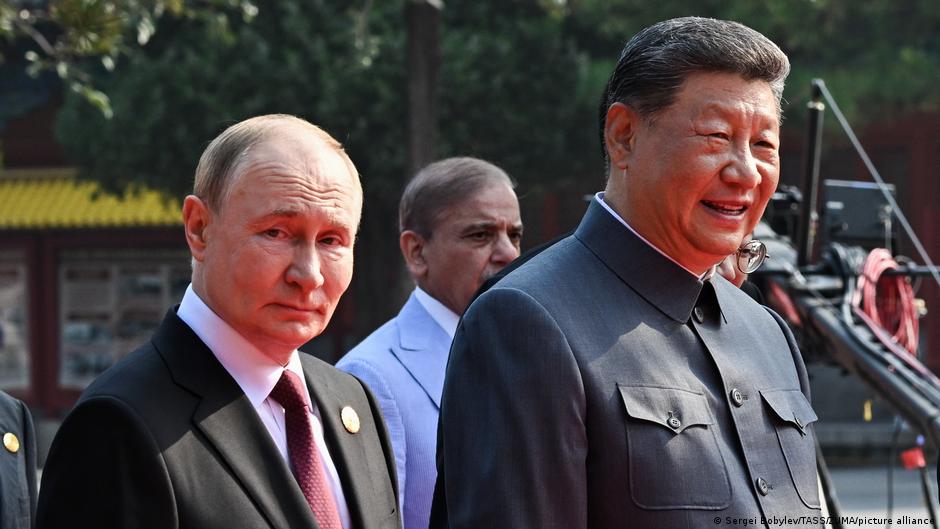
Russian President Vladimir Putin has arrived in Beijing to meet Chinese President Xi Jinping, marking the 25th anniversary of the 2001 Sino-Russian Treaty of Good-Neighborliness and Friendly Cooperation. The summit follows closely on the heels of US President Donald Trump’s state visit to the Chinese capital, underscoring Beijing’s pivotal position in a fractured geopolitical landscape. While the occasion is ostensibly ceremonial, the timing highlights the complex balancing act China must perform between its two largest strategic partners.
Discussions are expected to cover bilateral economic and trade issues, alongside international and regional affairs. Amid Moscow’s isolation from the West over the war in Ukraine, China has become Russia’s largest trading partner, supplying more than a third of its imports and purchasing over a quarter of its exports. This economic reliance is mirrored by military dimensions, with a Reuters investigation in July 2025 alleging that Chinese companies used shell firms to ship drone engines to Russian arms manufacturers, disguised as industrial cooling equipment. Beijing has denied these allegations.
Claus Soong of the Mercator Institute for China Studies (MERICS) noted that the current geopolitical environment places Beijing in an advantageous position, with both Washington and Moscow requiring Chinese engagement for opposing reasons. For Putin, the visit aims to seek reassurances that any progress in China-US relations does not come at Moscow’s expense. Soong suggested the Russian leader is looking to gauge Beijing’s current thinking and reaffirm close ties, particularly as Moscow faces mounting pressure in Ukraine.
Analysts indicate that Moscow may be experiencing war fatigue, evidenced by a subdued Victory Day parade and continued Ukrainian strikes on Russian oil infrastructure. Putin has hinted that the conflict could be nearing a conclusion. Ding Shufan, a professor of East Asia Studies at Taiwan's National Chengchi University, stated that Putin depends on China for energy imports, dual-use goods, and supply chains. However, the power balance is asymmetrical, with Russia relying more heavily on Beijing than vice versa.
China’s primary interest remains stability rather than regime collapse in Russia, which it views as a strategic risk due to their shared border. Soong described the relationship as a couple in the same bed with different dreams, noting that while interests are aligned, they are not identical. Chinese officials have downplayed the 2022 rhetoric that their friendship had “no limits,” with former ambassador Fu Cong describing the phrase as “nothing but rhetoric.” Beijing seeks to avoid direct involvement in the conflict while securing energy supplies, with Russia accounting for nearly 18% of China’s oil imports in 2025.