Putin and Xi to mark treaty anniversary amid shifting global power dynamics
The summit follows a recent meeting between Xi Jinping and US President Donald Trump, reinforcing Moscow-Beijing strategic alignment.
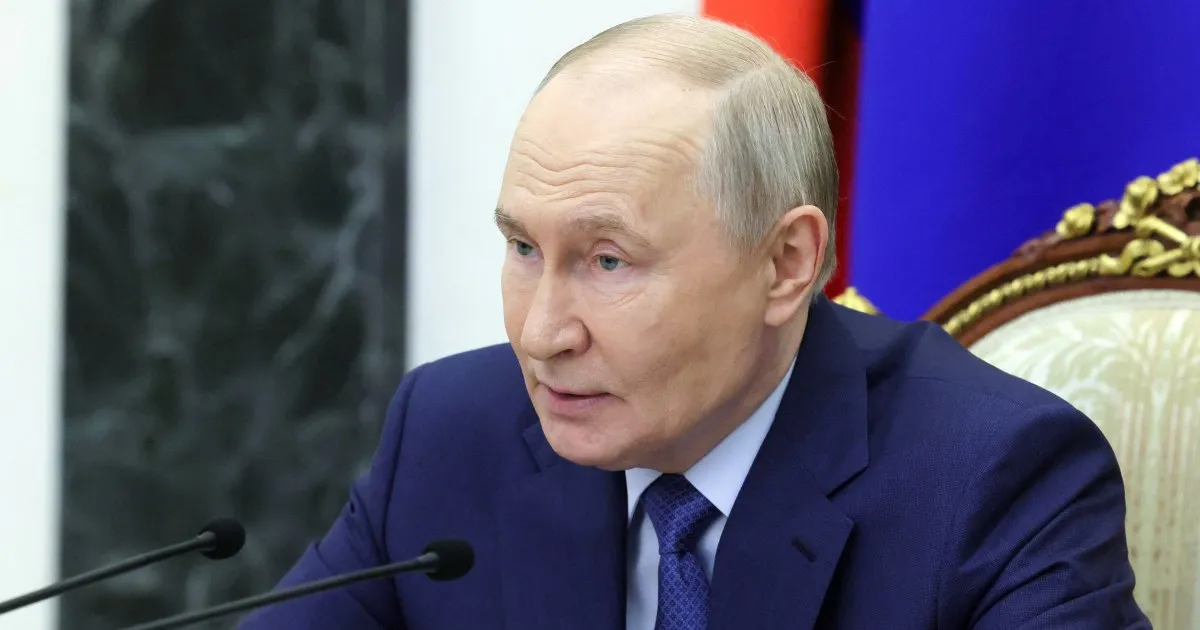
Russian President Vladimir Putin has arrived in China for a two-day visit to meet Chinese leader Xi Jinping, marking the 25th anniversary of the Treaty of Good-Neighbourliness and Friendly Cooperation. In an address ahead of the talks, Putin characterised the partnership as a stabilising force for global peace, asserting that Moscow and Beijing aim to defend international law and the principles of the UN Charter.
The summit represents the second face-to-face meeting between the two leaders in less than a year. Putin stated that the nations do not wish to align against any other country but seek to work together for universal prosperity. He highlighted cooperation through multilateral fora such as the Shanghai Cooperation Organisation and BRICS, noting that relations have reached an unprecedented level of coordination on sovereignty and national unity.
The visit occurs against a backdrop of significant geopolitical realignment. It follows a recent two-day summit in Beijing between Xi Jinping and US President Donald Trump, which produced few concrete agreements on contentious issues including trade, artificial intelligence, Taiwan, and the conflict in Iran. The Trump-Xi meeting was a follow-up to talks held in South Korea in October.
Economic ties between the two nations have deepened substantially, with two-way trade reaching $245bn in 2024, more than doubling from 2020 levels according to the Mercator Institute for China Studies. Russia’s exports to China are dominated by oil, gas, and coal, while China supplies machinery, vehicles, electrical equipment, and textiles. This economic integration has been accelerated by Russia’s international isolation following its 2022 full-scale invasion of Ukraine.
Alexander Korolev, a senior lecturer in international relations at UNSW, noted that the summit allows both leaders to strengthen their partnership amid strategic pressures. He observed that for Russia, the visit demonstrates continued access to high-level political and economic partners despite Western pressure. For China, it reaffirms Russia as a reliable pillar of its strategic environment and underscores Beijing’s independent foreign policy stance.