PSG trophy parade proceeds under heavy security as France grapples with post-victory unrest
Paris Saint-Germain players paraded their Champions League trophy on the Champs-de-Mars on Sunday, ahead of a presidential reception at the Élysée Palace, amid a security operation involving 6,000 officers.
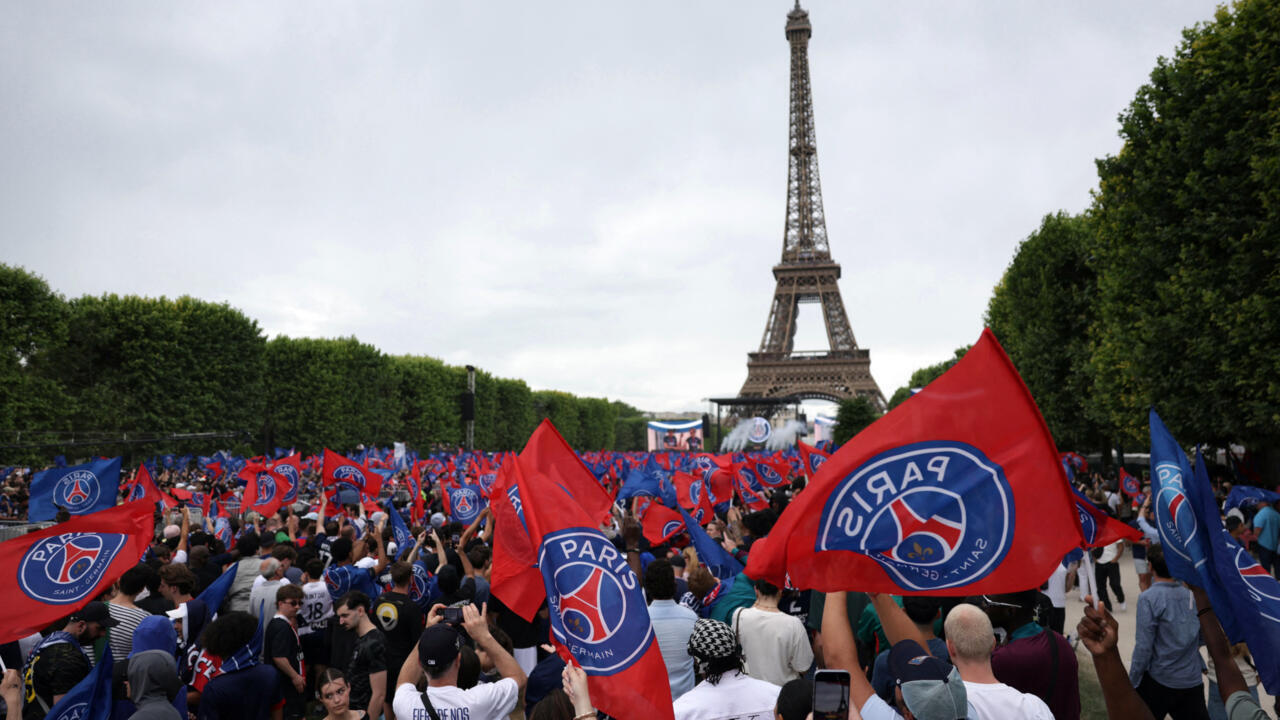
Paris Saint-Germain players paraded their Champions League trophy on the Champs-de-Mars in front of the Eiffel Tower on Sunday, marking the culmination of their second consecutive European title. The event, attended by thousands of supporters, took place under a significant security presence with approximately 6,000 police and gendarmes deployed across the capital. The celebrations follow a night of widespread disorder that has drawn sharp criticism from political figures and prompted a robust law enforcement response from the government.
The parade comes in the wake of PSG’s victory over Arsenal in the Champions League final in Budapest on Saturday night. The match concluded with a 1-1 draw after extra time, with Paris Saint-Germain winning 4-3 on penalties. While the sporting achievement was met with enthusiasm by many fans, the subsequent celebrations were marred by clashes with police, vandalism, and a significant number of arrests, casting a shadow over what was intended to be a national celebration.
Interior Minister Laurent Nunez provided a detailed account of the unrest, reporting that 780 people were arrested across France during the overnight festivities. Authorities confirmed that 57 members of the security forces were injured, alongside 219 participants, eight of whom sustained serious injuries. Nunez highlighted an increased use of fireworks directed at law enforcement and warned of fines for any obstruction of traffic, particularly regarding intrusions onto the Paris ring road.
The violence resulted in at least one fatality. The Paris public prosecutor’s office confirmed the death of a young man in his twenties after he crashed his motocross bike into concrete blocks on a ring road exit ramp. Authorities stated that supporters had stormed the ring road, bringing traffic to a halt and setting off flares. Additionally, another young man was seriously injured in a knife attack in Paris, allegedly over a robbery.
The scale of the disorder has sparked a debate on governance and public order. The district mayor of Paris’s 8th arrondissement called for a "zero gatherings" policy on the Champs-Elysées to prevent further violence, describing the previous night as "urban guerrilla warfare." However, Minister Nunez dismissed this approach, arguing it would tie up almost half of the security deployment. Meanwhile, far-right candidate Marine Le Pen and France Unbowed spokespersons have criticised the government’s management of the event.
Following the parade, the team is scheduled to receive a presidential reception at the Élysée Palace from President Emmanuel Macron. They will subsequently return to their Parc des Princes stadium for a party. The heavy security measures were partly a response to disturbances during the previous year’s celebrations, where shops boarded up windows to avoid ransacking, a precaution that was again observed ahead of this year’s match.
Paris prepared for a "heroes' welcome" despite the unrest, with municipal workers cleaning streets strewn with debris such as broken glass and damaged vehicles. Thousands of supporters, many wearing PSG kits, filtered through security checkpoints to witness the players' return. Interior Minister Nunez promised a "strong law enforcement response" to ensure the safety of the celebrations, which are expected to draw tens of thousands of people.
The unrest extended beyond the capital, with thefts and lootings reported in approximately 15 cities and violence recorded in 71 municipalities. The government’s handling of the event has been scrutinised, with opposition figures arguing that the management and organisation of the celebrations were inadequate. The incident highlights the ongoing challenge of balancing public celebration with the maintenance of order in major urban centres.
As the day concluded, the focus shifted to the institutional response to the violence. The deployment of 6,000 officers underscored the state’s commitment to preventing further disorder, even as political tensions rose over the appropriate measures to curb rioting. The events in Paris serve as a stark reminder of the potential for sports victories to trigger broader social and security challenges.