President Museveni Sworn In for Seventh Term Amidst Disputed Polls and Security Crackdown
President Yoweri Museveni secured a record seventh term with over 70 per cent of the vote, though rights groups cite reports of killings and the passage of restrictive Sovereignty Bill
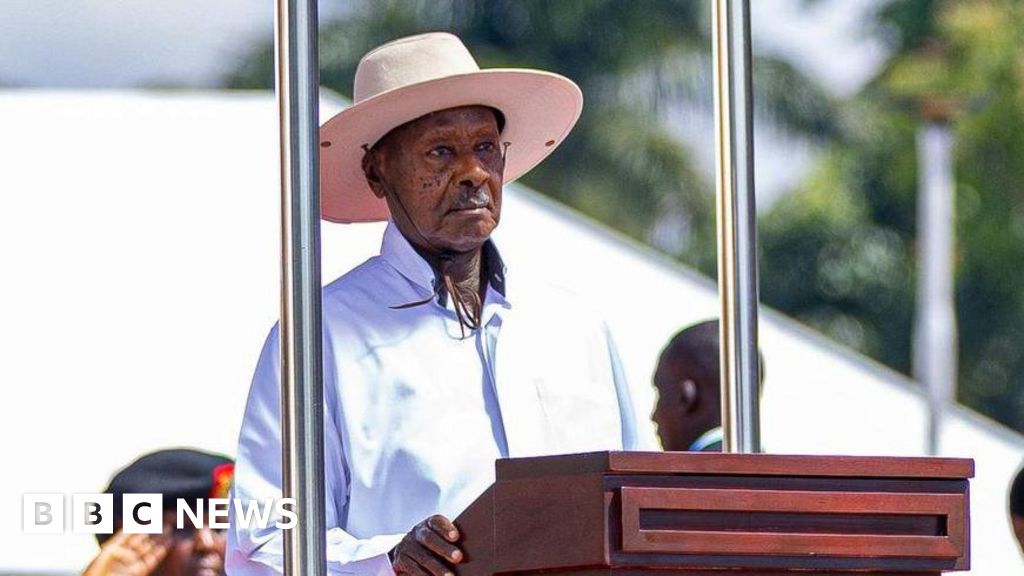
President Yoweri Museveni was sworn in for a record seventh consecutive term at the Kololo Independence Grounds in Kampala, extending his tenure as one of Africa's longest-serving rulers. The ceremony, held under heavy security measures that included the deployment of armoured tanks, marked the culmination of disputed elections won in January. Museveni, who first came to power as a rebel leader in 1986, was declared the winner with more than 70 per cent of the vote, with his current term expected to conclude in 2031.
The government declared the day a public holiday and hosted several African leaders, including Tanzania's President Samia Suluhu Hassan, the Democratic Republic of Congo's Félix Tshisekedi, South Sudan's Salva Kiir, and Somalia's Hassan Sheikh Mohamud. Despite the high-profile attendance, the event has drawn sharp criticism from rights groups regarding the security crackdown and the treatment of opposition figures. The atmosphere was tense, reflecting the deep divisions surrounding the electoral outcome which the government insists was free and fair.
Opposition leader Bobi Wine, whose real name is Robert Kyagulanyi Ssentamu, rejected the results as marred by ballot-stuffing and fled the country prior to the inauguration. Citing fears for his safety, Wine described the regime as seeking to eliminate him. The government accused the opposition of seeking to overturn results through violence, labelling them terrorists, while election officials denied allegations of fraud. Wine, who leads the National Unity Platform party, urged Ugandans to fight back for their democracy after his house was raided by security forces.
The post-election period has been marked by reports of significant violence. Amnesty International reported that at least 16 people were likely killed by security forces between 15 and 18 January, noting that the victims were reportedly unarmed and posed no imminent threat. Police denied allegations that security forces were targeting Wine and his family, insisting they were only providing security for the presidential candidate. These incidents have intensified scrutiny on the government's handling of the security situation.
Further complicating the political landscape, the government recently passed a Sovereignty Bill that criminalises actions deemed to promote foreign interests and labels recipients of foreign funding as agents of foreigners. This legislative move adds to the concerns raised by rights groups about the erosion of civil liberties. Additionally, Museveni's son, General Muhoozi Kainerugaba, the military chief, has faced criticism for threatening opposition figures on social media, including a specific threat against Bobi Wine that has since been removed.
With the majority of Uganda's population having known no other president, the focus now shifts to the implications of this extended rule. While Museveni has not indicated when he intends to retire, analysts suggest this may be his last term. His 51-year-old son, General Muhoozi Kainerugaba, has been widely tipped as a potential successor, though the path forward remains uncertain given the ongoing tensions and international criticism.