Preparedness Gap: Only Three Hokkaido Fisheries Groups Have Evacuation Rules
Repeated vessel evacuations off the Hokkaido coast highlight a disconnect between government policy requests and regional operational readiness.
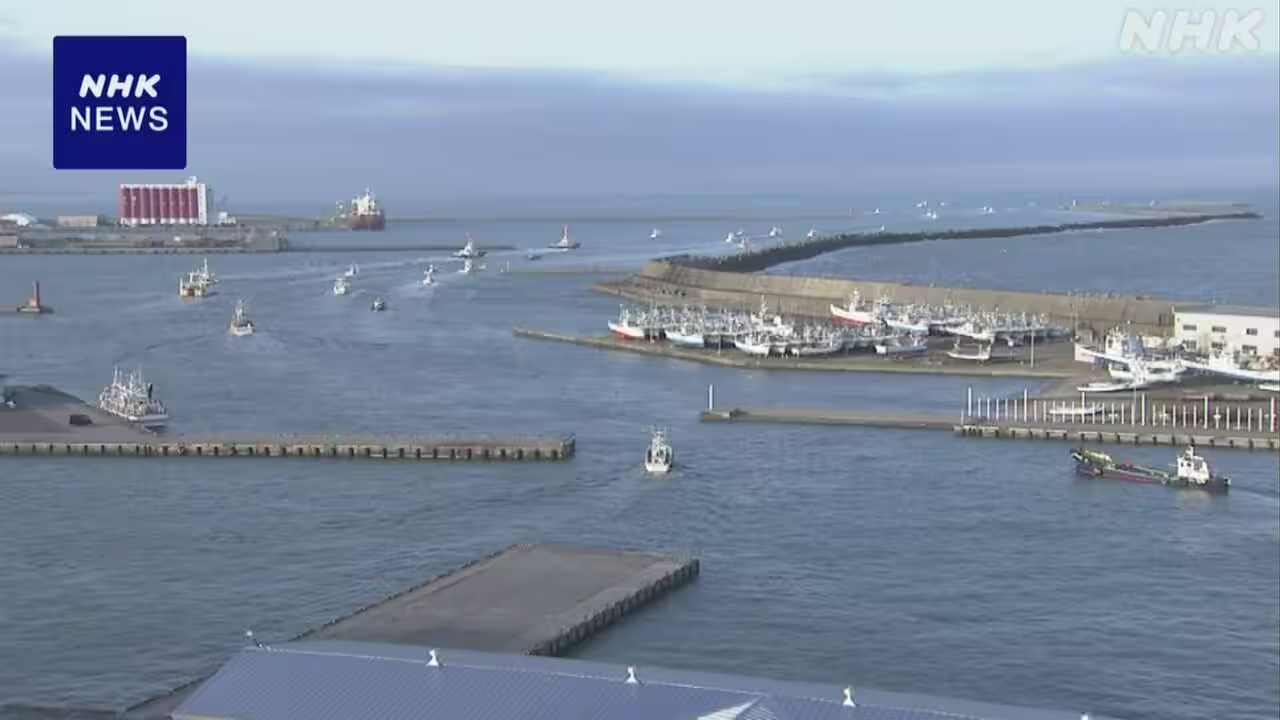
Following a significant earthquake on 20 April that triggered tsunami warnings, numerous fishing vessels were evacuated to deeper waters off the coast of Hokkaido. This coordinated movement, known as okudashi, involved moving boats away from the shoreline to safer, deeper waters to mitigate the threat of rising seas. The repeated nature of these evacuations underscores the urgency of the situation in a region with a history of major seismic events.
While the national government has issued requests urging fisheries associations to establish pre-defined rules for such evacuations prior to disasters, implementation remains patchy. According to reporting by NHK News Japan, only three fisheries associations in Hokkaido have currently formulated these specific guidelines. This disparity points to a significant gap between national policy expectations and local preparedness implementation within the region.
The incident serves as a stark reminder of the challenges in standardising emergency responses across the industry. Although the national government has previously requested that fisheries associations create specific operational rules to expedite these evacuations during emergencies, the majority of local groups have yet to comply. The recent seismic activity occurred in a context where such protocols are critical, yet the lack of widespread adherence to these suggested frameworks persists.
The distinction between a national request and mandatory enforcement remains a key factor in the current landscape. The text indicates that the government has asked for the creation of rules rather than enforcing a completed mandate for all associations. Consequently, the evacuation procedures relied on ad-hoc decisions or existing local knowledge rather than a unified, pre-defined set of instructions available to every fishing community in Hokkaido.
As the dust settles on the events of 20 April, the focus shifts to how these gaps will be addressed in the coming months. The situation highlights the ongoing tension between centralised policy direction and the practical realities of local governance in disaster-prone areas. Until the remaining associations formulate their guidelines, the region will continue to operate with a level of uncertainty regarding the speed and coordination of future vessel evacuations.