Portugal's Defence Minister Questions F-35 Procurement Amid Strategic Autonomy Concerns
With the defence sector generating €2.1 billion in revenue, officials debate whether local manufacturing partnerships can replace reliance on American hardware
Portugal's defence sector has expanded significantly over the past five years, generating €2.1 billion in revenue and employing around 20,000 people. While Lisbon actively purchases equipment from Italy, Germany and the US to meet NATO spending targets, Defence Minister Nuno Melo recently questioned the procurement of US F-35 fighter jets. This hesitation stems from concerns over American commitment to the alliance under President Donald Trump, casting doubt on a deal that was practically finalised.
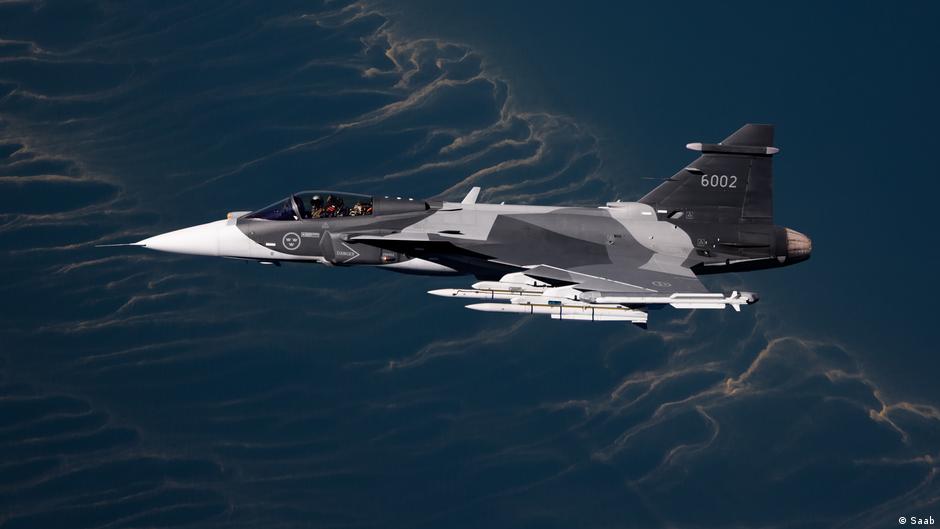
The debate centres on replacing the Portuguese air force's aging fleet of 28 F-16s, some of which are over 30 years old. Consequently, Sweden's Saab is proposing the Gripen-E aircraft as a European alternative that would involve local manufacturing through OGMA and software development by Critical Software. Saab describes the Gripen-E as a solution that would strengthen Portuguese and European strategic defence capabilities through long-term industrial partnerships and technological sovereignty.
Under this proposal, the Portuguese aerospace company OGMA could manufacture parts of the aircraft, a role it already performs for the Brazilian company Embraer. In return, Portugal buys military transport aircraft from Embraer. Furthermore, Critical Software, a firm with around 5,000 employees, is developing a flight simulator for the Gripen-E and is examining potential cooperation in maintenance, repair and overhaul areas.
Despite the growing industrial involvement, experts note that while Portugal is becoming a serious player in European defence, its strategic autonomy remains limited by its reliance on the US alliance. Bruno Oliveira Martins of the Peace Research Institute Oslo argues that Portugal's historical uncritical stance towards the US suggests the government possesses little autonomy to stand up to its major partner in military matters.
The final decision regarding the replacement of the F-16 fleet remains undecided, with the Portuguese air force seemingly preferring the more expensive US F-35 despite the Minister's reservations. The flight simulator and AI co-pilot projects for the Gripen-E are not yet finished, and it remains unclear whether Portugal can truly purchase the Swedish jets freely given the geopolitical constraints identified by PRIO experts.