Pope’s Spain Visit Draws ‘Rockstar’ Attention, Academic Observes
The Vatican’s recent trip to Spain has been characterised by significant media interest and large crowds, prompting analysis from ecclesiology experts on the nature of modern religious engagement.
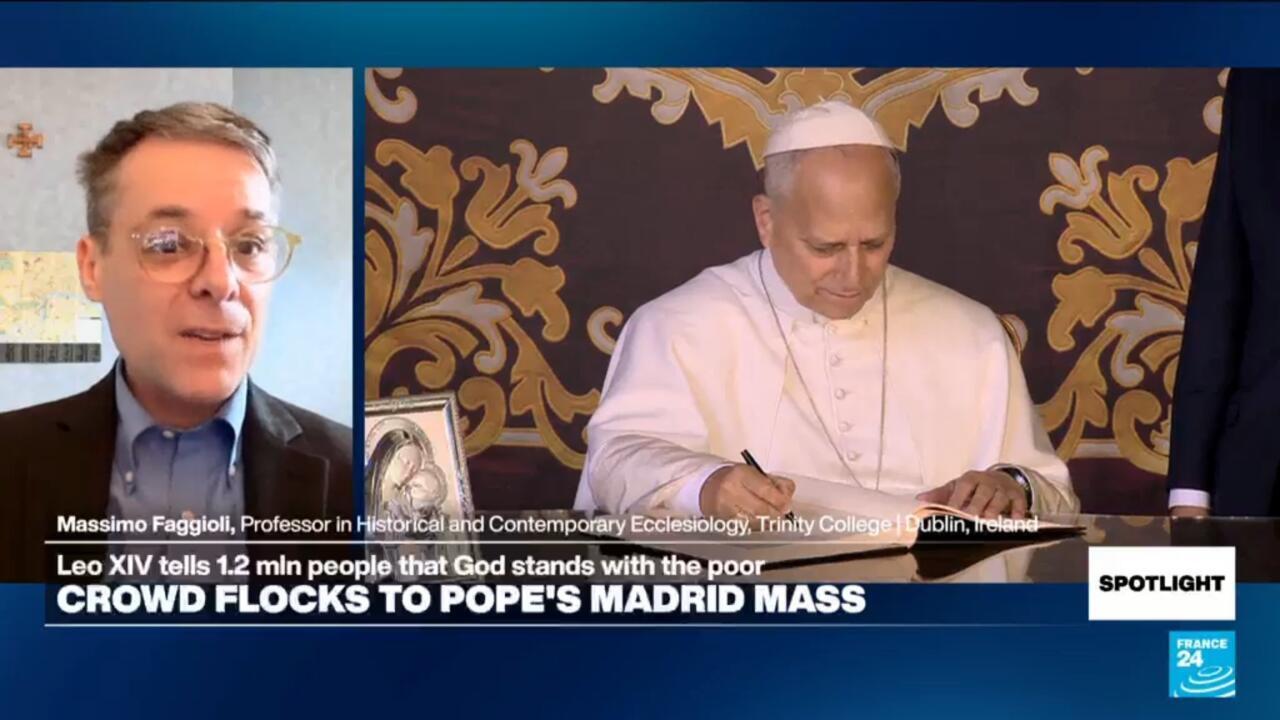
Pope Francis’s recent visit to Spain has been described as generating a "rockstar" effect, drawing substantial public attention and large crowds upon his arrival. The phenomenon has been noted for its scale, indicating a high level of engagement from the public and media alike during the Pontiff’s time in the country.
Massimo Faggioli, a Church Historian and Professor in Historical and Contemporary Ecclesiology at Trinity College Dublin, University of Dublin, has provided commentary on the event. His analysis lends an academic perspective to the observed public response, focusing on the institutional and social dimensions of the visit rather than mere spectacle.
The description of the visit as having a "rockstar" effect refers specifically to the intensity of the crowds and the media frenzy surrounding the Pope’s movements. This terminology highlights the unique intersection of religious authority and contemporary public interest, a dynamic that Faggioli’s work in historical and contemporary ecclesiology helps to contextualise.
It is important to distinguish this event from unrelated historical or legislative matters. Reports referencing a "Pope Leo XIV" urging national unity in Madrid are factually incorrect, as no such pontiff exists; the current head of the Catholic Church is Pope Francis. Similarly, legislative debates in France regarding school abuse scandals are unrelated to the events in Spain and should not be conflated with the Pope’s visit.
The coverage of this event, sourced from France 24 International, frames the visit through the lens of public reception and expert analysis. The focus remains on the observable impact of the Pontiff’s presence in Spain and the scholarly interpretation of that impact by figures such as Faggioli.