Pope Leo XIV’s Spain visit exposes fault lines in Catholic politics and migration policy
While Prime Minister Pedro Sanchez welcomed the Pope’s stance on migration and the war in Iran, Vox leader Santiago Abascal dismissed the message as rhetorical, highlighting the growing divergence between Church teaching and far-right policy.
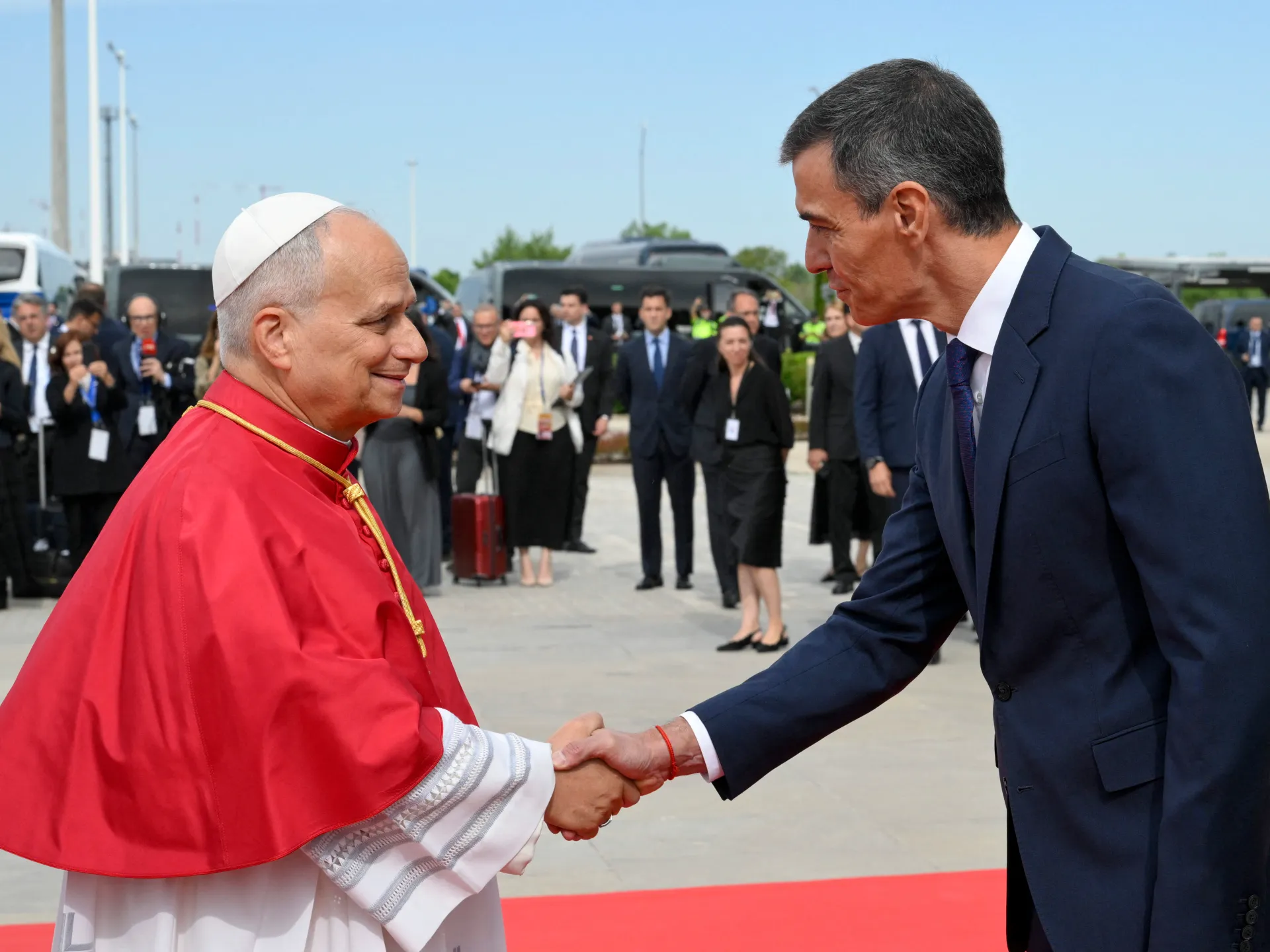
Pope Leo XIV’s visit to Spain has underscored a significant divergence between Catholic social teaching and the political agenda of the far-right Vox party. During a parliamentary address, the Pope invoked the 16th-century School of Salamanca to affirm the dignity of migrants, directly challenging Vox’s advocacy for mass deportations and "remigration". Prime Minister Pedro Sanchez supported the Pope’s stance, aligning with the government’s recent decision to regularise the status of approximately 500,000 undocumented migrants. Conversely, Vox leader Santiago Abascal dismissed the papal message as rhetorical, distinguishing it from practical policy. The visit also highlighted demographic shifts, with recent surveys indicating a rise in Catholic identification among young Spaniards, adding complexity to the political landscape ahead of next year’s general election.
The theological core of the Pope’s message relied on the School of Salamanca, a 16th-century movement whose theologians defended the rights and dignity of Indigenous peoples against the logic of conquest. By summoning this tradition, Pope Leo measured political power by its treatment of the vulnerable, a stance that stood in direct contrast to Vox’s calls for mass deportations of undocumented migrants, immigrants’ children, and those accused of refusing to adapt to Spanish customs. The Pontiff’s determination to highlight the plight of asylum seekers set him at odds with the administration of US President Donald Trump, whom Abascal admires, while also drawing a sharp line between Christian values and the far-right politics Abascal claims to represent.
The human cost of the migration routes the Pope addressed was starkly illustrated during his visit to Gran Canaria, where he spoke to migrants who have risked their lives on the Atlantic route from Africa to Europe. The International Organization for Migration reported at least 1,214 deaths or disappearances en route to the Canary Islands last year, with non-governmental organisations suggesting the toll is significantly higher. This focus on the humanitarian crisis in the Atlantic contrasted with the political calculus of Vox, which has fought the arrival of unaccompanied migrant minors and sought to rebrand its deportation agenda as "remigration".
Spanish Prime Minister Pedro Sanchez welcomed the Pope’s stance on migration and his condemnation of the US-Israel war in Iran as "illegal", aligning with the government’s recent move to regularise the status of at least 500,000 undocumented migrants. The Pope’s alignment with Sanchez on these fronts was evident during an open-air mass in Madrid attended by more than a million people, where he stated that “no one can kneel before the Lord and despise their brother”. This public display of unity between the Vatican and the Socialist government complicates the narrative for Vox, which has attempted to minimise the Pope’s message by insisting that “practical policy” must be distinguished from the words of a religious leader.
The political implications of the visit are compounded by shifting demographic trends within the Spanish electorate. While overall Catholic identification has declined from 68 percent a decade ago to 52.8 percent in the spring of 2025, the Fundacion SM “Jovenes Espanoles 2026” survey reveals that the share of young Spaniards identifying as Catholic has jumped from 31.6 percent to roughly 45 percent in five years. This revival of Catholic identity among Generation Z and young millennials runs alongside a sharp rightward turn among young voters, creating a complex environment for political parties. Vox is rebuilding regional alliances with the conservative People’s Party (PP) in Extremadura, Aragon, and Castilla y Leon, adopting the PP’s "national priority" policy that favours Spaniards over foreign-born people in housing and benefits.
Pope Leo also warned against the Church being instrumentalised for political ends after Vox attacked Spanish bishops for supporting the government’s migrant amnesty. The Pontiff’s caution suggests that the Catholic Church plays a longer and more cautious game than party politicians, with its centre of gravity shifting to the Global South, the very regions much of Europe’s migration comes from. While the Church remains closer to Vox on ethical issues such as family and abortion, its defence of migrants is bound up with both principle and its own future. As Spain prepares for next year’s general election, the tension between doctrinal positions and political pragmatism will likely continue to shape the debate over faith, migration, and national identity.