Pope Leo issues first encyclical demanding AI regulation
The Vatican’s latest teaching document, presented alongside an AI scientist, calls for governments to disarm artificial intelligence while acknowledging its potential, drawing comparisons to the 2015 climate encyclical.
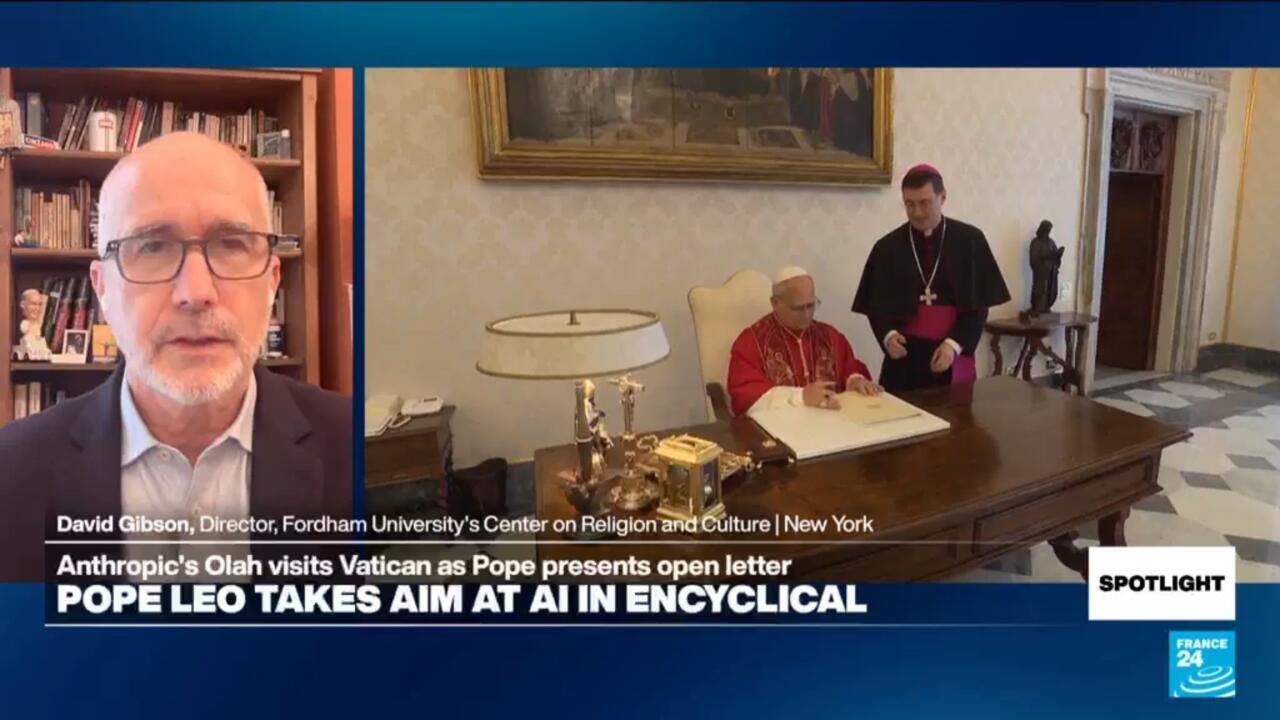
Pope Leo has released his first encyclical, outlining a comprehensive vision for the relationship between artificial intelligence and humanity. Titled ‘Magnifica humanitas: On Safeguarding the Human Person in the Time of Artificial Intelligence’, the document serves as a formal letter to bishops within the Roman Catholic Church, establishing the institution’s stance on the rapid advancement of AI technologies.
The encyclical explicitly calls for governments to regulate artificial intelligence, warning that the technology fuels war and misinformation. The text states that the technology must be “disarmed”, while simultaneously acknowledging its potential to “open up a horizon extending in all directions”. This dual approach seeks to balance the risks of unchecked technological development with its possible benefits.
To demonstrate dialogue between AI researchers and the wider world, the document was presented alongside Chris Olah, an AI scientist from Anthropic. The inclusion of a leading figure from the artificial intelligence sector underscores the Vatican’s intent to engage directly with the scientific community responsible for developing these systems.
Analysts are comparing the encyclical to Pope Francis’ 2015 climate encyclical, which sparked significant global political debate. The comparison highlights the potential for this new document to influence international policy discussions, much like its predecessor did regarding environmental issues.
David Gibson, a journalist and director of Fordham University’s Center on Religion and Culture, was interviewed by France 24 regarding the encyclical. His commentary provides context on the document’s significance within the broader landscape of religion, culture, and emerging technology.
The release of the encyclical marks a significant moment in the intersection of faith and technology. By addressing the ethical and governance challenges posed by AI, the Vatican aims to shape the ongoing debate on how societies should manage these powerful tools.
The document’s emphasis on regulation and disarmament suggests a cautious approach to AI development. It positions the Church as a voice advocating for safeguards against the potential harms of the technology, while remaining open to its constructive applications.