Police clash with Cockroach Janta Party protesters in New Delhi
Riot police deployed tear gas and batons against thousands of demonstrators attempting to march to Parliament, marking a significant escalation in the youth-led movement’s campaign for examination reform.
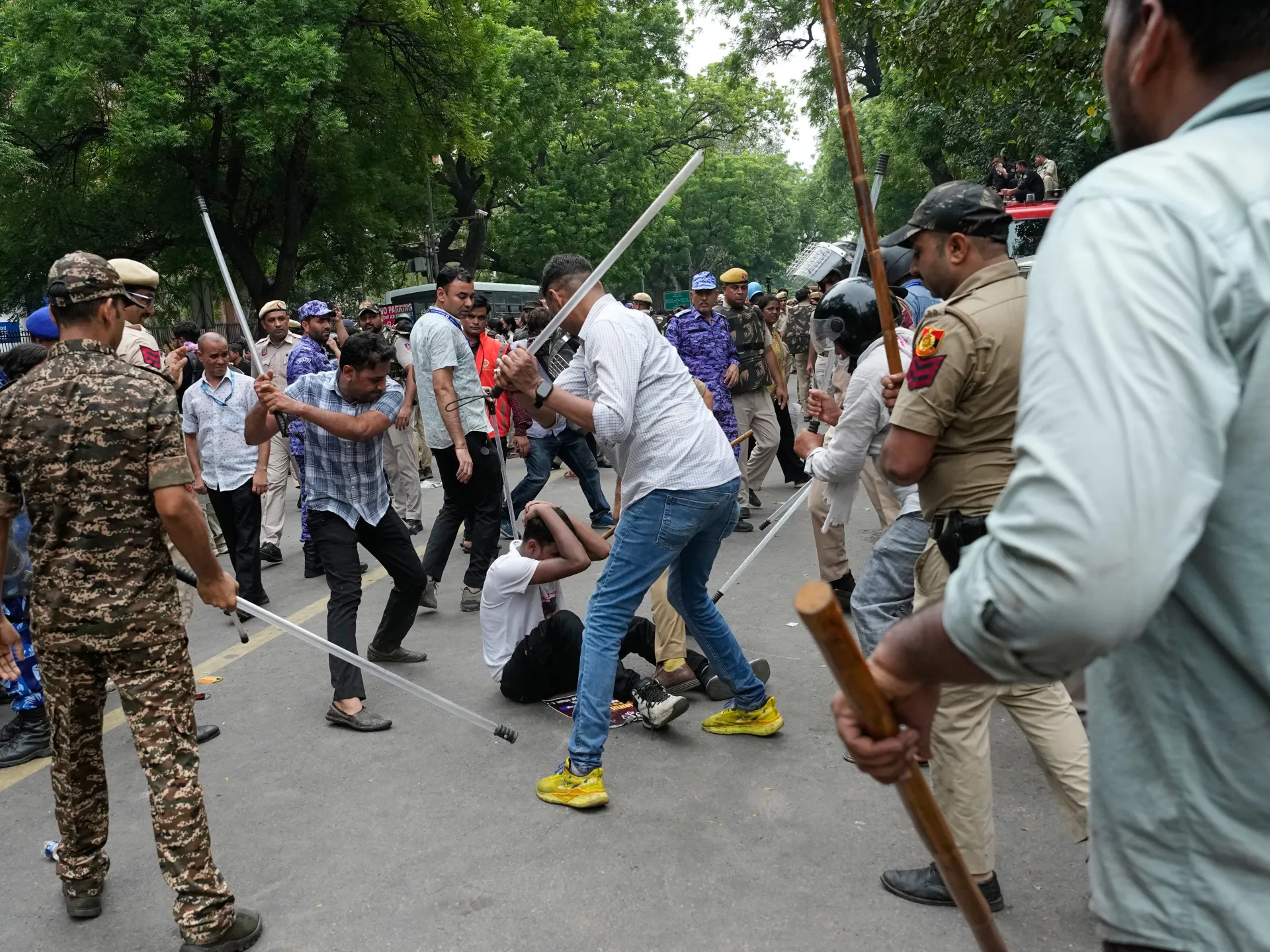
Police in New Delhi deployed tear gas and charged crowds with batons on Monday as supporters of the Cockroach Janta Party attempted to breach security barricades surrounding the Jantar Mantar protest site. The confrontation occurred as thousands of demonstrators, including students, professionals, and families, sought to march towards Parliament to demand the resignation of Education Minister Dharmendra Pradhan.
The incident marks a significant escalation in tensions surrounding the satirical movement, which has emerged as one of the most substantial political challenges to the government’s handling of public examinations. The unrest intensified following the hospitalisation of prominent activist Sonam Wangchuk on Saturday, which ended his 20-day hunger strike in support of the group’s demands.
The Cockroach Janta Party originated in May after the Chief Justice of the Supreme Court compared some unemployed young people to “cockroaches” during an unrelated hearing. Supporters embraced the remark, transforming it into a satirical political movement that has since attracted millions of followers on social media. The group has gained considerable momentum following repeated leaks of high-stakes entrance examinations for medical colleges and government jobs.
Protesters camped at Jantar Mantar for the past month have been joined by members of several student groups who participated in Wangchuk’s hunger strike. Their demands extend beyond the minister’s resignation to include comprehensive reforms to the examination system and compensation for the families of students who died by suicide after paper leaks.
Despite the presence of police barricades and monsoon drizzle, the crowd remained large and determined. In a shift in strategy, the government has reportedly launched its first public outreach to the group’s leaders, signalling an attempt to engage with the movement amidst the growing unrest.
The confrontation near Jantar Mantar, located approximately 2km from Parliament, highlights the deepening divide between the state and a youth demographic that has mobilised rapidly over issues of institutional integrity. Thousands of supporters have also turned out at universities and rallies in other cities, underscoring the national scale of the dissatisfaction.
As the government begins its initial engagement with the movement’s leadership, the immediate focus remains on the security situation in the capital. The deployment of riot police and the use of tear gas indicate a hardening of the state’s approach to the protests, even as diplomatic channels appear to be opening for the first time.