Plastic pollution linked to obesity and dementia in France 24 Spotlight segment
Merijn Tinga, known as the Plastic Soup Surfer, asserts that the crisis is no longer external but internal, affecting bodies and brains across borders.
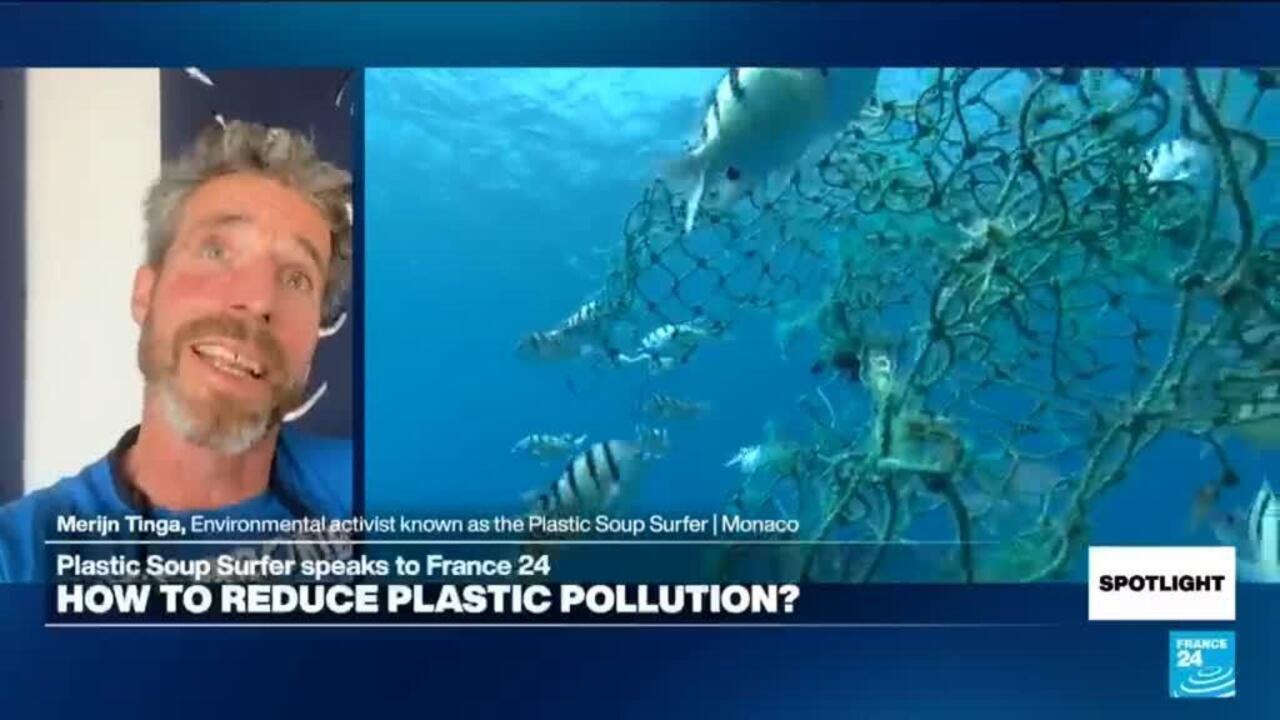
A France 24 Spotlight segment has examined the growing assertion that ocean plastic pollution is directly associated with human health crises, specifically obesity and dementia. The discussion, hosted by François Picard, features biologist and activist Merijn Tinga, who is widely recognised as the Plastic Soup Surfer. Tinga argues that the presence of plastic within human bodies and brains has transformed the issue from a distant environmental concern into an urgent internal biological one.
Tinga, who describes himself not merely as a scientist but as an activist, utilises his time on the water to demonstrate the inextricable link between ocean forces and human existence. His recent journey, which has taken him from Oslo to London, Paris, and Nice with Rome as the next destination, serves as a metaphor for carrying a universal message across borders. From his surfboard, he posits that while one becomes one with the wind and waves on the water, land remains immersed in a throwaway culture that disconnects humanity from nature.
The core of Tinga's argument is that plastic pollution is no longer an external problem but is literally within us. He highlights that microplastics have permeated human brains and bodies, a situation that extends to unborn children. This internalisation of the pollutant necessitates a fundamental shift in societal awareness regarding how humans view their relationship with the natural world. The segment emphasises that we are not separate from nature but are part of it, requiring a return to balance and harmony.
Beyond the philosophical implications, the segment identifies practical, proven solutions to address the crisis. Tinga points to deposit return schemes as a specific mechanism capable of significantly reducing pollution. He advocates for the adoption of such systems to restore equilibrium between humanity and the environment, suggesting that effective methods already exist to combat the disconnection caused by modern waste practices.
The discussion frames the current state of affairs as a symptom of a broader cultural disconnection. Tinga calls for a move away from throwaway culture, arguing that restoring harmony with nature requires both technological responses and a change in perspective. By focusing on the biological reality of plastic presence in the human body, the segment underscores the urgency of addressing this issue as a matter of public health rather than solely environmental management.