Pistons face structural overhaul after first-round exit exposes offensive limitations
Detroit’s 60-win season ended in a Game 7 blowout, highlighting critical deficiencies in shooting and playmaking that place an unsustainable burden on Cade Cunningham.
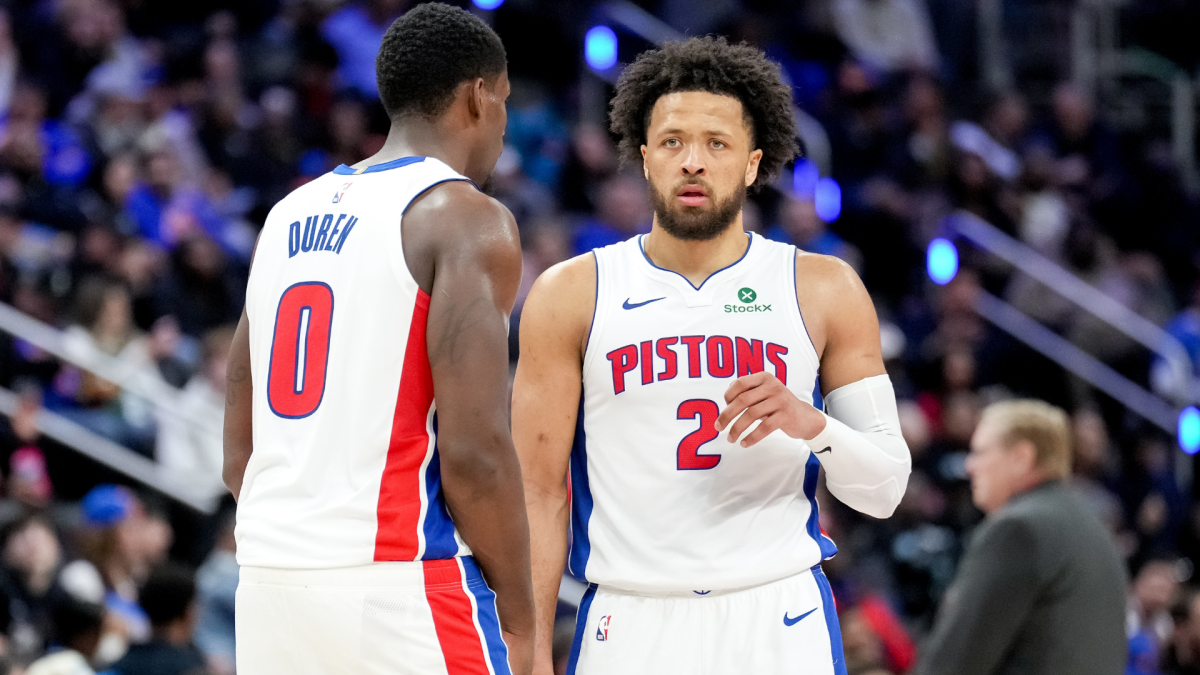
The Detroit Pistons’ 60-win regular season concluded with a first-round elimination by the Cleveland Cavaliers, a result that has placed significant pressure on president of basketball operations Trajan Langdon to redefine the franchise’s direction. Despite holding a 2-0 series lead, the Pistons lost the final three games in a blowout defeat, exposing deep-seated offensive deficiencies that persisted despite their high seeding. The loss underscores a strategic divergence from the team’s historical identity, forcing an evaluation of whether the current young core can be modernised to meet contemporary championship standards.
Langdon inherited a roster built under previous management and opted to test its organic growth rather than pursue immediate upgrades, a strategy mirrored by the Oklahoma City Thunder. However, where Oklahoma City addressed minor flaws to become champions, Detroit’s exit revealed fundamental issues with spacing and creation. The team recorded the NBA’s second-lowest three-point attempt rate, and its offensive efficiency dropped by more than nine points per 100 possessions whenever star guard Cade Cunningham sat. This lack of secondary playmaking forced Cunningham into a gargantuan workload, averaging over 41 minutes per game while carrying a playmaking load that exceeded that of elite scorers like Joel Embiid and Jaylen Brown.
Central to the roster dilemma is centre Jalen Duren, whose performance declined sharply during the postseason. Duren’s scoring average fell by nine points per game compared to the regular season, a statistical drop noted as the largest for a player since Wilt Chamberlain in 1962. His defensive discipline also wavered, as he was frequently drawn out of the paint by opponents, neutralising his rim protection. Furthermore, data indicates that Duren was substantially more effective when paired with Ausar Thompson on the bench, suggesting that their simultaneous presence on the floor creates a congested half-court environment that stifles offensive flow.
The Pistons now face a complex decision regarding Duren, who enters restricted free agency and is projected to be eligible for a max contract starting at 30 per cent of the salary cap if he makes the All-NBA team. Langdon must weigh the risk of retaining a player whose fit is questionable against the potential loss of a 22-year-old All-NBA talent for nothing if he signs with another team. With the Los Angeles Lakers and Chicago Bulls expected to have significant cap space, Detroit risks being forced into an untenable financial commitment or losing a key asset entirely.
To resolve these structural issues, the Pistons may need to explore trade scenarios that prioritise shooting and playmaking. Options include attempting a sign-and-trade for Duren to acquire offensive wings, or potentially moving Ausar Thompson to create a more favourable contract environment for Duren while retaining his transformative defensive impact. The organisation must decide whether to accommodate Thompson’s defensive prowess within a modified roster or seek a shooting centre to balance the lineup, ensuring the team does not repeat the passive maintenance of past eras.