Philippines declares state of calamity as earthquake death toll reaches 37
President Ferdinand Marcos Jr activates emergency agencies as rescue teams battle aftershocks and damaged access routes in the hardest-hit provinces of General Santos and Sarangani.
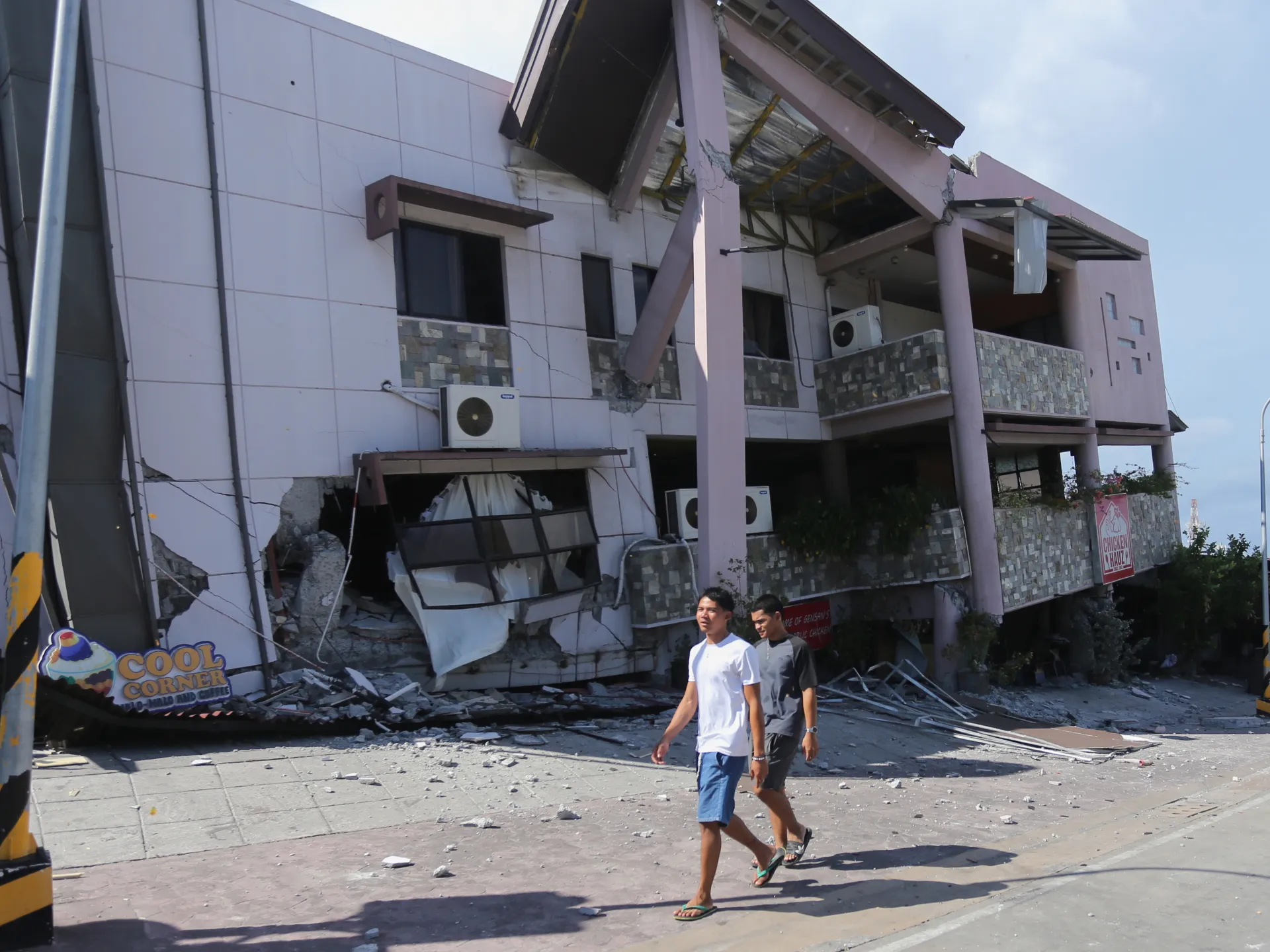
The Philippine government has declared a state of calamity in the southern regions following a magnitude 7.8 earthquake that killed at least 37 people and injured 400. President Ferdinand Marcos Jr confirmed the activation of national emergency agencies, stating that the government would not leave the island of Mindanao behind in the recovery effort. The disaster, which struck shortly before 7:40am local time on Monday, has triggered a complex logistical challenge for rescue teams operating in an area with significant infrastructure damage.
The epicentre was located approximately 20km off the coast of Sarangani province, with tremors felt as far away as Sulawesi in Indonesia. General Santos, a coastal city with a population of roughly 720,000, sustained the most severe damage, including collapsed commercial buildings and downed power lines. At least 13 fatalities were recorded in the city, while Sarangani province reported 18 deaths, predominantly caused by a landslide in the mountainous town of Glan. Additional casualties were confirmed in South Cotabato, Davao Occidental, and Balut Island.
Rescue operations in General Santos have focused on a collapsed commercial building that housed a grocery store. While two survivors were extracted from the debris, scanners have detected no signs of life from remaining trapped individuals, and one person was found dead. Regional civil defence chief Rodrigo Sosmena noted that ongoing aftershocks, including a magnitude 6.5 tremor within two hours of the main quake, are forcing rescuers to proceed with extreme caution.
Access to remote areas in Sarangani remains severely restricted, with dozens of roads and bridges damaged. Rescue efforts in these mountainous zones are now dependent on helicopter access, as public works departments work to clear blockages. The disruption to transport networks has also impacted the General Santos international airport, which remains closed, resulting in the cancellation of 63 domestic flights.
The scale of the structural damage extends beyond immediate casualties. Approximately 2,000 houses and 117 government buildings have been damaged across several provinces. Furthermore, about 6,000 public school buildings require structural assessment before education services can resume. This event marks the most powerful seismic activity to hit the Philippines in eight months, following a magnitude 6.9 tremor off Cebu last year that resulted in 79 deaths.