Panama Canal fees surge to record highs as El Niño and Iran tensions choke shipping
Falling water levels in the Panama Canal, exacerbated by shipping disruptions linked to the conflict in Iran, are driving transit fees to record highs, according to the Financial Times.
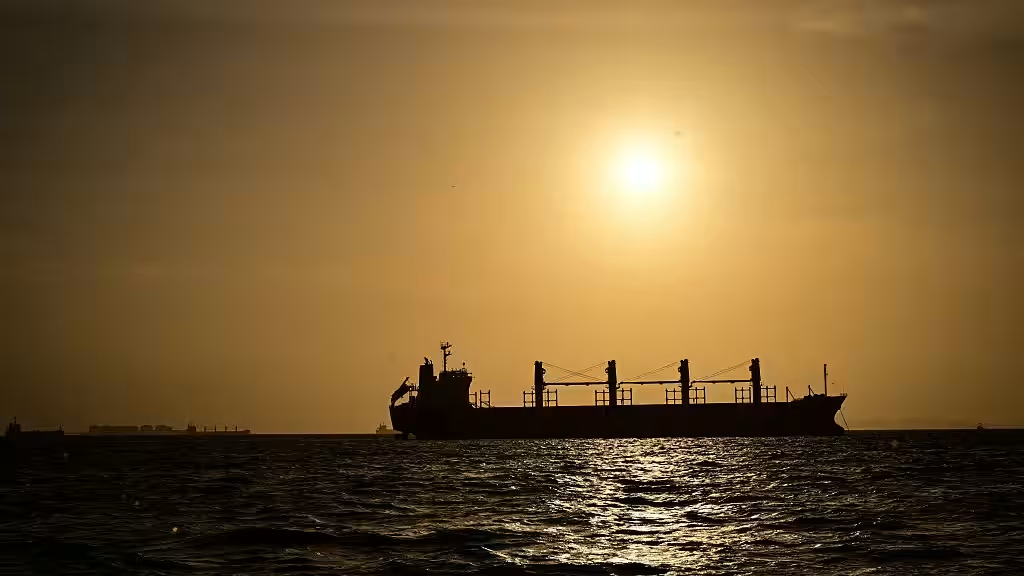
Transit fees through the Panama Canal have reached record levels as falling water levels caused by the El Niño weather phenomenon restrict the number of available slots for vessels. The Financial Times reports that the combination of climate-induced capacity constraints and broader shipping disruptions stemming from geopolitical tensions in the Middle East is significantly impacting global maritime logistics.
The primary driver of the bottleneck is the reduction in water levels within the canal’s lock system, a direct consequence of El Niño conditions. This scarcity limits the number of ships that can safely transit the crucial maritime passageway at any given time, forcing carriers to compete for limited space and driving up costs.
Compounding the logistical strain are disruptions related to the conflict in Iran. While the specific mechanism of these disruptions varies, the heightened tensions in the region have added pressure to global shipping routes, further exacerbating the capacity issues already created by the low water levels in Central America.
Tensions in the region have escalated recently, with Iran accusing Ukraine of launching a hostile attack on an Iranian commercial vessel in the Caspian Sea. The incident resulted in the death of one sailor and injuries to another, prompting condemnation from Iranian Foreign Minister Abbas Araghchi and a formal protest from the Iranian Ministry of Foreign Affairs.
Although US media reported on 24 July 2026 that President Donald Trump ordered a halt to new strikes on Iran, and no direct attacks were recorded between the US and Iran through 26 July 2026, the broader instability continues to affect shipping confidence and routing decisions. The convergence of these factors has created a perfect storm for maritime logistics, with the Financial Times noting the unprecedented nature of the current fee environment.
As El Niño conditions persist, the Panama Canal Authority faces ongoing challenges in managing transit capacity. For investors and institutions reliant on efficient global supply chains, the record-high fees serve as a stark indicator of the growing intersection between climate volatility and geopolitical risk in determining trade costs.