Ousted Ukrainian defence minister frames political rift as systemic governance crisis
Mykhailo Fedorov’s video address calls for a legal mechanism to hold elections despite martial law, coinciding with high-profile anti-corruption searches and the dismissal of a senior presidential aide.
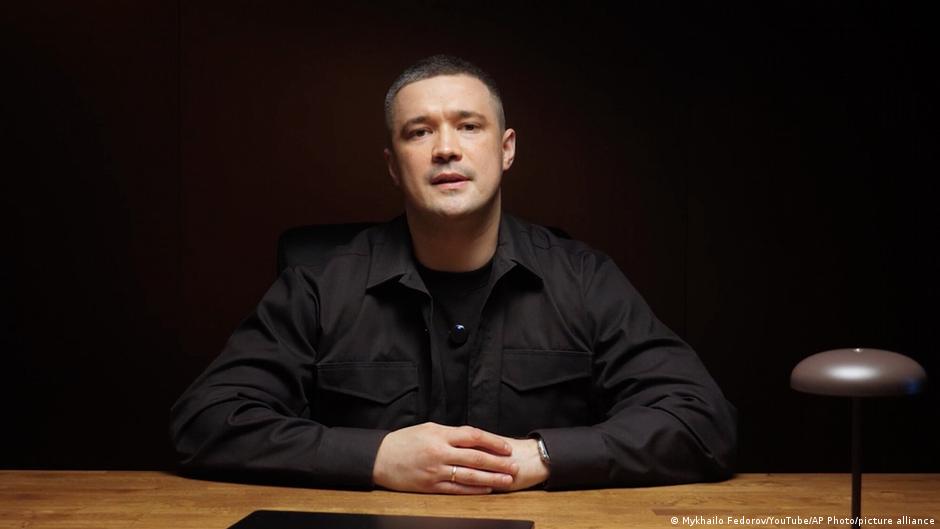
Former Ukrainian Defence Minister Mykhailo Fedorov has described the current political landscape as a "systemic crisis of governance," arguing that corruption is merely a symptom of deeper institutional failures. In a nine-minute video address released on his YouTube channel, Fedorov stated that the country cannot remain without a fully appointed minister of defence, but insisted the core issue extends beyond individual positions or ministries.
The speech, released one month after his dismissal by President Volodymyr Zelenskyy, explicitly criticises the lack of national elections since 2019. Fedorov warned that it is dangerous when the primary criterion for appointment becomes "personal loyalty to the system" rather than professionalism or results. He called for the establishment of a "legal, safe, and realistic mechanism" to conduct votes, even if the war with Russia continues for an extended period.
The timing of the address coincided with intensified anti-corruption efforts. On 19 August, the National Anti-Corruption Bureau (NABU) and the Specialised Anti-Corruption Prosecutor’s Office conducted searches of premises belonging to senior officials, including Presidential Deputy Chief of Staff Iryna Mudra and MP Vadym Stolar. Authorities stated they were exposing a "criminal organisation" led by current and former lawmakers and involving senior officials from the president’s office. President Zelenskyy dismissed Mudra from her post the same day.
Political analysts suggest Fedorov is consolidating support gained from recent protests, although he has not formally declared a candidacy. Polls conducted in early August show Fedorov in third place for presidential ratings at 12.5%, behind President Zelenskyy at 25.2% and former Commander-in-Chief Valerii Zaluzhnyi at 16.7%. Earlier polls indicated that trust in Fedorov rose significantly in the weeks following his dismissal, with a majority of respondents believing he should not have been sacked.
Ihor Chalenko, a political scientist at the Center for Analysis and Strategies in Kyiv, noted that the former minister is positioning himself as an independent political player. However, Chalenko does not view the conflict as a permanent rift, suggesting Fedorov could return to government if offered a position. Oleksiy Haran, a professor at the Kyiv Mohyla Academy, observed that while the speech expresses public desire for change, it does not directly criticise President Zelenskyy or address the logistical challenge of holding elections without a stable ceasefire.
Vadym Denysenko, an analyst at the Ukrainian thinktank Business Capital, described the speech as the start of a broader political game. He noted that some of Zelenskyy’s former followers have switched allegiance to Fedorov, becoming his strongest supporters. Denysenko argued that Fedorov’s inner circle is working toward a potential candidacy, reasoning that the former minister stands to gain political capital regardless of whether elections are held in the near term.