OpenAI expands ChatGPT Health access to US users amid legal scrutiny
The tech giant’s latest update grounds AI responses in data from Apple Health and providers like Kaiser Permanente, even as the company faces lawsuits over medical advice accuracy and its relationship with Apple.
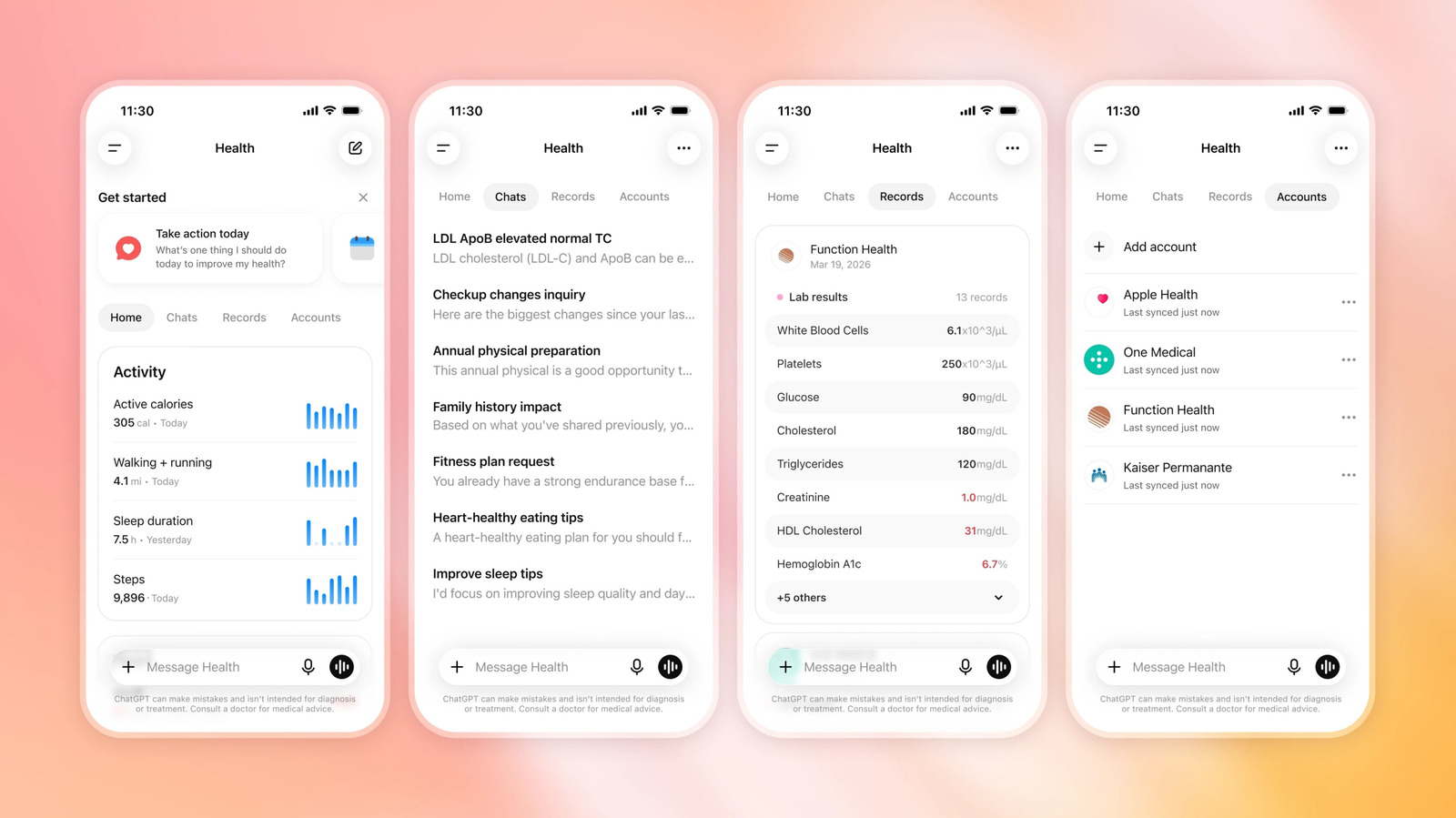
OpenAI has commenced the rollout of its ChatGPT Health feature to users aged 18 and older in the United States. This update marks a significant shift from the January testing phase, where functionality was confined to a standalone portal. The new version integrates health data referencing directly into the primary chat interface, allowing the model to access personal medical records such as doctors' notes and blood test results within any conversation where health is relevant.
The feature is powered by OpenAI’s GPT-5.6 Sol model, which the company claims improves the handling of health-related queries. Users can link their data via Apple Health, utilising the Healthkit framework, and specific healthcare providers including Kaiser Permanente and One Medical. OpenAI states that the tool is designed to summarise appointments, interpret test results, and assist patients by grounding responses in personal medical history, current conditions, medications, and family history, rather than providing direct medical advice.
Privacy controls remain a central component of the launch. OpenAI asserts that connected medical information is not used to train foundation models or for advertising targeting, regardless of user settings. Users retain full control over data usage, with the ability to disconnect health information at any time. The system can also be configured to force the chatbot to request explicit permission before accessing specific data points during a conversation.
The timing of the expansion coincides with significant legal challenges for the company. OpenAI is currently facing a lawsuit from a pastor who alleges that ChatGPT provided dangerous medical advice, leading him to forgo treatment for a pulmonary embolism. Additionally, the company is embroiled in a separate legal dispute with Apple, making its reliance on Apple Health as a primary data source particularly sensitive.
Despite OpenAI’s framing of the tool as a means to help users understand their health data, the company acknowledges that the chatbot is still capable of making mistakes. It advises that any output should not be considered a diagnosis or official treatment, even if presented with confidence. Users are encouraged to exercise caution and disconnect data if they feel uncomfortable sharing medical information with the platform.