Nvidia posts record $58.3bn profit as AI demand fuels market scrutiny
The Santa Clara-based firm announced an $80 billion share buyback and dividend increase, signalling a shift in capital allocation as it cements its position as the world’s most valuable company.
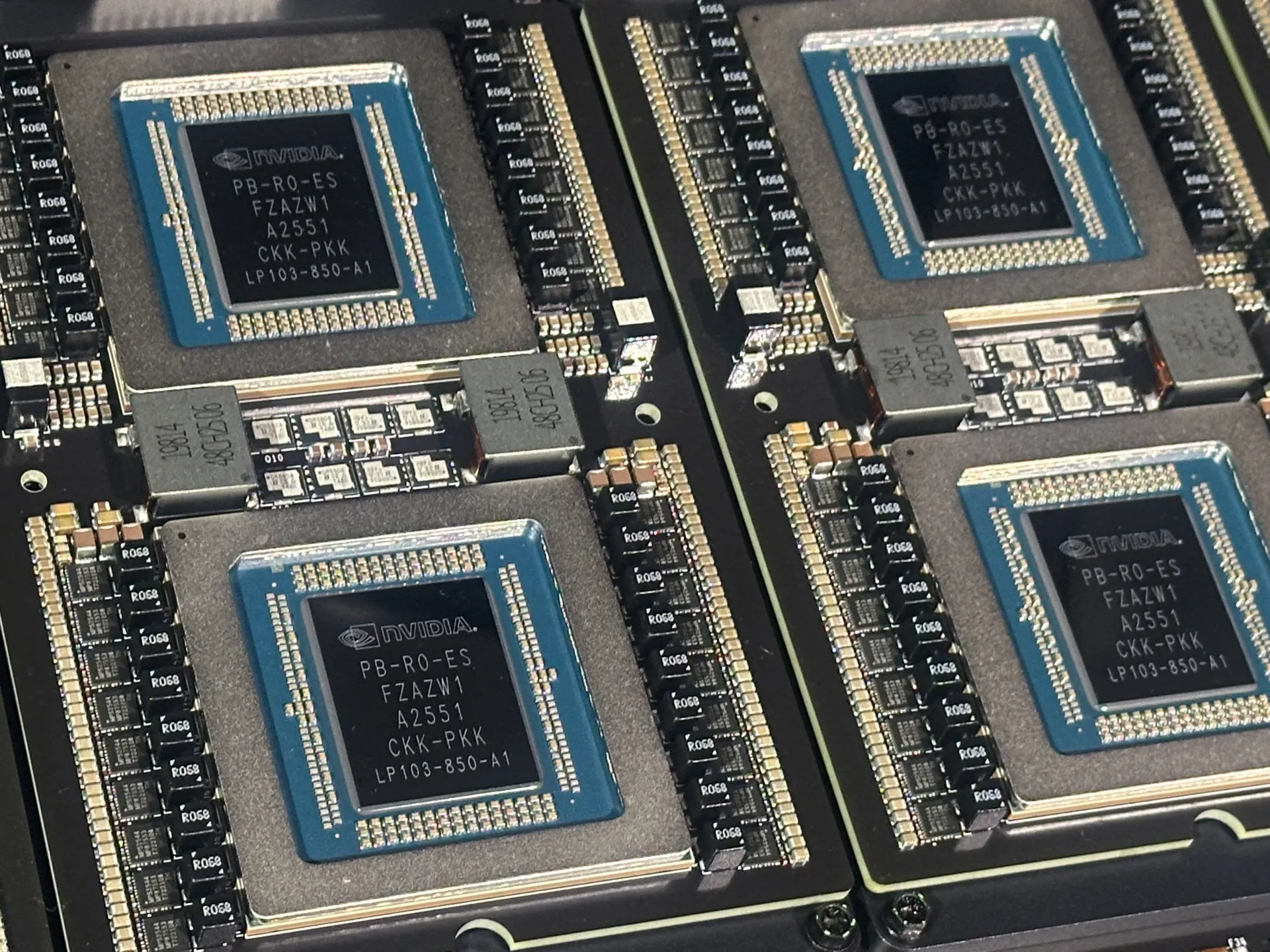
Nvidia has reported record quarterly results for the period ending April 2026, with profit soaring to $58.3 billion and revenue reaching $81.6 billion. The US technology company attributed the surge to explosive demand for its artificial intelligence chips, marking a 37 per cent increase in profit from the previous quarter and more than a 200 per cent rise year-on-year. Revenue jumped 20 per cent from the prior quarter and 85 per cent compared with the same period in 2025.
The company’s data-centre business served as the primary engine for this growth, with quarterly revenue surging 92 per cent year-on-year to $75.2 billion. The hardware unit also contributed significantly, recording $6.4 billion in revenue, a 29 per cent increase from the previous year. Chief Executive Officer Jensen Huang described the demand as having gone "parabolic," attributing the success to the arrival of "agentic AI." Huang stated that semi-autonomous AI models are now capable of performing productive and valuable work, citing the new Vera CPU which has generated $20 billion in standalone sales this year.
Despite forecasting current quarter revenue at $91 billion—exceeding most analyst estimates—Nvidia’s shares fell nearly 1.3 per cent in after-hours trading. The muted market response highlights the sky-high expectations attached to the firm, whose blistering growth since 2022 has lifted its market capitalisation to more than $5 trillion. This performance has intensified debate over whether AI valuations are overhyped and whether the sector is creating a market bubble, a concern shared by other tech giants such as Microsoft and Amazon.
In a move to return capital to shareholders, Nvidia announced an $80 billion share buyback programme and increased its quarterly cash dividend from $0.01 to $0.25 per share. William Rhind, CEO of GraniteShares, noted that the shift toward buybacks and dividends indicates a company with "more cash than it can possibly redeploy into the business." He described this transition as a sign of a hypergrowth story beginning to mature, arguing that the bullish case remains strong despite the lack of earth-shattering new developments.
Analysts suggested that the market reaction reflected a normalization of expectations rather than a loss of confidence. Jay Goldberg of Seaport Research observed that Nvidia is no longer beating a high bar but has become the bar itself, noting that tech firms have yet to demonstrate a broad-based consumer case for AI. John Belton of Gabelli Funds echoed this sentiment, stating that the results mirrored previous strong numbers without dramatically shifting the narrative one way or the other.