Nvidia commits $500 billion to AI data centre financing with GPU value guarantees
The initiative aims to bring independent institutional capital into the AI market while mitigating risks associated with traditional hyperscaler funding models.
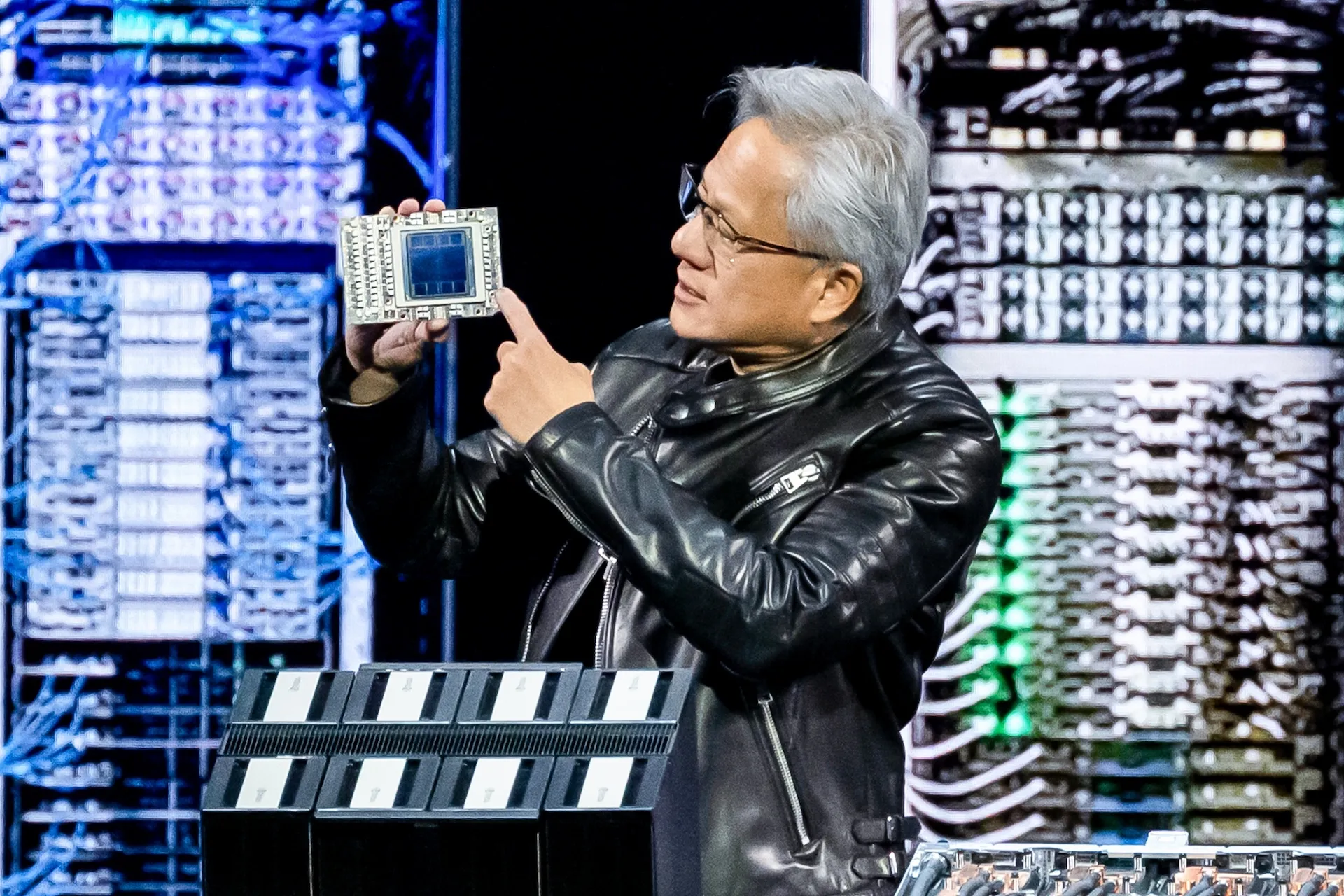
Nvidia has announced a financing initiative involving major financial institutions, including Apollo, BlackRock, Blackstone, Brookfield, Goldman Sachs, and KKR, to commit up to $500 billion towards the construction of AI data centres. To facilitate this funding, Nvidia will guarantee that its graphics processing units (GPUs) used as collateral retain their value, covering up to 25% of any shortfall if the chips fail to meet expected prices upon liquidation.
CEO Jensen Huang stated the initiative aims to bring independent, long-term institutional capital into the AI infrastructure market and sustain demand for ageing hardware by creating a secondary market for used GPUs. The move comes as traditional funding methods for hyperscalers, such as debt issuance and equity tranches, show signs of strain, with major tech companies facing significant financial pressure.
The structure of the deal has drawn comparisons to the rise and fall of Lucent Technologies during the dotcom bubble, a cautionary tale for hardware manufacturers that lend to customers to purchase their wares. Huang has publicly addressed concerns about circular financing on X and business television, asserting that the initiative brings independent capital into the market and differs from historical precedents by having other institutions shoulder the bulk of the capital and risk.
Nvidia has previously committed billions to customers, including frontier AI labs like OpenAI and Anthropic, and neoclouds such as CoreWeave, Nebius, Firmus, and Lambda. Bloomberg has calculated that Nvidia has been involved in another $750 billion worth of circular deals this summer, highlighting the scale of financial engineering currently underpinning the sector’s expansion.
Huang describes Nvidia’s AI servers as “AI factories” akin to railroads or airlines rather than quickly depreciating assets. He argues that a broad ecosystem of potential users and offtakers helps protect the residual value of the hardware, ensuring that even as architecture ages, the infrastructure remains viable for startups, enterprises, and researchers seeking affordable compute options.