Nuclear fusion investment hits record $4.48 billion as tech giants lock in power deals
Global private funding for fusion ventures rose 69% in 2025, with major corporations signing binding agreements to secure future electricity supplies from emerging commercial plants.
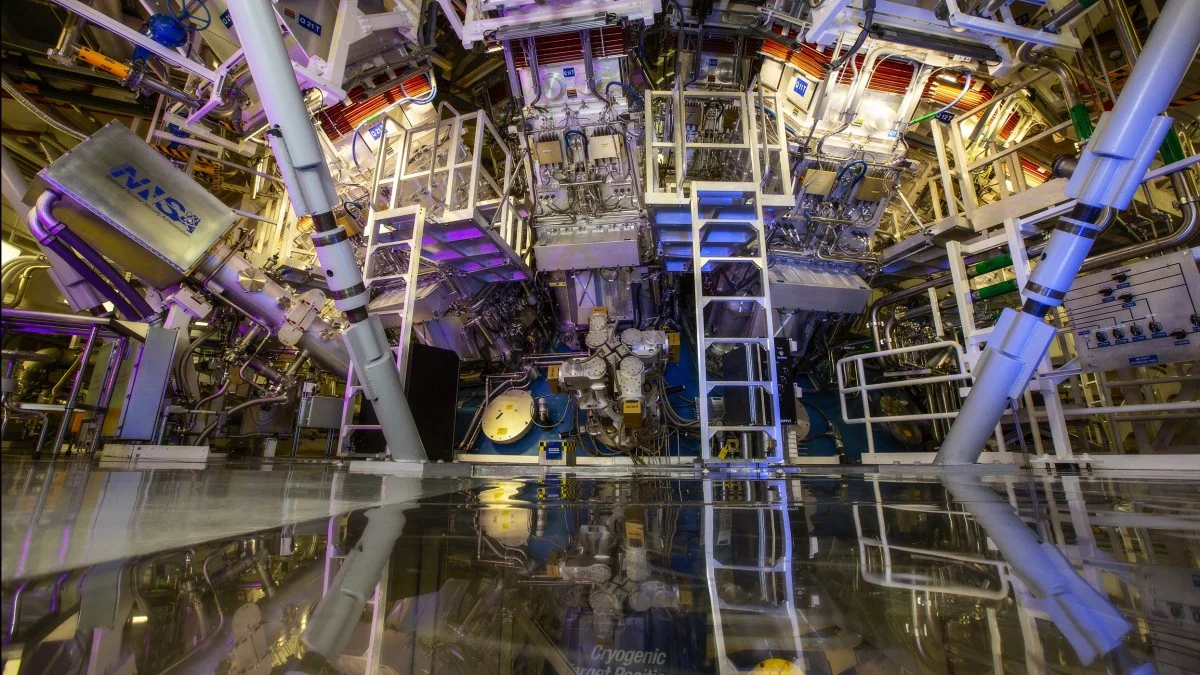
Global private investment in nuclear fusion reached a record $4.48 billion in 2025, marking a 69% surge driven by the escalating energy requirements of artificial intelligence data centres and broader concerns over energy security. According to the Fusion Industry Association, confidence in the commercial viability of the technology is now high, with approximately 71% of fusion companies expecting to deliver power to the grid by the 2030s. This growing optimism is translating into tangible infrastructure commitments, with major technology firms signing binding power purchase agreements to secure future electricity supplies.
Microsoft has formalised its support for Helion Energy through a binding power purchase agreement for at least 50 megawatts of electricity by 2028. Unlike previous letters of intent, this contract carries financial penalties for Helion if it fails to meet its delivery schedule. Constellation Energy is managing the transmission from the reactor to the grid, serving as the primary power marketer for the deal. Helion broke ground on its Orion facility in Malaga, Washington, in 2024, strategically locating the site near the Columbia River to integrate with the regional power network.
To meet the strict 2028 deadline, Helion closed a $465 million Series G funding round led by Thrive Capital, which elevated its valuation to $15.5 billion. The company is heavily backed by OpenAI CEO Sam Altman, who has invested hundreds of millions of dollars of personal capital into the venture. The capital injection signals a shift for Helion from a speculative science project to a heavily capitalized utility competitor aiming to provide steady-state power.
In Massachusetts, Commonwealth Fusion Systems raised $863 million in a Series B2 round, bringing its total funding to nearly $3 billion. The oversubscribed round included backing from Nvidia, Google, Bill Gates, George Soros and Stanley Druckenmiller. The funds will support the development of SPARC, a research facility aiming for net-positive fusion energy by 2027, and the subsequent ARC commercial plant in Virginia, which is targeted for the early 2030s.
Meanwhile, Munich-based Proxima Fusion secured €411 million, reaching a valuation of €2.4 billion and becoming the most valuable fusion company in Europe. Google and German utility provider RWE are industrial partners in the venture, which is a spinoff from the Max Planck Institute for Plasma Physics. Proxima is constructing Alpha, a stellarator-based demonstrator near Munich, targeting the early 2030s. Unlike the tokamak designs used by Helion and Commonwealth Fusion Systems, Proxima’s stellarator approach uses a twisted magnetic cage layout to prevent plasma disruptions, allowing for continuous operation.