NPT Review Conference Opens in New York Amid US-Iran Diplomatic Friction
While the gathering aims to determine if the international community can reach consensus on nuclear disarmament, the opening proceedings were characterised by immediate diplomatic friction.
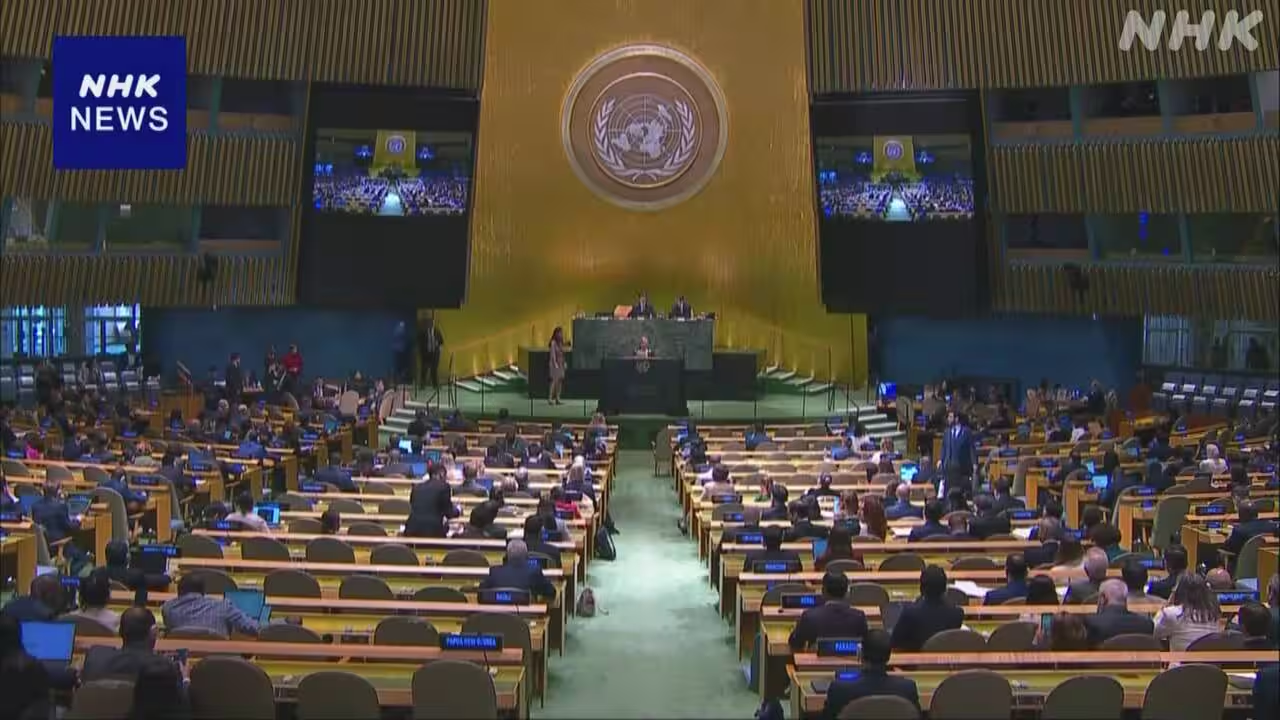
The United Nations Nuclear Disarmament Treaty Review Conference opened on the evening of 27 April at UN Headquarters in New York. The primary objective of this gathering is to determine whether the international community can reach a consensus on nuclear disarmament. However, the opening session was immediately marked by a cycle of mutual accusations between the United States and Iran.
The United Nations Nuclear Disarmament Treaty serves as the central treaty governing nuclear non-proliferation and disarmament efforts globally. Despite the high anticipation for the conference, the inaugural session featured immediate diplomatic friction, with the two nations engaging in reciprocal accusations that cast a shadow over the proceedings.
Concurrently, Japanese survivors of the atomic bombings marched to advocate for a world without nuclear weapons ahead of the conference. A Japanese delegation also departed for the event to participate in the discussions. These actions underscore the ongoing advocacy for disarmament within the region as the global policy debate unfolds.
In related diplomatic developments, Japanese Prime Minister Takako Takishi was preparing to announce diplomatic policies in Vietnam. The focus of these upcoming announcements includes strengthening cooperation in energy and artificial intelligence, while also addressing domestic security document revisions.
The overarching goal remains establishing a unified international direction for nuclear disarmament. It remains unclear if the immediate confrontation between the United States and Iran will derail the conference's ability to adopt a final document on the matter.
The specific content of the mutual accusations exchanged during the opening session is not detailed in the current reporting. The focus remains on the structural challenge of achieving consensus amidst such diplomatic friction.