North Korea codifies 'hostile state' doctrine in constitutional overhaul
South Korea’s Ministry of Unification confirms Pyongyang has formally redefined the inter-Korean relationship, shifting from a framework of potential unification to one of territorial separation and state-to-state hostility.
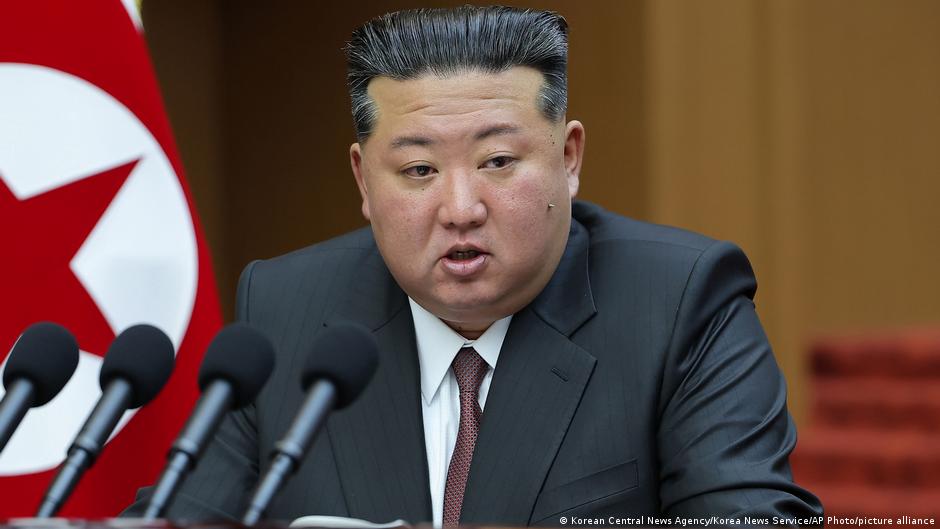
North Korea has amended its constitution to formally remove all references to national reunification and shared ethnic identity with South Korea, effectively framing Seoul as a hostile state. The changes, distributed by South Korea’s Ministry of Unification on May 6, mark a significant policy departure for Pyongyang, which has technically remained at war with its southern neighbour since an armistice halted hostilities in 1953.
The revised charter contains four major structural changes, most notably the deletion of Article 9, which previously stated that North Korea would strive to achieve national reunification. References to the Three Principles of National Reunification, which emphasised independence, peaceful reunification, and national unity, have also been excised. This shift contrasts sharply with South Korea’s constitution, which continues to claim the entire Korean Peninsula and its islands as its own territory.
Kim Jong Un had signalled this policy pivot earlier in the year, defining South Korea as the primary foe and invariable principal enemy during a speech at the Supreme People’s Assembly in March. The constitutional amendment codifies his exclusive authority over the deployment of both nuclear and conventional forces, strengthening his personal power while shifting the national narrative away from the deified rule of his predecessors, Kim Il Sung and Kim Jong Il.
Experts argue the changes reflect a structural choice by the regime to preserve internal governance and manage vulnerability. Hong Min, a senior researcher at the state-run Korea Institute for National Unification, described the amendment as a formal adoption of the doctrine of two hostile states, a concept Pyongyang has pursued since the collapse of the 2019 US-North Korea summit in Hanoi. He noted that the removal of reunification language points to a relationship shaped by hostility, territorial separation, and nuclear deterrence.
The amendment also raises concerns regarding maritime security. While the new territorial clause may be interpreted as a de facto acceptance of the Military Demarcation Line as a border, it leaves the disputed Northern Limit Line in the Yellow Sea ambiguous. Han Ki Bum, a former deputy director of South Korea’s National Intelligence Service, warned that this ambiguity, combined with the recent deployment of additional North Korean destroyers to the region, could invite future provocations.
Cha Du Hyeon, vice president of South Korea’s Asan Institute for Policy Studies, told a forum at the National Assembly on May 13 that the term hostile relations does not explicitly appear in the text, likely because constitutions rarely define relations with specific countries in such terms. However, he argued that the structural shift allows Pyongyang to use hostility toward Seoul as a pretext for provocation when conditions are favourable, while providing a stronger foundation for future negotiations.
The removal of specific mentions of the achievements of Kim Il Sung and Kim Jong Il marks a departure from the previous document, often referred to as the Kim Il Sung-Kim Jong Il Constitution. The new text focuses instead on the state, territory, sovereignty, and nuclear capabilities, a move Hong Min characterised as an attempt to present a more conventional state image while simultaneously consolidating one-man dictatorship.