Noboa pledges intensified extraditions as critics question Ecuador’s security strategy
Daniel Noboa tells National Assembly that families cannot develop while living in fear, even as the International Crisis Group argues his emergency powers have failed to curb homicide rates.
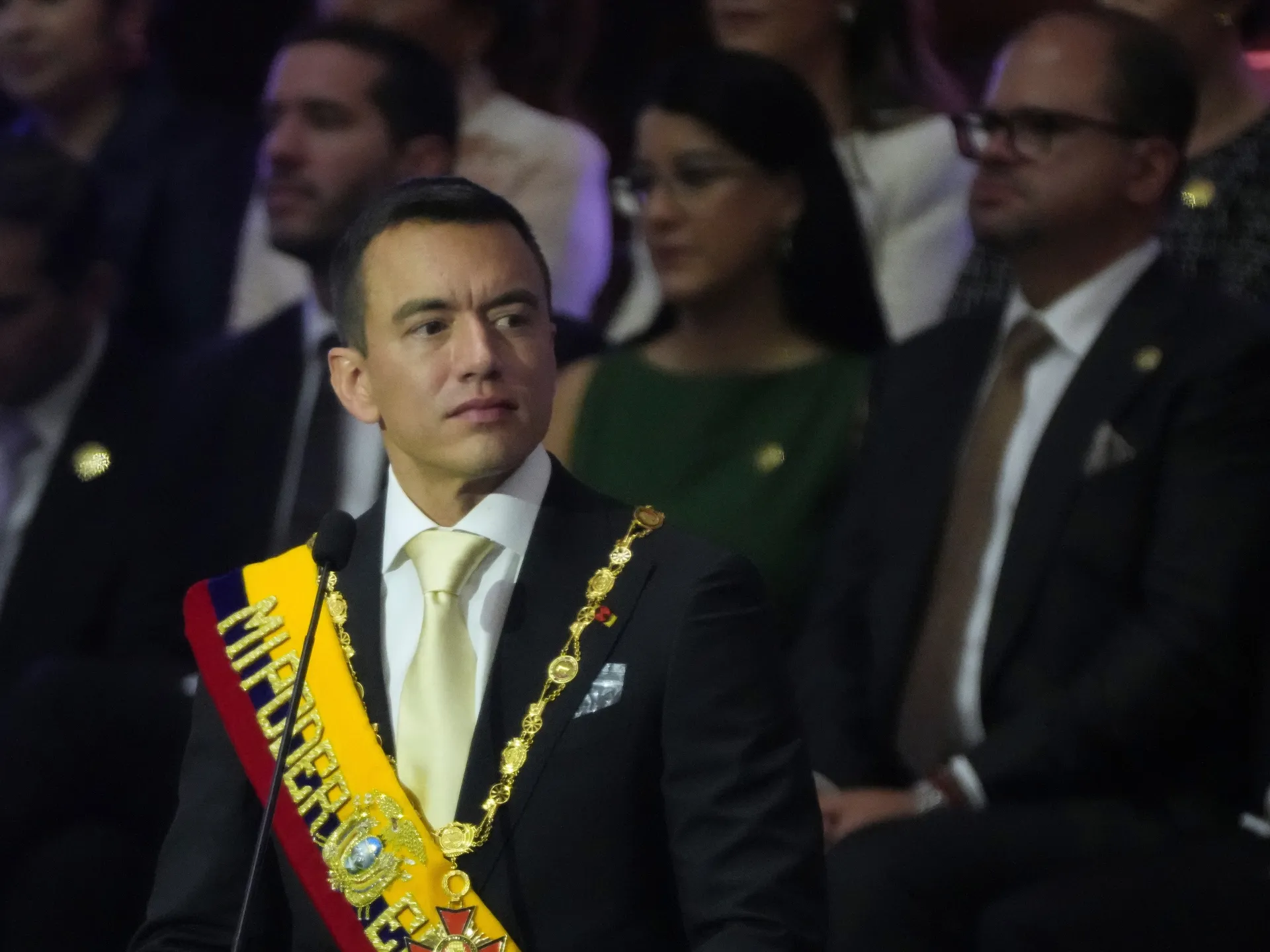
Ecuadorian President Daniel Noboa delivered his State of the Union address to the National Assembly in Quito on Sunday, framing the extradition of high-profile criminals as a central pillar of his administration’s security policy. Addressing lawmakers, Noboa pledged to “seek them out, find them and extradite them,” citing the removal of a dozen crime bosses to the United States and the seizure of nearly 300 tonnes of drugs as evidence of his administration’s effectiveness.
The President argued that national development is impossible while citizens live in fear, highlighting a joint military operation earlier this year with US forces against a training camp allegedly used by Colombian drug traffickers. The operation, which involved drones, helicopters, and boats, was presented as part of a decisive strategy to dismantle organised crime networks that have exploited Ecuador’s geographic position between Colombia and Peru.
Noboa, who was re-elected last year to a four-year term following a 2023 snap election triggered by former President Guillermo Lasso, also reported significant economic improvements. He stated that overall poverty fell from 26 per cent to 21.4 per cent in 2025, while extreme poverty decreased from 10.4 per cent to 8.4 per cent. These figures were used to bolster his case for the continuation of his current governance model.
However, the President’s approach has drawn sharp criticism from civil society and international observers. Noboa has relied on a state of exception to permit the military to conduct joint patrols with police and carry out property searches without warrants. Critics argue that these iron-fisted measures have not sufficiently reduced violence and have instead endangered civilians.
Glaedys Gonzalez, an analyst for the Andean region at the International Crisis Group, challenged the President’s optimism during the address. She stated that progress on violence reduction is “far from being achieved” and noted that the situation in Ecuador has reached “unprecedented levels.” This assessment contrasts with official data from the Ministry of the Interior, which recorded approximately 50 murders per 100,000 residents last year, the highest homicide rate in decades.
Since 2021, Ecuador has struggled to contain drug-related violence as rival cartels partner with local gangs to control smuggling routes and coastal ports. The spike in homicides during the COVID-19 pandemic has entrenched organised crime as the leading concern for Ecuadorians this decade. Despite the government’s claims of success, the International Crisis Group warned that Noboa’s methods have failed to address the underlying security crisis.