Nikkei 225 breaks 68,000 as AI infrastructure spending drives market rally
The Nikkei 225 rose nearly 3 per cent to surpass 68,000 for the first time, contributing to a year-to-date gain of nearly 33 per cent in 2026 as demand for high-end chips and a weak yen fuel investor enthusiasm.
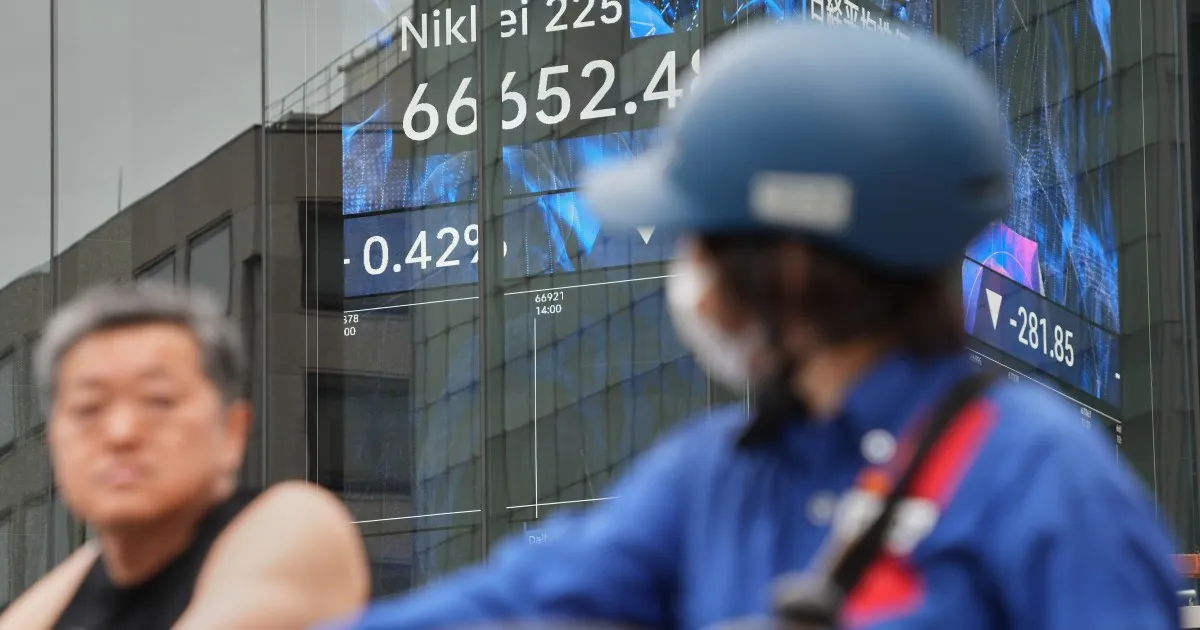
Japan’s stock market has reached an all-time high as a global buying frenzy centred on artificial intelligence shows no signs of abating. The Nikkei 225 benchmark index rose nearly 3 per cent on Wednesday, lifting the benchmark above 68,000 for the first time. This latest surge contributes to a year-to-date gain of nearly 33 per cent in 2026, reinforcing the strength of Asian equity markets amid sustained investor enthusiasm for the sector.
Semiconductor-related firms led the gains, benefiting from strong demand for high-end chips and a weak yen. Tokyo Electron, Japan’s largest manufacturer of semiconductor equipment, soared as much as 14 per cent in morning trading. Advantest, which supplies testing equipment to the industry, rose more than 5.5 per cent, while Shin-Etsu Chemical, a supplier of silicon wafers used in integrated circuits, gained about 4 per cent.
The rally mirrors record highs in the United States, South Korea, and Taiwan, where major tech firms are committing hundreds of billions to AI infrastructure. Ferocious demand for AI chips has driven these global markets to new peaks, with three memory chip makers—South Korea’s SK Hynix and Samsung Electronics, and US-based Micron—entering the elite club of firms with a market capitalisation of at least $1 trillion during the past month.
Despite concerns among some investors regarding the sustainability of sky-high valuations, technology companies continue to outline massive investment plans. US tech giants are expected to spend about $800bn on AI-related capital investment in 2026, according to Goldman Sachs. Google parent company Alphabet recently announced it would sell $80bn worth of shares to help fund expected capital expenditures of $180bn to $190bn in 2026.
In a contrasting move, Softbank fell approximately 3 per cent after overtaking auto giant Toyota on Monday to become Japan’s largest company by market capitalisation. Softbank, which is heavily invested in AI models, chips, and data centres, saw its shares decline despite its recent milestone. Khoon Goh, head of Asia research at ANZ, noted that while strong demand has rallied top semiconductor companies in Taiwan and South Korea, Japanese markets are also receiving tailwinds from the weak yen.
Only 17 companies globally have hit the $1 trillion market capitalisation milestone, all but five of which are based in the United States. The trend underscores the structural shift in global capital allocation towards AI infrastructure, with Japan’s semiconductor supply chain playing a central role in the broader economic narrative.