Nigeria’s jet fuel export boom leaves domestic airlines struggling
As the Dangote refinery becomes Europe’s primary source of aviation fuel, Nigerian carriers face soaring costs and debt amid a fully deregulated market that prioritises international buyers.
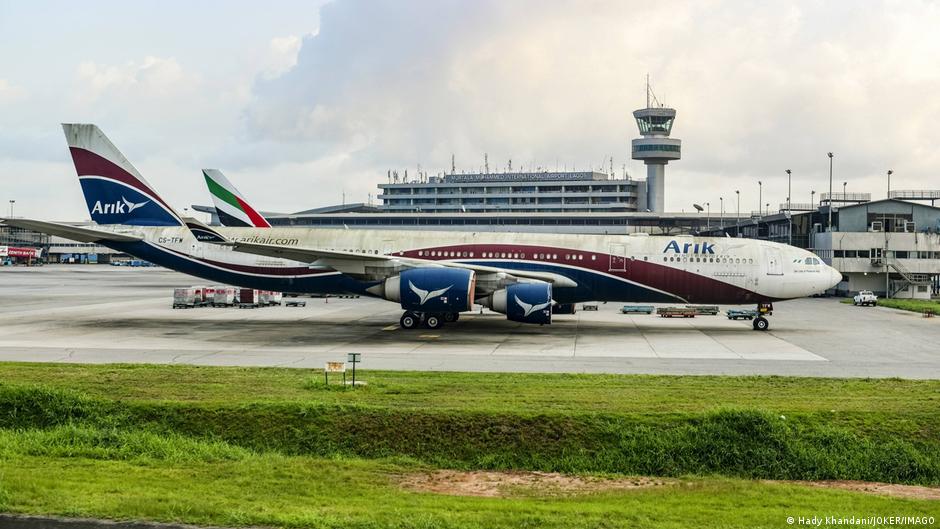
Nigeria has overtaken the United States to become Europe’s largest supplier of jet fuel, a structural shift driven by the closure of the Strait of Hormuz and ongoing supply disruptions linked to the Iran war. According to trade intelligence firm Kpler, Europe now relies on imports of roughly 700,000 barrels per day to meet aviation demands, with the 650,000 barrel-per-day Dangote refinery outside Lagos emerging as a critical node in this new supply chain.
The refinery, owned by Aliko Dangote, is currently producing a record volume of approximately 24 million litres of jet fuel per day. This output has helped stabilise European aviation, which had previously faced acute shortages. In April, International Energy Agency head Fatih Birol warned that Europe had only "maybe six weeks or so" of jet fuel supplies remaining, a concern that materialised in temporary restrictions at four northern Italian airports, including Bologna and Venice, where short-haul fuel use was capped at 2,000 litres per aircraft.
However, this export success has come at a significant domestic cost. Nigeria operates a fully deregulated downstream market where the Dangote refinery prices products based on international parity rather than preferential domestic rates. As a result, fuel flows to the highest-paying international buyers, leaving local airlines to compete with larger global entities that possess greater purchasing volume and negotiating power.
Domestic operators have accrued over 60 billion Naira, or approximately $45 million, in debt to sustain operations. Many have been forced to cut routes and raise ticket prices, while jet fuel prices have surged from roughly 900 Naira per litre before the conflict to a current minimum of 1,600 Naira. The situation is further complicated by the abolition of government subsidies and crude-backed loans from Nigeria’s state oil company, which require the refinery to import crude rather than utilise domestic reserves.
Analysts suggest that the core issue is not merely supply, but the logistics and distribution costs incurred between the refinery gate and the airport. Energy analyst Charles Victor noted that storage, coastal shipping, and multiple intermediaries add significant layers of cost, arguing that the problem is what happens to the price on the way to the aircraft.
Proposed solutions include reserving a specific metric tonnage of fuel for Nigerian airlines each month to be sold directly and equitably, potentially stabilising wholesale prices around 1,200 Naira per litre. While the Dangote refinery was originally built to transform Nigeria into a net exporter of refined products, the current global crisis may leave that long-term strategic goal as a distant prospect.