Nigeria and US announce killing of ISIL-linked commander in Borno state
Experts warn that tactical gains may be offset by the group’s decentralised structure and the region’s ransom economy.
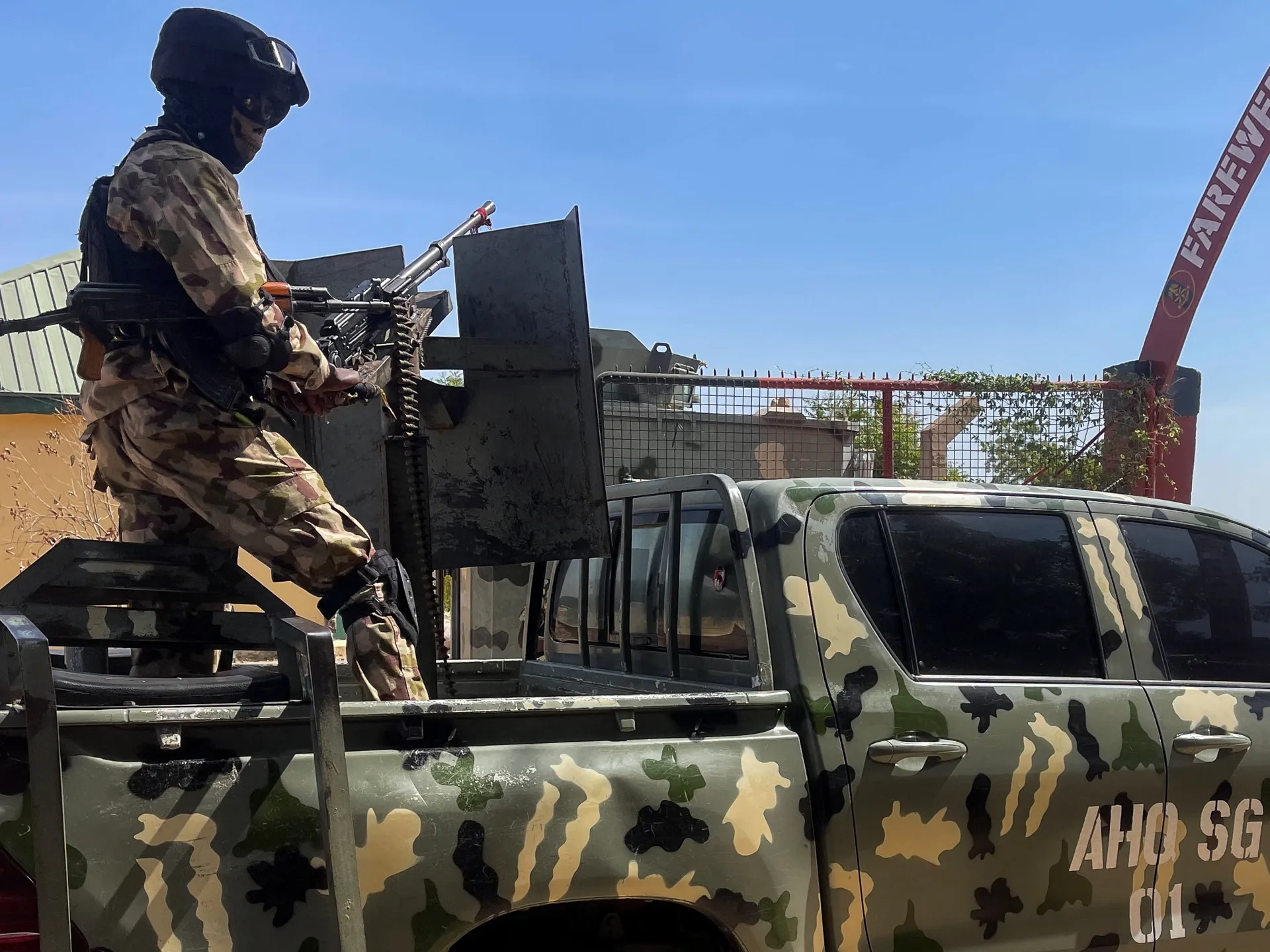
Nigerian President Bola Tinubu and US President Donald Trump have confirmed the killing of Abu-Bilal al-Minuki, described as the second-in-command of ISIL, during a joint military operation in Borno state. The strike, characterised by the Nigerian army as a precision air-land operation, occurred in Metele within the Lake Chad Basin between midnight and 4am on Saturday. Al-Minuki, also known as Abu-Mainok, was killed alongside several of his lieutenants at his compound.
The operation follows an initial announcement by President Trump via social media on Friday, which did not disclose specific operational details. President Tinubu subsequently provided further confirmation in a statement on Saturday, detailing the removal of what the Nigerian army termed a "critical node" for global ISIL coordination. The army stated that al-Minuki had overseen operations across the Sahel and West Africa, including attacks against minority communities and the 2018 kidnapping of schoolgirls in Dapchi.
Al-Minuki, a former Boko Haram leader who pledged allegiance to ISIL in 2015, had been subject to US sanctions since 2023. His death is viewed as a significant disruption to the Islamic State West Africa Province (ISWAP), which has recently intensified attacks along the Nigeria-Cameroon border. The Nigerian government has welcomed the partnership with the US, noting that dozens of American troops have been deployed to the country recently to provide intelligence sharing and technical support for counter-terrorism efforts.
Despite the tactical success, analysts caution that the strategic impact may be limited by ISWAP’s decentralised command structure. Cheta Nwanze of SBM Intelligence noted that the group’s resilience was evident when al-Minuki was previously declared killed in 2024. Nwanze highlighted that the group’s capabilities remain tied to a growing "ransom economy" in Nigeria, which generated approximately $1.66 million between July 2024 and June 2025, suggesting that eliminating a single commander may not disrupt the underlying economic logic fueling the insurgency.
Alex Vines from the European Council on Foreign Relations described the killing as a tactical win for the Tinubu administration but warned it would not be strategically decisive on its own. He noted that the operation reinforces Nigeria’s importance as a key security partner for the US, improving bilateral relations. However, Mubarak Aliyu, a political and security risk analyst, emphasised that broader governance reforms remain fundamental to addressing the long-term security challenges in the region.