NIES study links clothing colour to heatstroke risk as Japan faces extreme temperatures
The National Institute for Environmental Studies has released findings from an experiment designed to identify optimal clothing choices for heat avoidance, as temperatures exceed 40 degrees Celsius across multiple Japanese regions.
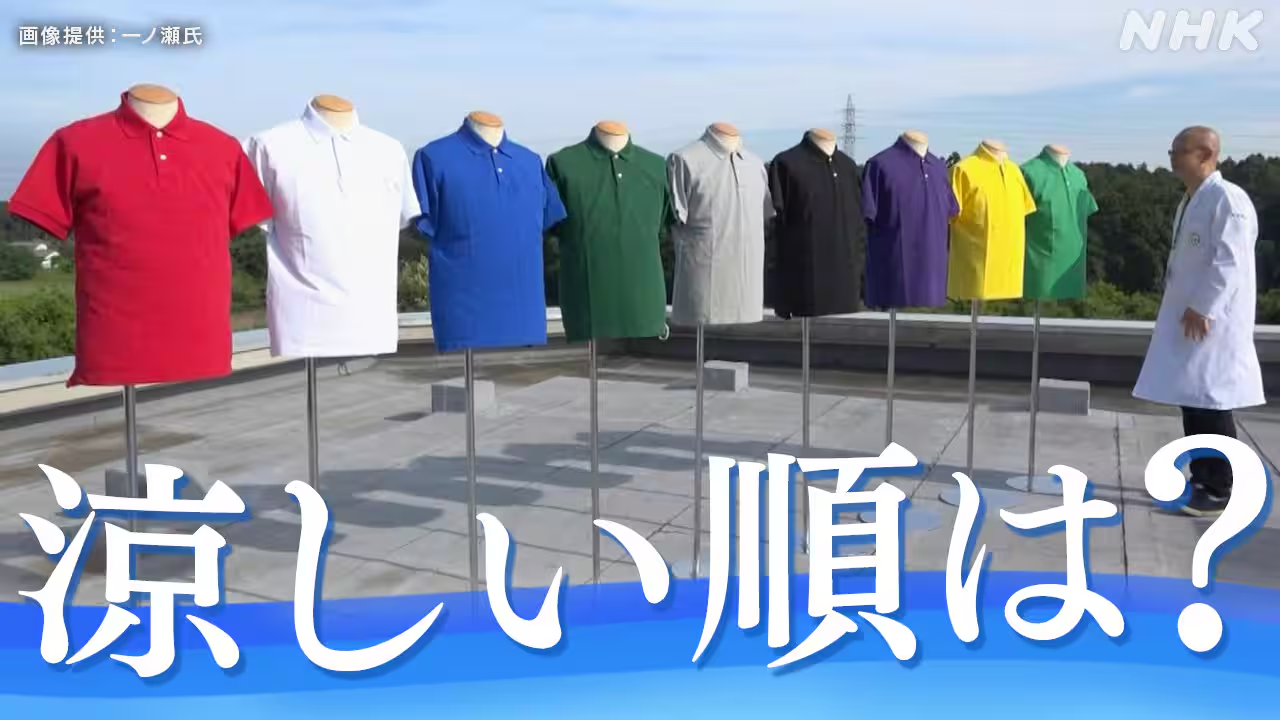
The National Institute for Environmental Studies (NIES) in Japan has released findings from an experiment conducted to identify the most effective clothing colours for heat avoidance. The study tested nine different colours made from identical materials and sizes to measure surface temperature differences. The results were published on 23 July 2026, coinciding with a period of extreme heat across Japan where temperatures exceeded 40°C in several regions, including Shizuoka.
This heatwave has led to significant health impacts, with 453 people suspected of suffering from heatstroke transported to hospitals in Tokyo on 22 July, marking the highest number since 2010. The Japan Meteorological Agency defines a "hot day" as one where the maximum temperature reaches 30°C or higher, a threshold currently surpassed in multiple prefectures.
The NIES experiment specifically analysed the surface temperature of clothing made from identical materials and sizes but in nine different colours. The research indicates that clothing colour selection is a critical factor in managing body temperature and preventing heatstroke during days with temperatures above 40°C. The results were reported by NHK News Japan on 23 July 2026 at 16:30.
Temperatures have reached extreme levels, with Hamamatsu in Shizuoka Prefecture recording 41.1°C on 23 July 2026. Other areas in the Tokai region have also experienced "boiling heat days," prompting warnings for strict vigilance against heat-related illnesses. The study underscores the importance of public health measures and individual behavioural adjustments during such meteorological events.
While the specific ranking of which colours were coolest or hottest is not fully detailed in the provided excerpt, the core finding emphasises that selecting the correct clothing colour is a key factor in managing body temperature. The experiment provides a scientific basis for public health guidance during periods of intense thermal stress.
The timing of the report aligns with broader political and social discussions in Japan, including constitutional amendment talks by the LDP and Komeito, and legal issues involving a football player. However, the immediate focus remains on the public health crisis driven by the extreme weather conditions.
The Japan Meteorological Agency continues to monitor the situation, with heavy rain expected from Typhoon No. 6 in regions from Kyushu to the Kanto and Chubu areas. The interplay between extreme heat and subsequent weather patterns highlights the complexity of disaster risk management in the region.