NHK uncovers former ruling party records on Education Basic Law amendment
Broadcast giant obtains documents detailing discussions between politicians and MEXT officials as law marks two-decade milestone
NHK has obtained internal minutes from consultations held by the former ruling party regarding the amendment of the Education Basic Law, coinciding with the 20th anniversary of its revision and implementation. The acquisition of these documents provides a renewed look into the legislative process that reshaped Japan’s educational framework two decades ago.
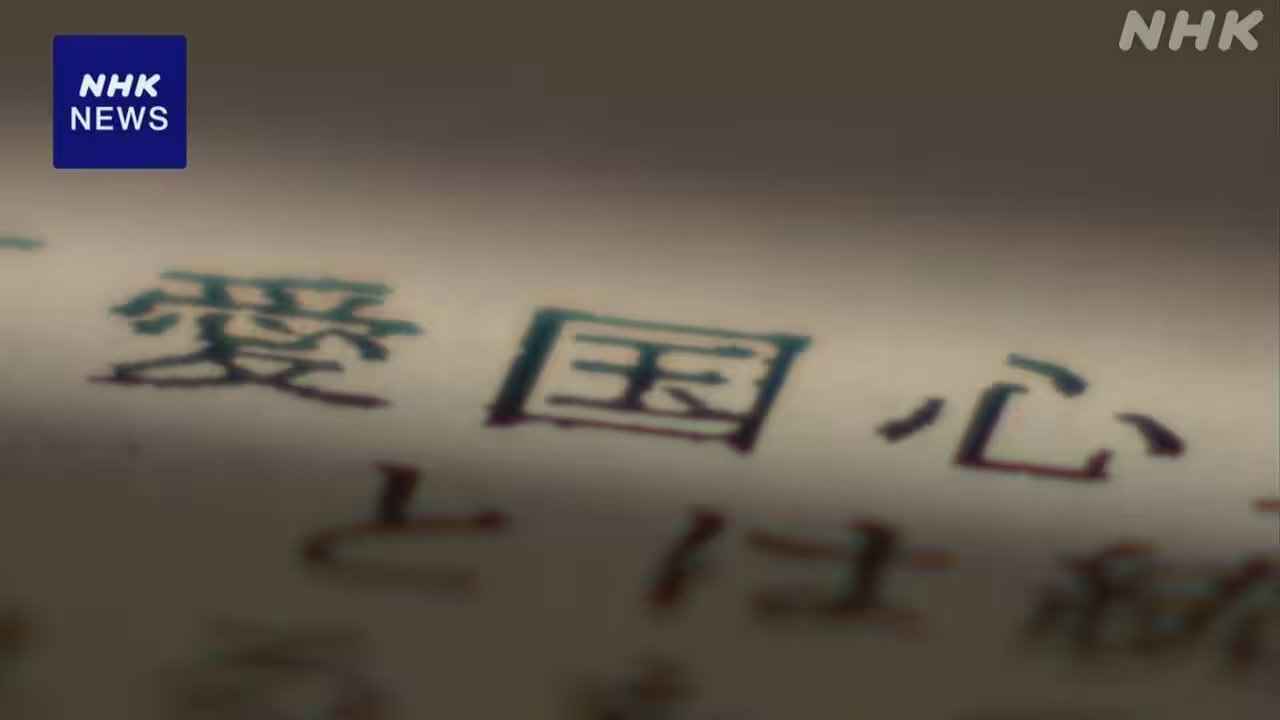
The 2006 amendment to the Education Basic Law, often referred to as the "constitution of education," was a subject of significant political contention. The most contentious aspect of the revision was the debate over whether to explicitly include "patriotism" (ai kokushin) as a formal educational objective, a move that sparked widespread public and political discussion at the time.
The records secured by NHK pertain to deliberations involving former ruling party politicians and officials from the Ministry of Education, Culture, Sports, Science and Technology (MEXT). These documents outline the internal consultations that took place as the government moved to formalise the changes to the foundational education statute.
The news report was published on 25 June 2026, marking exactly two decades since the law’s enactment. The timing of the disclosure has drawn attention to the historical context of the policy shift and the specific arguments that were weighed behind closed doors during the legislative process.
While the full contents of the minutes have not been fully detailed in the initial report, the existence of these records confirms the extent of engagement between political leaders and the ministry during the amendment phase. The documents serve as a primary source for understanding the institutional decision-making that led to the current educational guidelines.
The revelation comes as the nation reflects on the impact of the 2006 changes. The inclusion of nationalistic sentiments in educational goals remains a sensitive topic in Japanese politics, and the newly obtained minutes offer a factual basis for examining how that policy direction was negotiated.
NHK’s acquisition of these files highlights the ongoing interest in the transparency of educational policy formulation. As the 20th anniversary is observed, the records provide a concrete reference point for analysing the evolution of Japan’s approach to civic education and national identity.