NFL shifts strategy as Rams and Patriots execute June 1 blockbuster trades
General managers leverage salary cap rules to reshape rosters, signalling a broader league trend toward frequent high-value player movement.
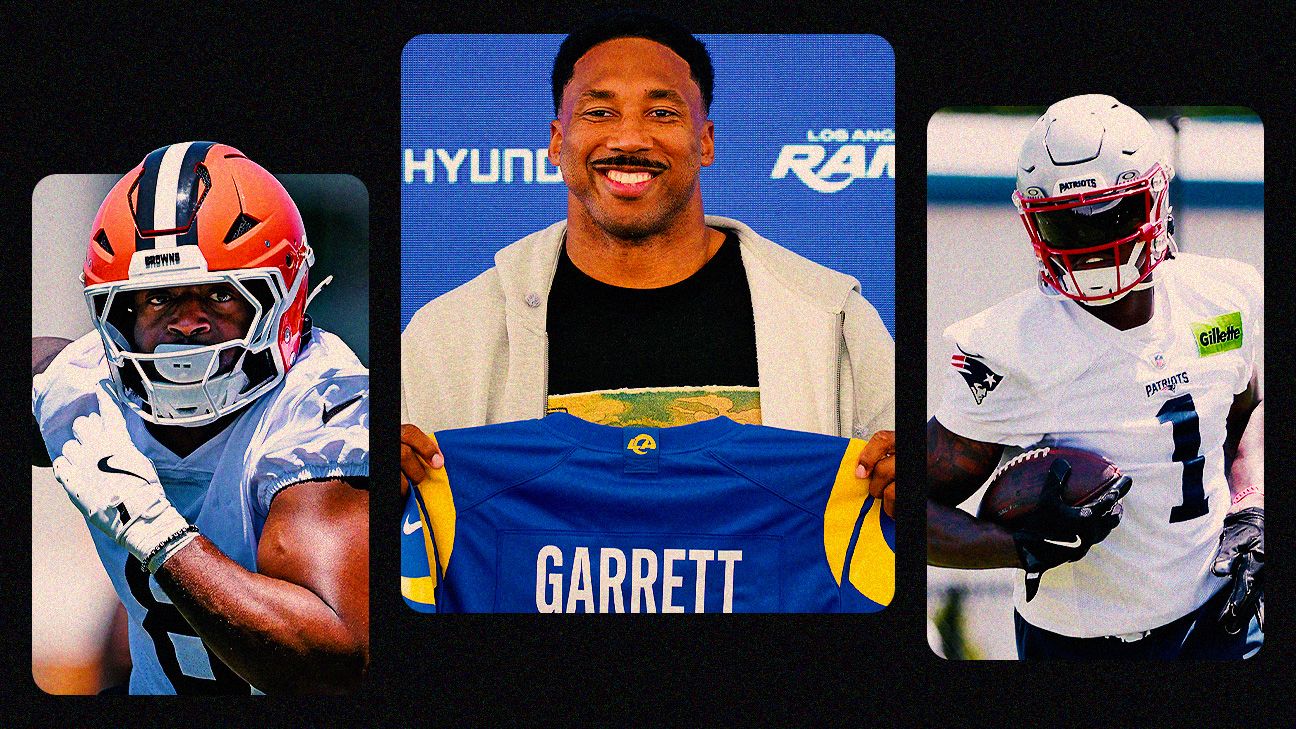
The National Football League witnessed a significant structural shift on June 1, as the Los Angeles Rams and New England Patriots finalised major trades hours apart, utilising specific salary cap regulations to reshape their respective rosters. The Los Angeles Rams acquired defensive end Myles Garrett from the Cleveland Browns, sending edge rusher Jared Verse and a package of future draft selections to Cleveland. Simultaneously, the New England Patriots acquired wide receiver A.J. Brown from the Philadelphia Eagles, sending a 2028 first-round pick in return. Both transactions were executed under the NFL’s June 1 salary cap rule, which permits teams to prorate a player’s dead salary cap hit over two years, thereby reducing the immediate financial burden on the trading entities.
The Rams’ acquisition of Garrett, the reigning NFL Defensive Player of the Year, involved Verse, a 2027 first-round pick, a 2028 second-round pick, and a 2029 third-round pick. General manager Les Snead described the move as the culmination of months of negotiation, noting that the Rams viewed Garrett as a definitive asset capable of affecting games on Sundays. The deal required Garrett to waive a no-trade clause, a step he took after discussions with Rams leadership, though the team declined to speak with him directly to avoid jeopardising the agreement.
In Boston, head coach Mike Vrabel secured his long-coveted target in Brown, a former player under his tenure with the Tennessee Titans. The Patriots’ strategy centred on maximising the window for quarterback Drake Maye, who is in the third year of a rookie contract. By acquiring Brown and releasing Stefon Diggs earlier in the offseason, New England aimed to bolster its passing game while managing cap space. Brown, who cited a desire to be a central part of a winning offence, described his arrival in Foxborough as a positive step, noting the strong personal connection with Vrabel.
Philadelphia’s decision to trade Brown was driven by a desire to reset team chemistry and move forward with quarterback Jalen Hurts. The Eagles leveraged the June 1 deadline to save approximately $27 million in dead salary cap space for the current year. General manager Howie Roseman defended the return, emphasising the value of securing two first-round picks in 2028, which provided significant future flexibility. The Eagles had previously explored trade options for Brown but found the Patriots’ offer of a single first-round pick in 2028 to be the most viable path forward after initial asking prices were deemed too high.
Cleveland’s general manager Andrew Berry characterised the trade for Garrett as a necessary strategic pivot, prioritising short- and long-term benefits alongside the acquisition of a young, cost-controlled player at a premium position. Berry noted that the inclusion of Verse, a two-time Pro Bowler, was the decisive factor in finalising the deal. The transactions reflect a broader league trend where general managers are increasingly willing to trade premier talent, viewing high-salary players as potential sunk costs if relationships deteriorate. This shift marks a departure from previous norms, with teams more readily engaging in high-profile moves to address immediate competitive needs.
The execution of these deals on a date traditionally associated with accounting adjustments has been interpreted as a new engagement strategy for the league. Sources indicate that the success of these trades, alongside other recent high-profile moves involving players such as Micah Parsons and Sauce Gardner, suggests a future where blockbuster transactions become more frequent. The NFL’s summer landscape is now defined by this increased willingness to redistribute talent, with teams across the league adapting their strategies to capitalise on the evolving market dynamics.