Nepal shifts to reconstruction as thousands remain missing after floods
Nepal faces an estimated $4.78 billion rebuilding bill as recovery teams continue searching for missing people and the government seeks international climate finance.
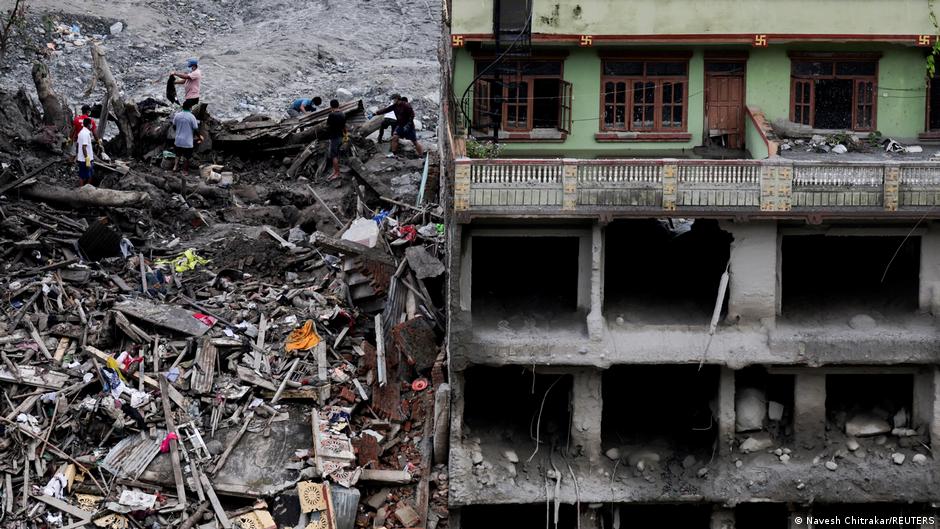
Nearly three weeks after flash floods struck the Bhotekoshi–Trishuli river corridor near the Chinese border, Nepal is moving from rescue operations towards relief and reconstruction. Nepali authorities report that 1,386 bodies have been recovered across five affected districts, while more than 5,130 people remain missing.
Searches are continuing in submerged tunnels and along riverbanks, but destroyed roads and bridges have restricted access. The missing figure includes 587 foreign nationals and about 900 hydropower and energy workers, although their status is not independently detailed.
The floods destroyed settlements and more than a dozen hydropower facilities, while roads, bridges, energy networks, transport infrastructure and academic facilities were also damaged. A preliminary rapid damage and needs assessment places reconstruction requirements at about 723.3 billion Nepalese rupees, or $4.78 billion.
Nearly two-thirds of the estimated funding is expected to be directed towards energy and transport networks and academic facilities. India has approved power exports to Nepal for 18 hours a day until at least 31 December, according to Reuters as cited by Deutsche Welle.
Nepal has formally approached the UN Framework Convention on Climate Change-backed Loss and Damage Fund for assistance, while planning to rebuild infrastructure to withstand future disasters. The government also says affected people will be resettled near their original homes, with financial assistance provided according to household size.
The scale of the recovery is sharpening Nepal’s argument for international climate responsibility. Prime Minister Balendra Shah is scheduled to address the United Nations General Assembly on 24 September. Scientists cited by Deutsche Welle cautioned that the specific flood cannot be attributed to global warming without detailed study, while noting that rising temperatures are accelerating glacial melt across the Himalayas.