Near-constant activity continues at Shivelyuch volcano in Russia
The Kamchatka Volcanic Eruption Response Team reports an ongoing explosive-extrusive eruption accompanied by powerful gas-steam activity on 23 April 2026.
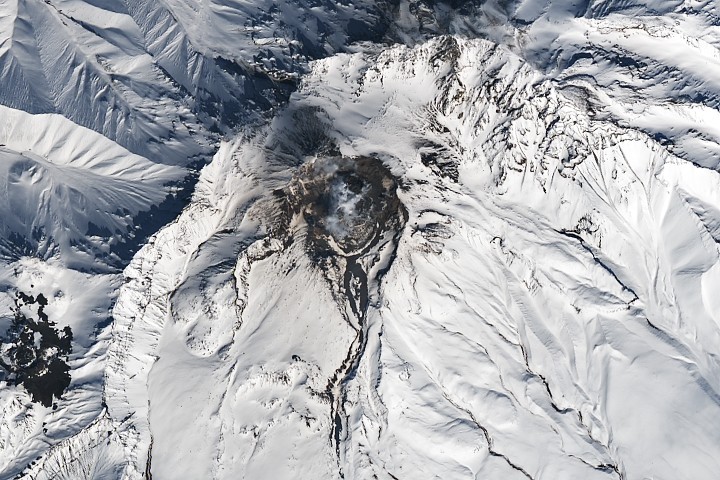
Near-constant activity continues at Shivelyuch, the most northerly active volcano on Russia's Kamchatka Peninsula. On 23 April 2026, the Kamchatka Volcanic Eruption Response Team (KVERT) confirmed an explosive-extrusive eruption accompanied by powerful gas-steam activity. Satellite imagery from Landsat 9 captured the scene on the same day, highlighting a multi-lobed lava dome actively growing within the horseshoe-shaped caldera.
The growing lava dome appears as a dark patch against the late-spring snow cover, creating visible contrast in the landscape. This activity has generated thermal anomalies, hot avalanches, and debris flows that are visibly melting the surrounding snowpack. The debris slides through structures radiating outward from the caldera, which volcanologists describe as avalanche chutes and lahar channels.
Shivelyuch is one of the world's most active volcanoes, frequently producing ash deposits and pyroclastic flows. Lava domes at the site cycle through periods of growth and collapse, with collapses often triggering block-and-ash flows that travel down specific chutes. These flows contain coarse, blocky chunks of cooled volcanic rock along with powdery ash and soil, creating thick deposits that can retain heat for months or even years.
Geologists note that deposits from previous eruptions can maintain warmth long after the initial event, contributing to prolonged snow melt. An unusually large eruption and flank collapse in April 2023 sent pyroclastic flows tens of kilometres down the mountain, destroying forests and leaving visible deposits near the foot of the mountain that are still present today.
The current activity leaves dark channels and exposed patches that stand out against the white snow. Satellites have regularly detected thermal anomalies within the caldera and near the growing lava dome in recent months, as well as warm land surface temperatures along the network of channels.
NASA's Earth Observatory brought this imagery to light, using data from the U.S. Geological Survey to document the ongoing geological processes at this dynamic site. The image serves as a reminder of the persistent energy released by one of the planet's most restless volcanic systems.