National Trust initiates conservation overhaul for Dorset’s Cerne Abbas Giant
As specialists re-chalk the 55-metre hill figure, the National Trust highlights the need for adaptive management in response to changing weather patterns and accelerated erosion.
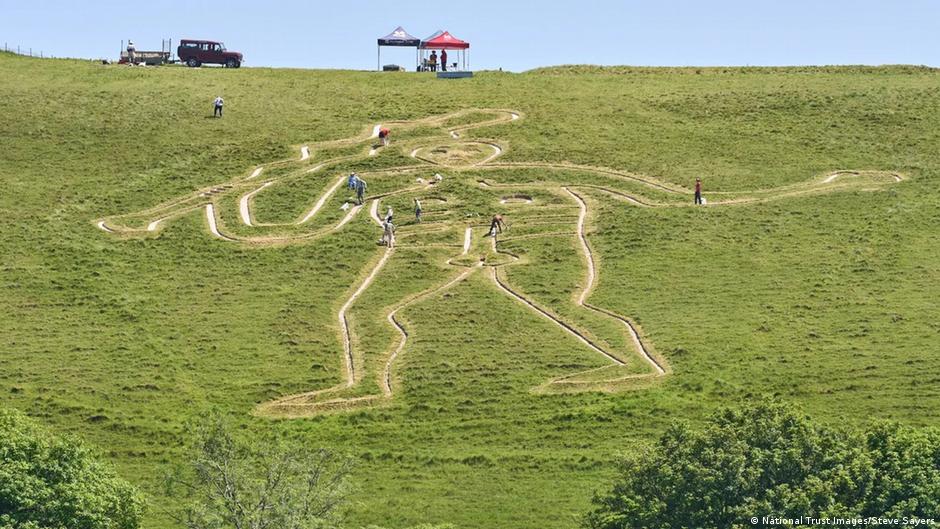
The National Trust has commenced the annual re-chalking of the Cerne Abbas Giant, a 55-metre Saxon-era chalk figure carved into a hillside in Dorset, southwest England. Specialists, volunteers, and staff are utilising approximately 17 metric tons of fresh chalk to restore the outline, a process carried out roughly once a decade to counteract fading caused by erosion and weather exposure. The operation follows the charity’s recent acquisition of 130 hectares of surrounding land, funded by a public appeal that raised £300,000.
Luke Dawson, Lead Ranger for the National Trust at West Dorset and Cranborne Chase, emphasised that the maintenance relies on techniques unchanged for generations. Rangers carefully dig out older material and pack in fresh chalk by hand on the steep slope to keep water out and weeds at bay. Dawson noted that while the method remains traditional, the environmental context is shifting, with rangers observing algae growth that dulls the bright white outline.
“We can’t say for certain what’s driving that, but warmer, wetter conditions may be a factor and it’s something we’re continuing to investigate,” Dawson said. He added that more intense rainfall is increasing water run-off, which gradually wears away the chalk. Consequently, the Trust is planning further monitoring to understand these impacts and is considering the possibility of more frequent re-chalking to maintain visibility.
The re-chalking effort is part of a broader conservation strategy following the purchase of the surrounding landscape, which includes species-rich chalk grassland and a Site of Special Scientific Interest. Hannah Jefferson, the National Trust’s general manager for the region, stated that the work feels especially meaningful given the recent land acquisition. The purchase was championed by Sir Stephen Fry and completed within a week of the public appeal reaching its target, allowing the charity to protect not just the figure but the broader archaeological landscape.
Historical context for the Giant has evolved significantly in recent years. A 2021 study commissioned by the National Trust dated the first carving to the late Saxon period, between 700 and 1100 AD, challenging earlier theories that ranged from Roman depictions of Hercules to 17th-century satirical portrayals of Oliver Cromwell. Steve Timms, a National Trust archaeologist, noted that protecting the surrounding land offers new opportunities to explore how people moved through and understood this part of Wessex over thousands of years.