NASA’s Webb Telescope Reveals Ancient Origin of Interstellar Comet 3I/ATLAS
New analysis of the comet’s composition indicates formation in a cold, dense cloud during the universe’s “cosmic noon,” offering rare insights into prebiotic chemistry outside our solar system.
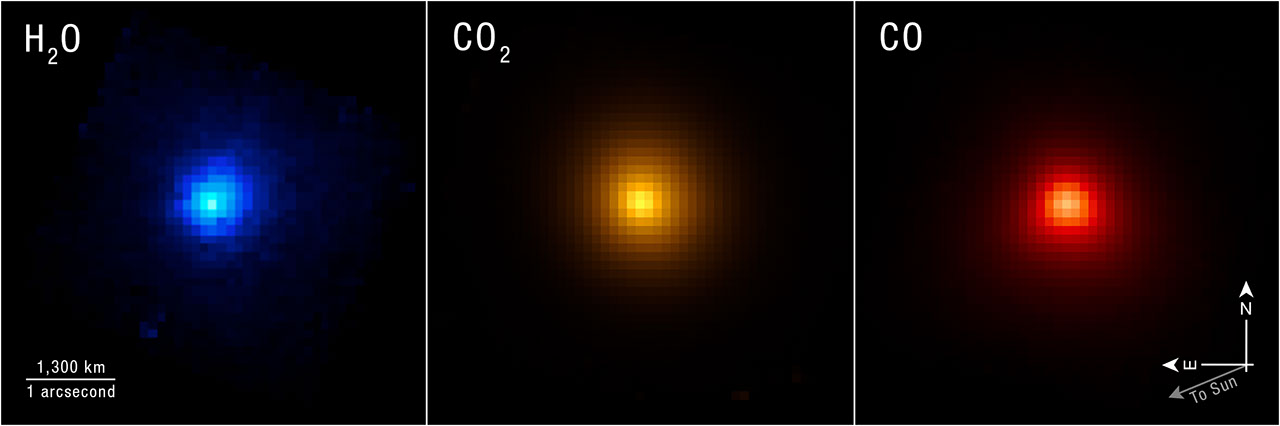
Astronomers using NASA’s James Webb Space Telescope have identified chemical signatures in interstellar comet 3I/ATLAS that point to an ancient origin, potentially dating back 10 to 12 billion years. The findings, published in the journal Nature on June 22, suggest the comet predates our own solar system, which formed approximately 4.5 billion years ago. The observations provide new context for the conditions in which the earliest stars and planetary bodies formed in the galaxy.
The analysis was conducted as 3I/ATLAS moved away from the Sun in December 2025. The comet had recently passed its closest point to the Sun, causing its ancient ice to sublimate into a bright coma of gas that was ideal for spectroscopic study. Researchers utilised the telescope’s Near-Infrared Spectrograph, or NIRSpec, to capture detailed measurements of the comet’s chemical components, specifically focusing on isotopic ratios that differ significantly from those found in local comets.
The data revealed exceptionally high levels of deuterium, a heavy isotope of hydrogen. The concentration of deuterium in 3I/ATLAS was found to be approximately 30 times higher than that observed in solar system comets. This abundance implies that the material forming the comet was incorporated into its structure in a very cold environment, where it was exposed to radiation but not long-term warmth that would have reprocessed the heavy water ice into the lighter H2O ice common in our solar system.
Additionally, the spectrograph detected only trace amounts of carbon-13 compared to the lighter carbon-12. In stellar systems, carbon-13 enrichment occurs over time as successive generations of stars are born and die. The low ratio of carbon-13 in 3I/ATLAS indicates that it formed early in the galaxy’s history, before significant enrichment had taken place. The research team estimates the comet likely formed during the universe’s “cosmic noon,” a period of peak star formation, within a cold, dense cloud.
A separate study led by the European Southern Observatory’s Very Large Telescope complemented these findings by analysing cyanide compounds, providing further data on the comet’s carbon and nitrogen varieties. Martin Cordiner of NASA’s Goddard Space Flight Center, the lead author of the study, described the event as a unique opportunity to study an object from a distant time and place. He noted that the results help scientists understand how unusual our own solar system may be in the broader context of the galaxy.
Stefanie Milam, a co-author of the study and astrochemist at NASA Goddard, emphasised the broader implications for understanding the distribution of life’s ingredients. She stated that while Earth remains the only known location where chemical ingredients have led to life, the analysis of interstellar objects is a major step towards determining how common or uncommon the conditions for the evolution of life are in the universe.
The James Webb Space Telescope is an international programme led by NASA, with partners including the European Space Agency and the Canadian Space Agency. The telescope continues to serve as a premier observatory for solving mysteries in our solar system and probing the origins of the universe.