NASA’s subscale flight lab accelerates aerospace innovation with small drones
From wildfire monitoring in Alabama to supersonic parachute testing for Mars landings, NASA’s subscale aircraft programme is reducing risk and accelerating the transition from concept to full-scale flight.
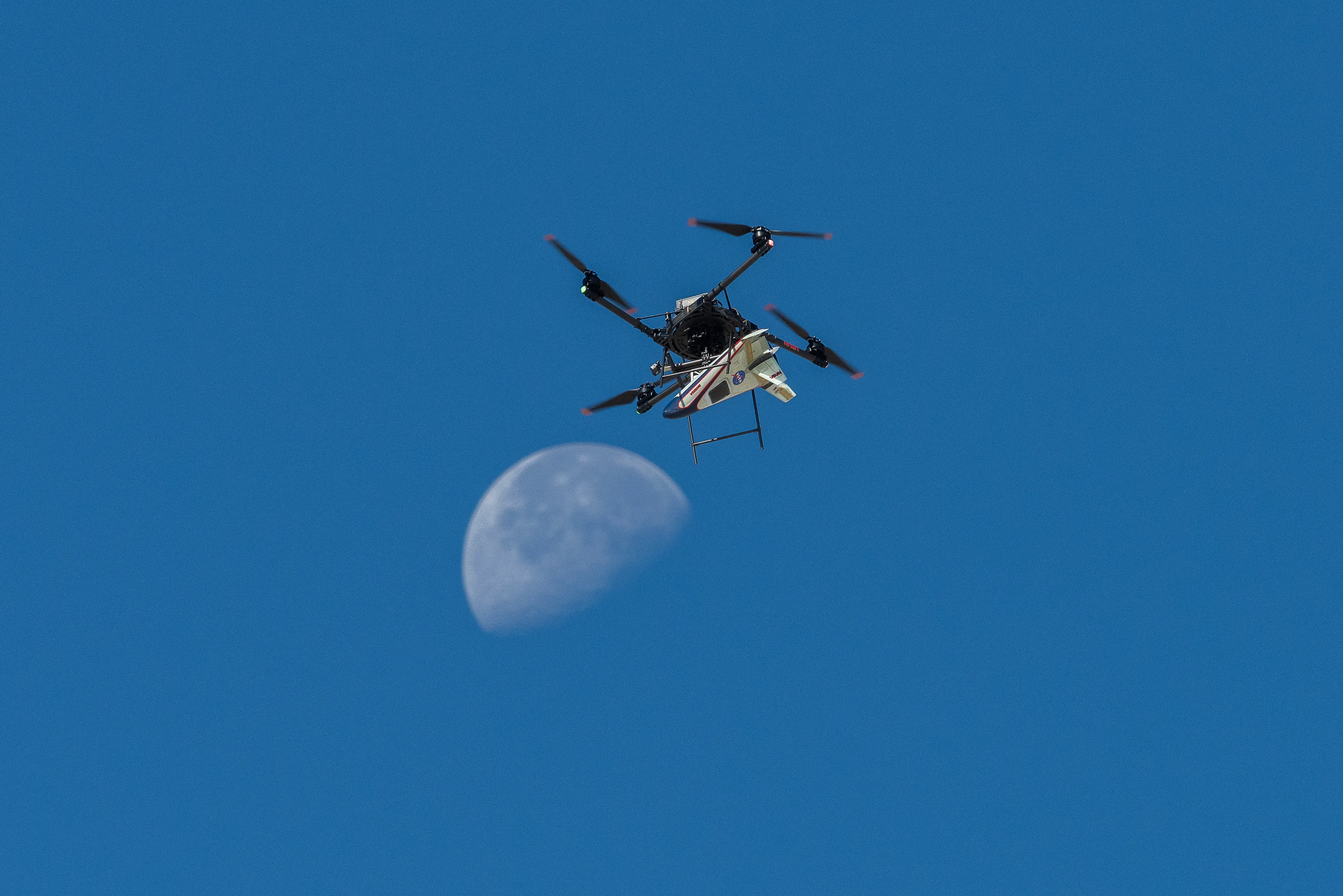
NASA’s Dale Reed Subscale Flight Research Laboratory at the Armstrong Flight Research Centre in Edwards, California, is utilising small, remotely piloted and autonomous aircraft to test aerospace concepts, reduce risk, and accelerate innovation. The facility employs platforms such as the Alta-X quadrotor, the Dryden Remotely Operated Integrated Drone (DROID), and the Multi-Use Cub to support diverse missions, including wildfire monitoring in Alabama, supersonic parachute testing for Mars landings, and the development of automatic collision avoidance technology.
The laboratory supports rapid prototyping and fabrication to mature aeronautics and exploration technologies, facilitating smoother transitions from concept to full-scale flight. Staff members serve as experienced and certified subscale aircraft pilots, prepared to fly unique or modified commercial aircraft wherever the mission requires. The facility also integrates rapid design and testing capabilities, including 3D manufacturing and composite fabrication, to transform promising ideas into flight-ready test structures.
Recent missions have demonstrated the versatility of these platforms. The FireSense project involved flights in Geneva State Forest, Alabama, where an Alta-X drone gathered localized weather data to influence wildfire decision-making. Laboratory staff integrated the instrument onto the drone and operated it during the mission to demonstrate how remotely piloted aircraft can gather data that influences smoke movement and fire behaviour.
Other missions occur closer to NASA Armstrong, such as the Enhancing Parachutes by Instrumenting the Canopy (EPIC) project. EPIC involved air-launching a capsule containing a parachute and flexible sensor from the Alta-X to study supersonic parachutes for Mars landings. These tests demonstrated that a flexible sensor could help researchers study supersonic parachutes, potentially filling gaps in computer models to make them safer and more reliable.
NASA and its partners have also advanced Automatic Collision Avoidance Technology for decades. NASA Armstrong developed a simplified version, the Automatic Ground Collision Avoidance System, installed on the DROID for testing. The system performed well and led to further research toward a version that provides alerts and steering cues. The NASA Armstrong Technology Transfer Office is working to license the technology for U.S. businesses to develop the system as a commercial product.
The Prandtl-D flying-wing glider, known for its twisted wing design that reduces drag, has been flown and is being further developed. The original Prandtl-D is now part of the Smithsonian National Air and Space Museum collection, and the Prandtl-D3 is at the California Science Center in Los Angeles. Researchers continue developing the next generation of the design in the laboratory.
Additional technical facilities, such as the Experimental Fabrication Branch and the Environmental Laboratory at NASA Armstrong, enhance the laboratory's capabilities. Together, they support development, testing, and validation activities that advance NASA’s aeronautics and exploration goals.