NASA’s Roman Telescope to Unveil 100,000 New Exoplanets in Deep Galactic Survey
Scientists expect the Nancy Grace Roman Space Telescope to reveal a staggering leap in exoplanet discoveries, extending the search far beyond the solar neighbourhood to study planet formation across different galactic habitats.
NASA’s Nancy Grace Roman Space Telescope is preparing to significantly advance the search for exoplanets, with scientists expecting to reveal approximately 100,000 new worlds. This mission represents a substantial leap from the nearly 6,300 exoplanets identified to date by NASA missions and other observatories. The telescope will employ two primary detection methods: the transit method, which monitors stars for brightness dips caused by planets passing in front of them, and gravitational microlensing, which detects planets via the bending of light by their gravity.
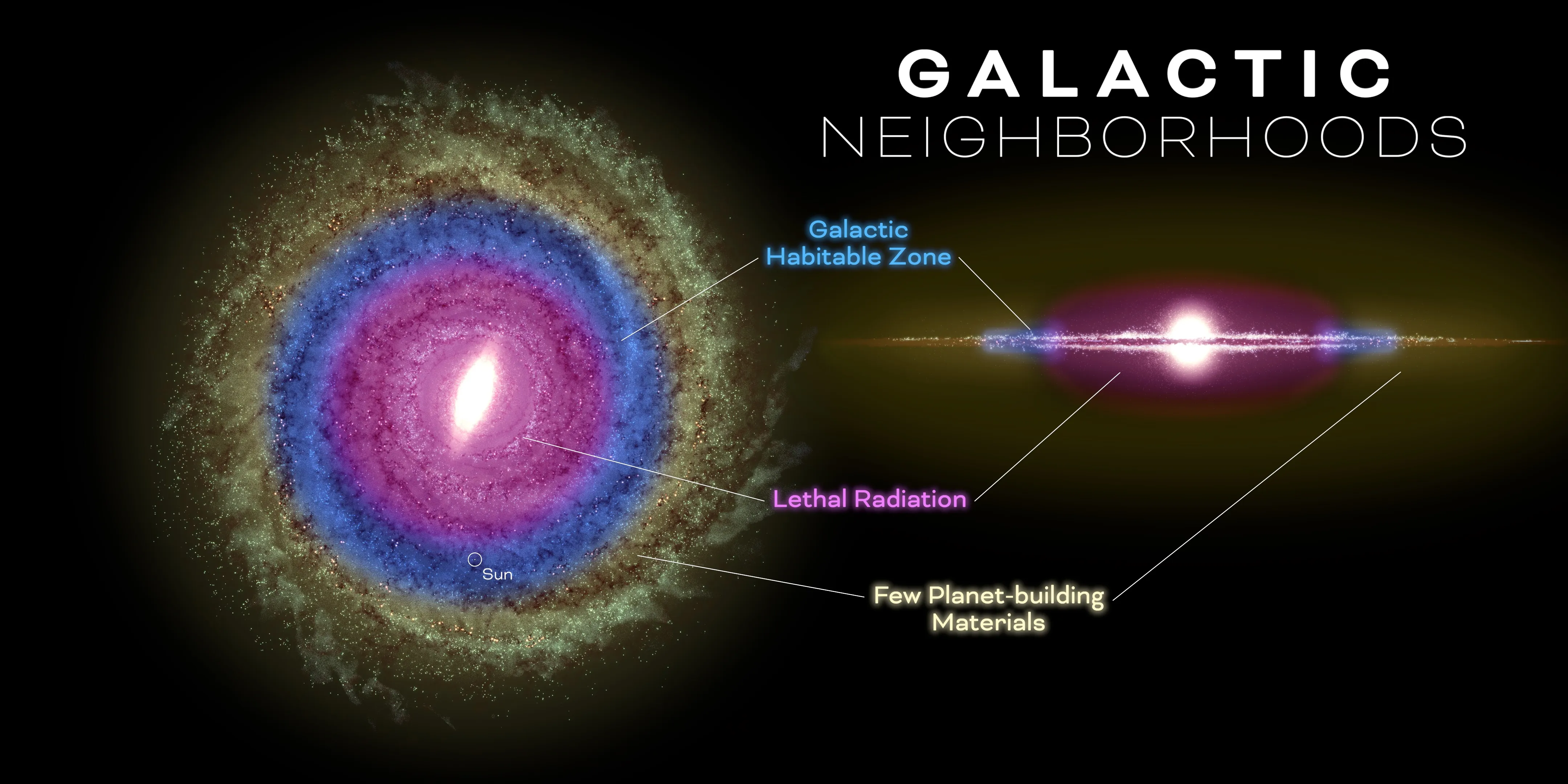
Most known exoplanets are located within a couple of thousand light-years of Earth. Roman will extend the search far enough to encompass other galactic habitats, including a core survey that peers through the Milky Way’s galactic bulge to the fringes of the far side of the galaxy. Elisa Quintana, an exoplanet researcher at NASA’s Goddard Space Flight Center, noted that while our galaxy contains a variety of environments, the hunt for exoplanets has largely focused on our own neighbourhood.
The transit method, which Roman will use to reveal around 100,000 worlds, is best at finding gigantic, scorching worlds known as hot Jupiters because they block the most starlight and transit more frequently. Microlensing, which will find more than 1,000 worlds, is better suited to finding planets with larger orbits, including those in habitable zones. These microlensed planets, which can be as small as Earth or Mars, are almost undetectable by other methods and are virtually unknown outside of our solar system.
Astronomers will compare planet populations in the galactic bulge, where stars are older and richer in elements like silicon, oxygen, and magnesium, to those in the solar neighbourhood. Stars with different compositions may host planets that are different too, perhaps rockier or larger. Robby Wilson, a postdoctoral fellow at NASA Goddard, stated that stars with more heavy elements tend to host more planets, especially giant ones, and Roman will take these studies to a new level by sampling completely different populations.
To prepare for the influx of real data, scientists are using machine learning and synthetic data to filter out false positives. Wilson explained that the team is creating synthetic data and detecting simulated planets to ensure they are ready when real data arrives. This approach allows researchers to comb through the vast amount of information efficiently, identifying genuine planetary signals amidst the noise of stellar activity.
Roman will measure temperature patterns and climate behaviour for thousands of planets, providing a statistical view of exoplanet atmospheres that the James Webb Space Telescope may follow up on for detailed chemical analysis. The mission will detect hot Jupiters via their infrared heat signature, allowing astronomers to track atmospheric winds and heat circulation by observing secondary dips in brightness when the planet passes behind its star.
Jorge Martínez-Palomera, an astronomer at NASA Goddard, compared the potential impact of Roman to the legacy of the now-retired Kepler mission, which revolutionized the field by showing that planets are even more common than stars. Roman’s galactic bulge survey will observe around 100 million stars, providing a foundational dataset that will help astronomers uncover how common planetary systems like our own are throughout the Milky Way.