NASA's Roman Space Telescope set to reveal hidden population of isolated neutron stars
Researchers say the technique could uncover tens of millions of previously unseen objects, offering crucial data on stellar explosions and the mass gap between neutron stars and black holes.
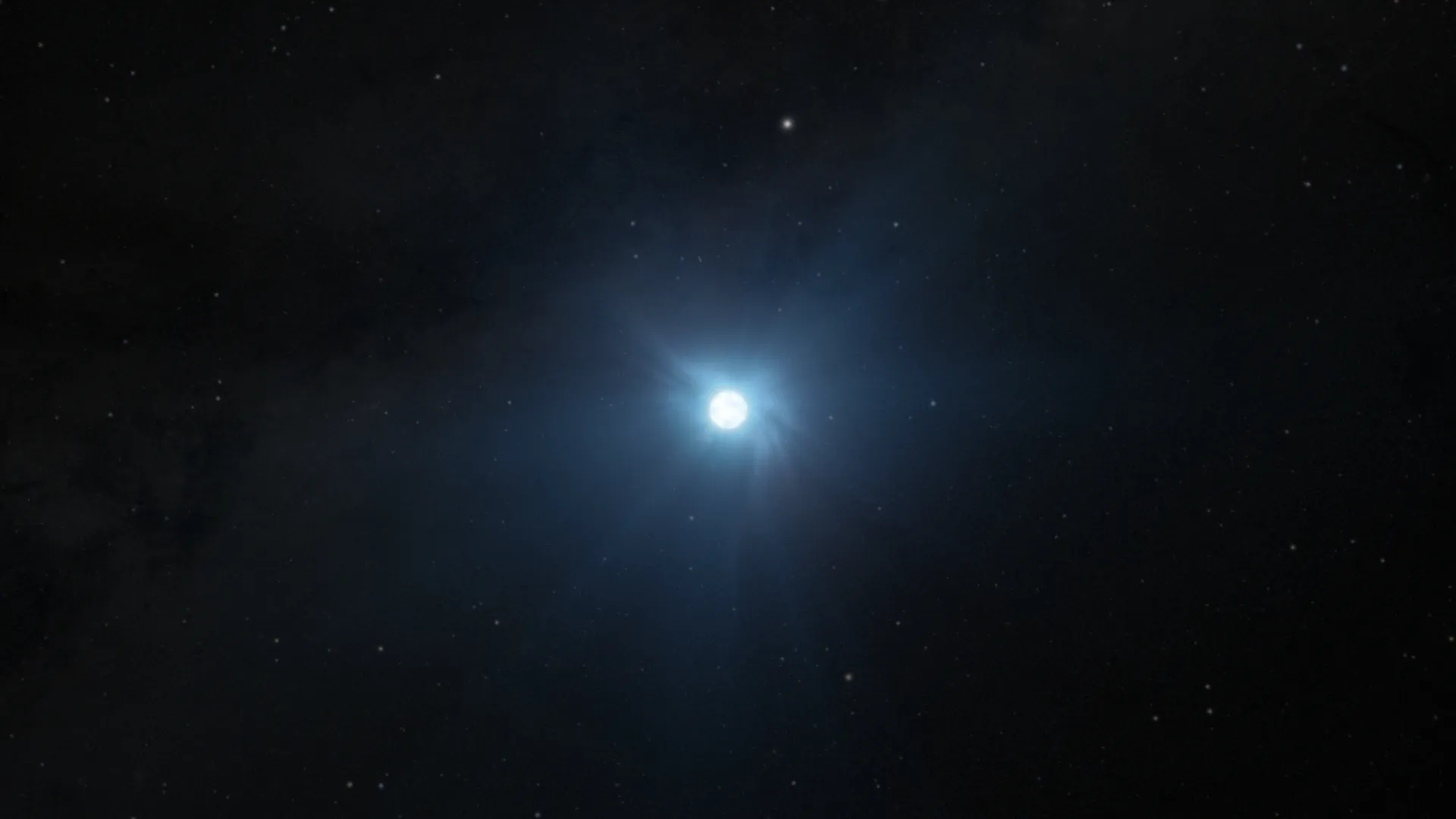
Astronomers have long suspected that neutron stars, the crushed cores left behind after massive stars explode, should be scattered throughout the Milky Way. However, most of these objects remain effectively invisible to current detection methods. A new study published in Astronomy and Astrophysics suggests NASA's upcoming Nancy Grace Roman Space Telescope could change this by spotting them using a subtle effect known as gravitational microlensing.
Unlike traditional techniques that rely on neutron stars emitting light, such as radio waves from pulsars or X-rays, this approach utilises astrometric microlensing. When a massive object like a neutron star moves in front of a distant background star, its intense gravity warps spacetime, causing the background star to appear brighter and slightly offset from its true position. While many telescopes can detect the temporary brightening, Roman is capable of measuring both the photometric brightening and the tiny positional shift with exceptional precision.
The study highlights a creative use of the mission's capabilities, noting that while the primary survey design targets exoplanets via photometric microlensing, the astrometric capability opens a new avenue for discovering stellar remnants. Because neutron stars are relatively massive, they produce a larger astrometric signal than lighter objects. This allows the mission to not only detect these previously invisible objects but also directly measure their masses, a feat that is nearly impossible with photometry alone.
Zofia Kaczmarek of Heidelberg University in Germany, who led the study, noted that most neutron stars are relatively dim and on their own, making them incredibly hard to spot without such assistance. Peter McGill of Lawrence Livermore National Laboratory added that while photometry tells scientists that something passed in front of a star, it is the amount the star's position shifts that reveals how massive that object is. By measuring that tiny deflection on the sky, researchers can directly weigh something that is otherwise unseen.
Scientists are particularly interested in using these measurements to determine whether there is a true gap between the masses of neutron stars and black holes and to understand the powerful kicks neutron stars receive when they are born in supernova explosions. These events can send the stellar remnants racing through the galaxy at hundreds of miles per second, yet current data suggests there could be tens of millions to hundreds of millions of isolated neutron stars in the Milky Way, with only a few thousand detected so far.
The research team will utilise Roman's future Galactic Bulge Time Domain Survey, which will monitor millions of stars at a time in vast images of the sky taken at a high frequency. Although the study is based on detailed simulations, scientists expect to begin identifying promising events within the first few months after the telescope's commissioning. Even a relatively small number of confirmed detections could significantly improve models of stellar explosions and extreme matter, providing the first large sample of isolated neutron stars discovered through their gravity alone.