NASA’s Pandora satellite begins detailed study of exoplanet atmospheres
The small satellite, the first launched under NASA’s Astrophysics Pioneers program, will observe at least 20 exoplanets and their host stars to disentangle stellar signals from planetary data.
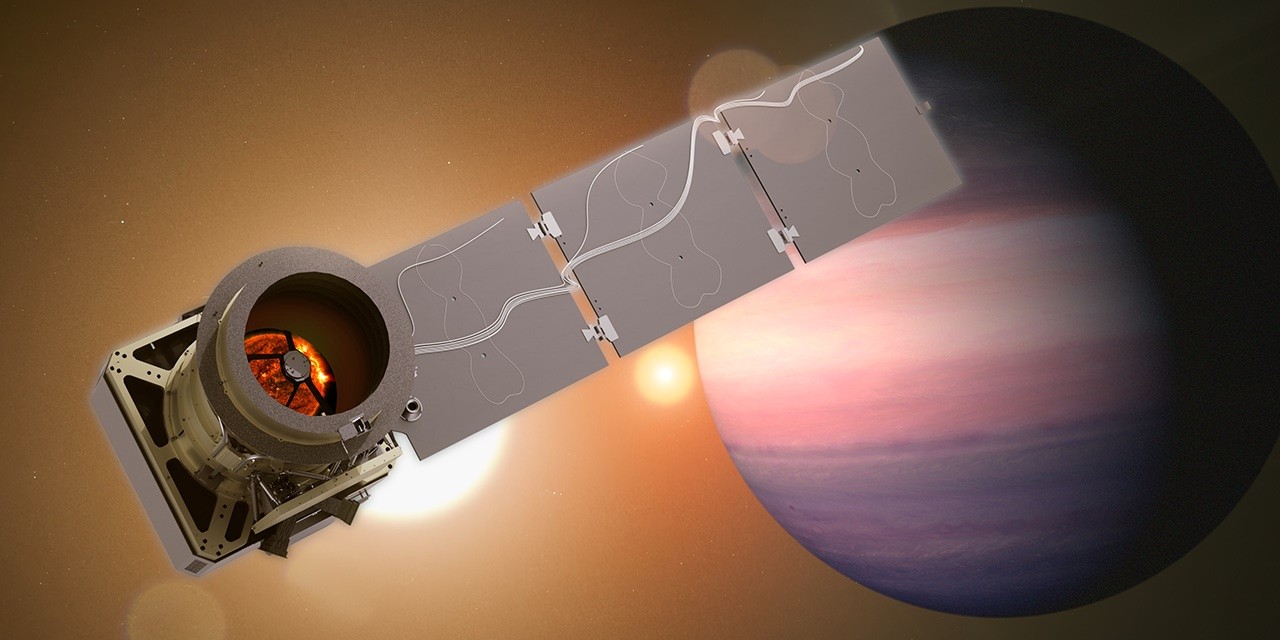
NASA’s Pandora mission has officially begun its science operations, marking the start of a new era in exoplanet research. The small satellite, which launched into low Earth orbit on 11 January, is the first spacecraft to be deployed under the agency’s Astrophysics Pioneers program. This initiative is designed to support fast-paced, low-cost missions that carry a higher tolerance for failure in exchange for rapid exploration of compelling scientific questions.
The primary objective of Pandora is to determine the atmospheric composition of at least 20 exoplanets, specifically looking for the presence of hazes, clouds, and water. By observing these worlds and their host stars simultaneously in both visible and infrared light, the mission aims to close a significant knowledge gap regarding how starlight affects measurements of exoplanet atmospheres. This work will lay a firm foundation for interpreting data from the James Webb Space Telescope and future observatories focused on finding habitable worlds.
A key challenge in exoplanet science is that stellar surfaces are not uniform. They feature hotter, brighter areas known as faculae and cooler, darker regions similar to sunspots, which can change position as the star rotates. These features can distort the signals from molecules in a planet’s atmosphere, such as water. Pandora is designed to disentangle these stellar signals from planetary data, allowing scientists to understand the physical conditions of exoplanet atmospheres more accurately.
The spacecraft carries a novel all-aluminium telescope approximately 45 centimetres in diameter, jointly developed by Lawrence Livermore National Laboratory and Corning Specialty Materials. Its detectors capture the star’s brightness in visible light and its near-infrared spectrum at the same time. Notably, Pandora’s near-infrared detector is a spare unit originally developed for the James Webb Space Telescope, highlighting the collaborative nature of NASA’s astrophysics efforts.
Over the course of its year-long primary mission, Pandora will observe at least 20 exoplanets 10 times each. Each observation will cover a 24-hour period that includes a transit, an event where the planet passes in front of its star. During a transit, starlight skims the planet’s atmosphere, embedding chemical fingerprints of atmospheric molecules into the light. This extended observation time allows Pandora to gather data in a way that high-demand flagship missions like Webb cannot regularly achieve.
The mission is led by NASA’s Goddard Space Flight Center, with project management and engineering provided by Lawrence Livermore National Laboratory. The spacecraft is currently healthy, with all instruments performing as expected. Data from the mission will be made available through the NASA Exoplanet Archive, operated by IPAC at the California Institute of Technology, supporting a broad international science team.