NASA’s Nancy Grace Roman Space Telescope Set for August 2026 Launch
Scheduled for liftoff on 30 August 2026, the mission aims to investigate dark energy, dark matter, and exoplanets using the most powerful coronagraph ever flown in space.
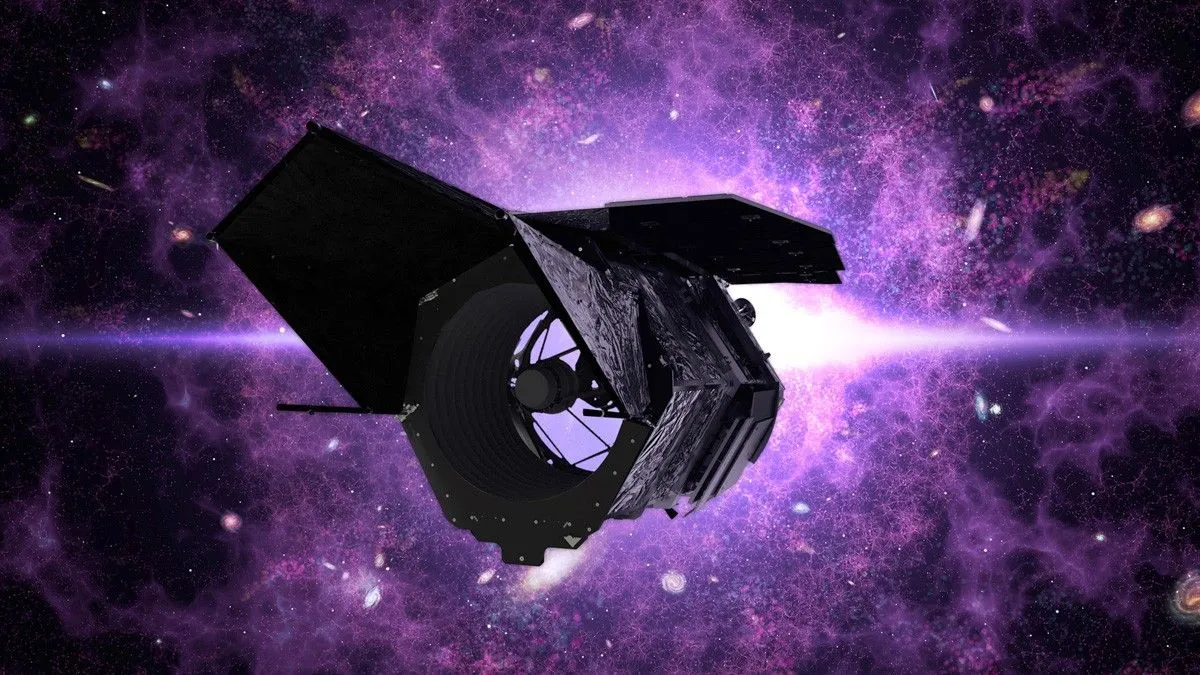
NASA’s Nancy Grace Roman Space Telescope is scheduled to launch on 30 August 2026 aboard a SpaceX Falcon Heavy rocket. Liftoff will occur from Launch Complex 39A at the Kennedy Space Center in Florida. The observatory represents the agency’s newest astrophysics mission, designed to scan large sections of the universe to address fundamental questions regarding dark energy, dark matter, and exoplanets.
Upon deployment, the telescope will orbit at the second Sun-Earth Lagrange point, approximately 930,000 miles (1.5 million kilometres) from Earth. This gravitational position provides an orbital parking spot where minimal fuel is required to maintain the spacecraft’s location, offering unobstructed views of the cosmos. The mission will utilise infrared technology to peer through dust and across vast stretches of space, capturing light that has been travelling for billions of years.
The observatory features a primary mirror 7.9 feet (2.4 metres) across, which gathers significant amounts of light to produce finer details. This mirror directs light to two main science instruments: the Wide Field Instrument and the Coronagraph Instrument. The Wide Field Instrument is a 300-megapixel infrared camera capable of observing the universe in its early stages, providing insights into its expansion history.
The Coronagraph Instrument is described as the most powerful ever flown in space. It employs technology to block the glare from stars, allowing astronomers to detect planets that are nearly a billion times fainter than their host star. This capability is critical for identifying exoplanets, including those in habitable zones, as scientists have discovered more than 6,000 exoplanets to date but believe billions may exist.
The mission is named after Nancy Grace Roman, NASA’s first chief astronomer and first female executive at the agency. Known as the mother of the Hubble Space Telescope, she was instrumental in the project’s development from funding to instrument design. More than 1,000 technicians and engineers assembled the Roman telescope from millions of individual components, with careers ranging from instrument technology to mechanical engineering and astrophysics shaping the mission.
While the James Webb Space Telescope recently released high-resolution images of the Lion Nebula on 10 August 2026, the Roman mission focuses on distinct scientific objectives. Scientists expect the Roman telescope to help determine the true nature of dark energy, which constitutes approximately 68% of the universe and drives its accelerated expansion. Additionally, the observatory will trace how galaxies and galaxy clusters formed to better understand dark matter, the gravitational glue holding cosmic structures together.