NASA’s Curiosity rover finds unusual pits and complex rock layers on Mount Sharp
After 14 years on the surface, the rover has documented broad, shallow bedrock pits that differ from typical weathering voids, alongside a regional dust storm that appeared to be dissipating.
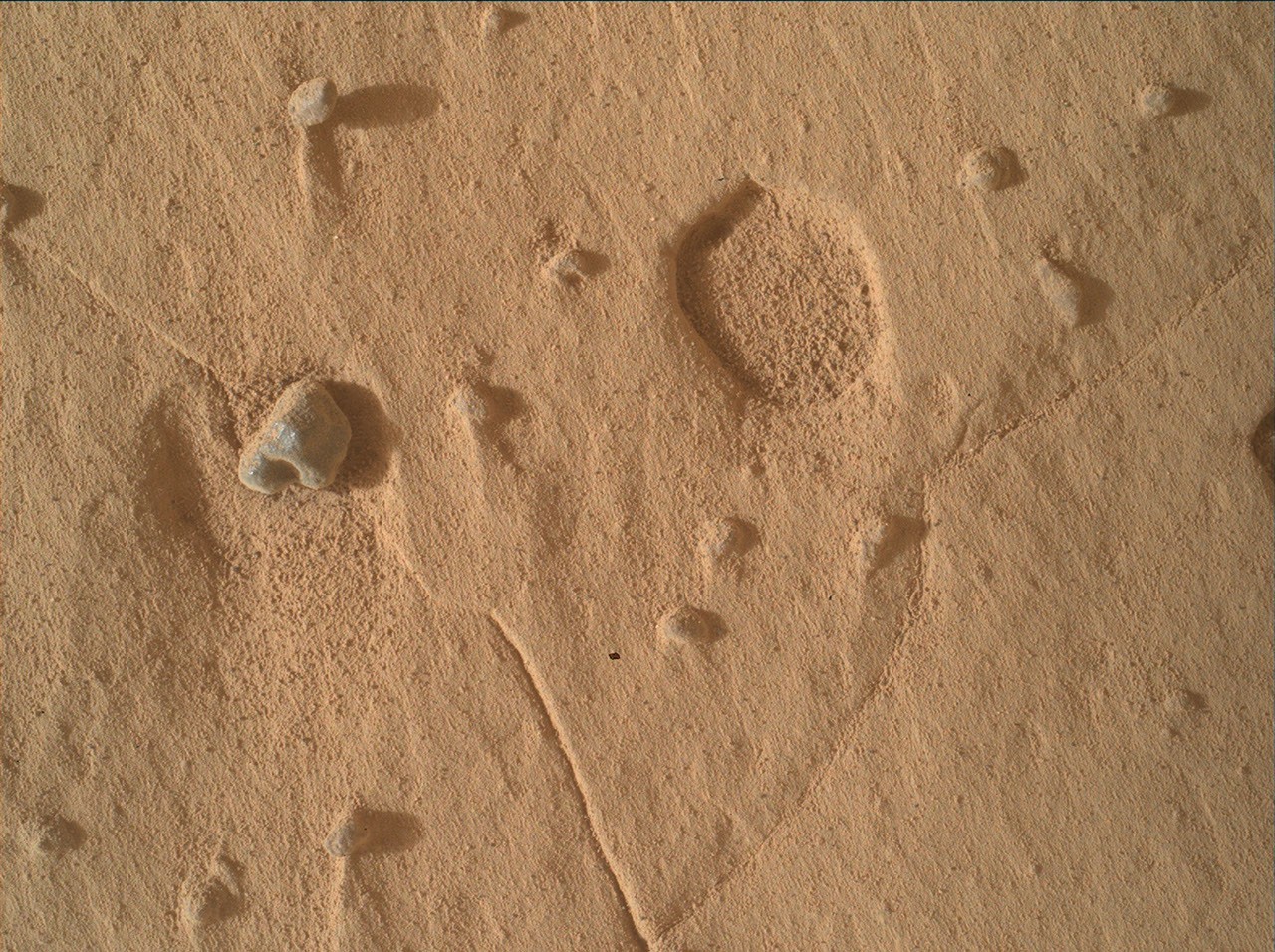
NASA’s Curiosity rover has recorded new geological features on Mars that differ from previously observed patterns, according to a report published on 3 September 2026. During Sols 4988 to 4994, which correspond to an Earth planning date of 21 August 2026, the rover documented broad, shallow pits dotted across the bedrock of Mount Sharp. While pits are generally formed when resistant nodules or pebbles weather out of host rock, leaving behind a void, these new features were much broader and shallower than past examples. Notably, they were not accompanied by the obvious residual objects typically associated with such weathering processes.
The mission team utilised the rover’s instruments, including MAHLI and Mastcam, to investigate these structures. The team acquired stereo mosaics and tightly overlapping image sets, which can be converted into digital elevation models to better understand the structure of the pits. These features represent a new puzzle in the processes that have affected this specific section of the Mount Sharp stratigraphy.
Beyond the pits, the rover examined bedrock that was described as complex, featuring packages of layers with changes in texture and structure over short vertical differences. These variations may indicate changes in depositional conditions captured in close proximity to one another. ChemCam, MAHLI, and the Alpha Particle X-ray Spectrometer (APXS) analysed gray, rough, and resistant layers that differed from the host bedrock, suggesting a different chemistry. The team also studied scattered gray float rocks to determine their origins, though this investigation remains ongoing.
Further targets included the “Cordillera” butte, which received a comprehensive Mastcam mosaic covering its entire visible face, along with focused ChemCam RMI mosaics of specific horizons. The rover also targeted the “Tolhuaca” and “Potosí” buttes, located farther south down “Valle Grande,” where ChemCam looked for potential crossbedding and assessed the mineralogy of dark material capping Potosí.
Environmental science activities were conducted at a higher-than-usual cadence to monitor a potential regional dust storm. By the end of the reporting week, the storm appeared to be dissipating, although the situation was not fully resolved at the time of reporting. The rover managed to accomplish these tasks despite losing one planning day due to a failed downlink.
Curiosity has been operating on the Martian surface for 14 years, continuing to explore the stratigraphy of Mount Sharp. The mission team includes MAHLI, Mastcam, ChemCam, APXS, REMS, and Navcam instruments, all of which contributed to the data collected during this period.