NASA’s Curiosity Rover Completes 47th Drill and Departs Campo Marte for Mount Sharp
The Curiosity rover has finished its operational stay at the Campo Marte workspace, marking the completion of its 47th successful drill and a series of detailed geological investigations before moving toward the next area of interest on Mount Sharp.
The NASA Curiosity rover has concluded its operations at the 'Campo Marte' workspace on Mars and is proceeding up the slope of Mount Sharp. During the final sols at this location, the mission team completed the rover's 47th successful drill and conducted extensive analysis of the resulting drill fines and surrounding sedimentary layers. Instruments including CheMin, SAM, ChemCam, APXS, MAHLI, and Mastcam were utilised to gather mineralogical, chemical, and high-resolution imaging data. The team also performed atmospheric monitoring and captured long-distance mosaics of sedimentary structures. The rover is now en route to the next geological area of interest.
The drill operation took place during Earth planning dates around Friday, May 29, 2026, covering Sols 4908-4912. Susanne P. Schwenzer, Professor of Planetary Mineralogy at The Open University, UK, served as Science Operations Working Group chair three times during the stay at Campo Marte. Specific targets analysed included "Corcovado" and "Junakas" (millimeter-sized targets on adjacent laminated sediments), "Palcaya" (layered bedrock), "Alcamachi" (a dark float rock), and "Magallanas" (a distant dark target).
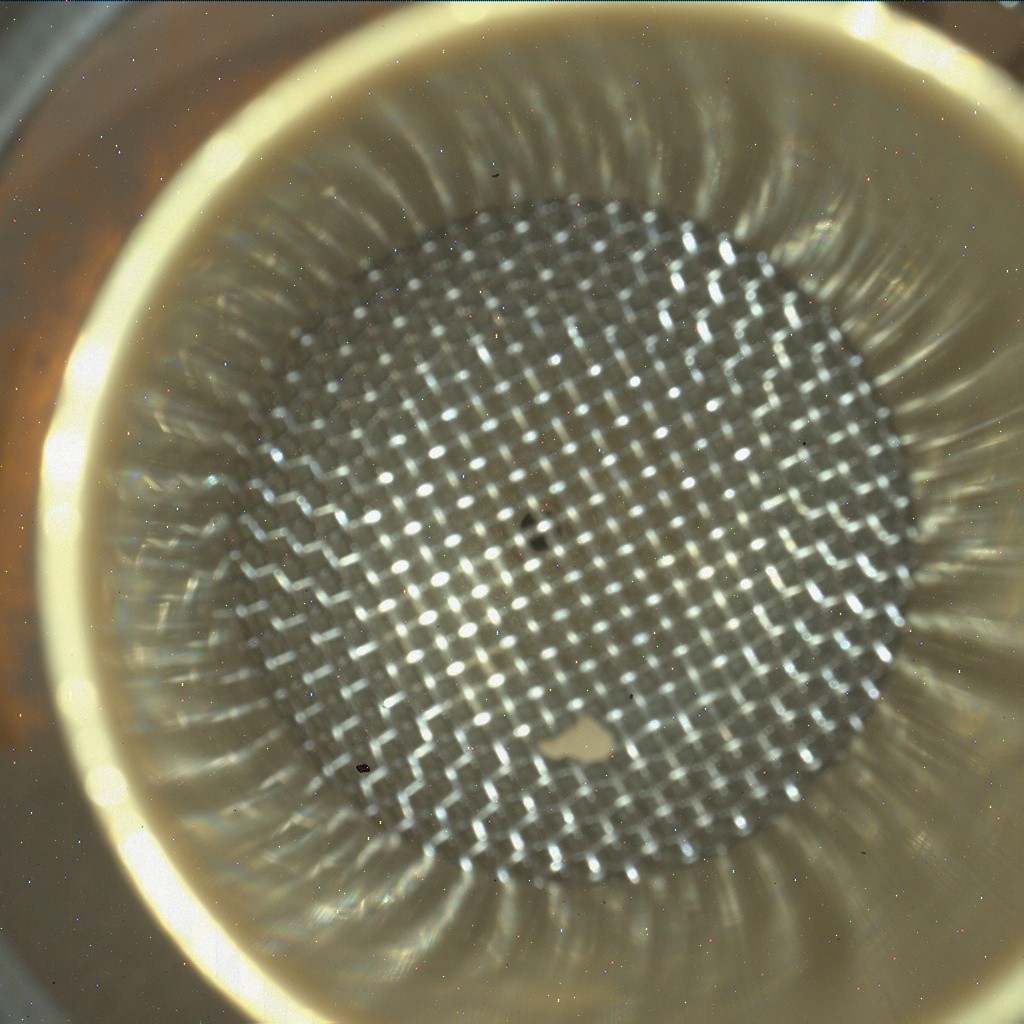
ChemCam performed an expert’s targeting exercise to compare chemical differences between sedimentary layers. A long-distance Remote Micro-Imager (RMI) mosaic of 24 frames was captured, potentially breaking the record for the longest strip of RMI images taken in one mosaic. APXS significantly increased measurement time to improve counting statistics for the Campo Marte drill fines. MAHLI conducted a nighttime experiment using LED lights to document the drill hole and sample inlets. The CheMin inlet contained a small rock referred to by the team as "our pet rock." Environmental monitoring included atmospheric opacity, dust activity, and dust-devil activity.
The rover is now en route to the next geological area of interest.