NASA’s Chandra Observatory Releases Composite Image of Spiral Galaxy Messier 94
The June 30, 2026 release highlights a bright inner ring in NGC 4736 where star formation is potentially driven by gas dynamics within the galaxy’s oval structure.
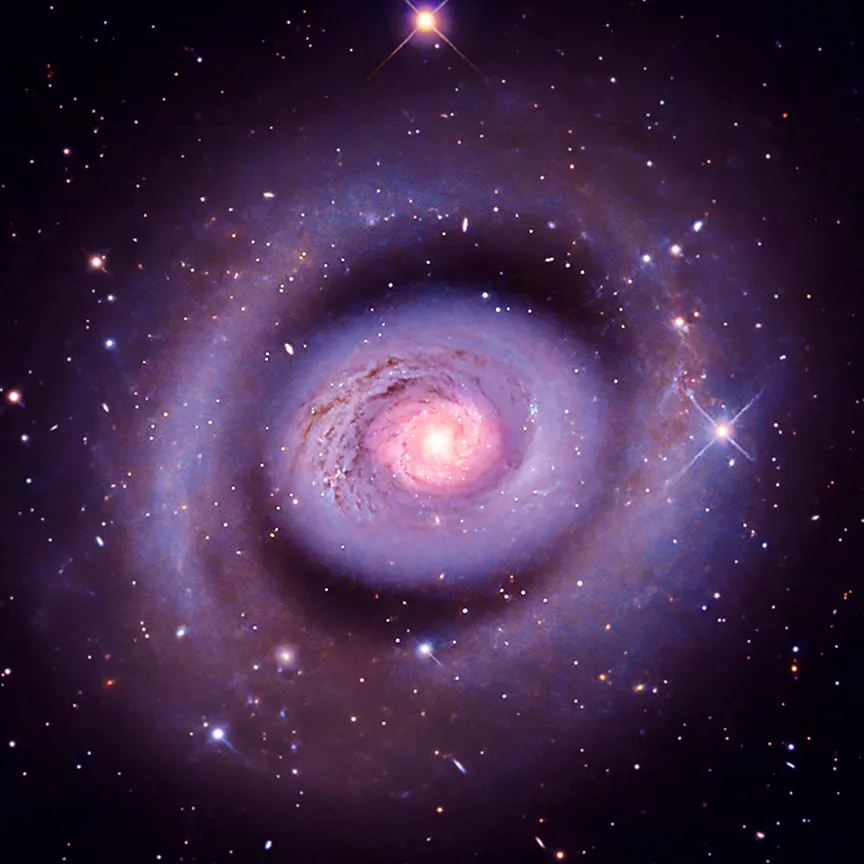
NASA’s Chandra X-ray Observatory released a new composite image of the spiral galaxy NGC 4736, commonly known as Messier 94, on 30 June 2026. The visualisation combines high-energy X-ray data with visible light observations to provide a detailed look at the galaxy’s structure and ongoing stellar activity.
The image prominently features a bright inner ring, identified as a starburst ring, where new stars are actively forming. According to the release, this intense star formation is perhaps fueled by gas driven by the galaxy’s unique oval-shaped structure, although the source material presents this causal link as a hypothesis rather than a confirmed fact.
The composite image layers X-ray data from Chandra, represented in red, orange, and blue, with visible light images captured by ground-based astrophotographers. The optical imagery, shown in red, green, and blue, was provided by Brian Brennan and Remi Lacasse, who used their telescopes on the ground to capture the galaxy’s visible light emissions.
Image processing for the release was conducted by NASA/CXC/SAO staff members L. Frattare and K. Arcand. The final visualisation serves to illustrate the interplay between the galaxy’s large-scale structure and the localized regions of star formation within its inner ring.
Messier 94 is classified as a spiral galaxy, and this new data from Chandra adds to the observational record of its inner dynamics. The release underscores the utility of combining X-ray and optical data to study the mechanisms that may drive starburst activity in galactic structures.