NASA’s Artemis EVA Lead Tests Lunar Spacesuit Amid Push for Inclusive Design
With over 25 years of experience, the Artemis extravehicular activity lead is instrumental in defining lunar surface operations and ensuring new suits accommodate diverse body types.
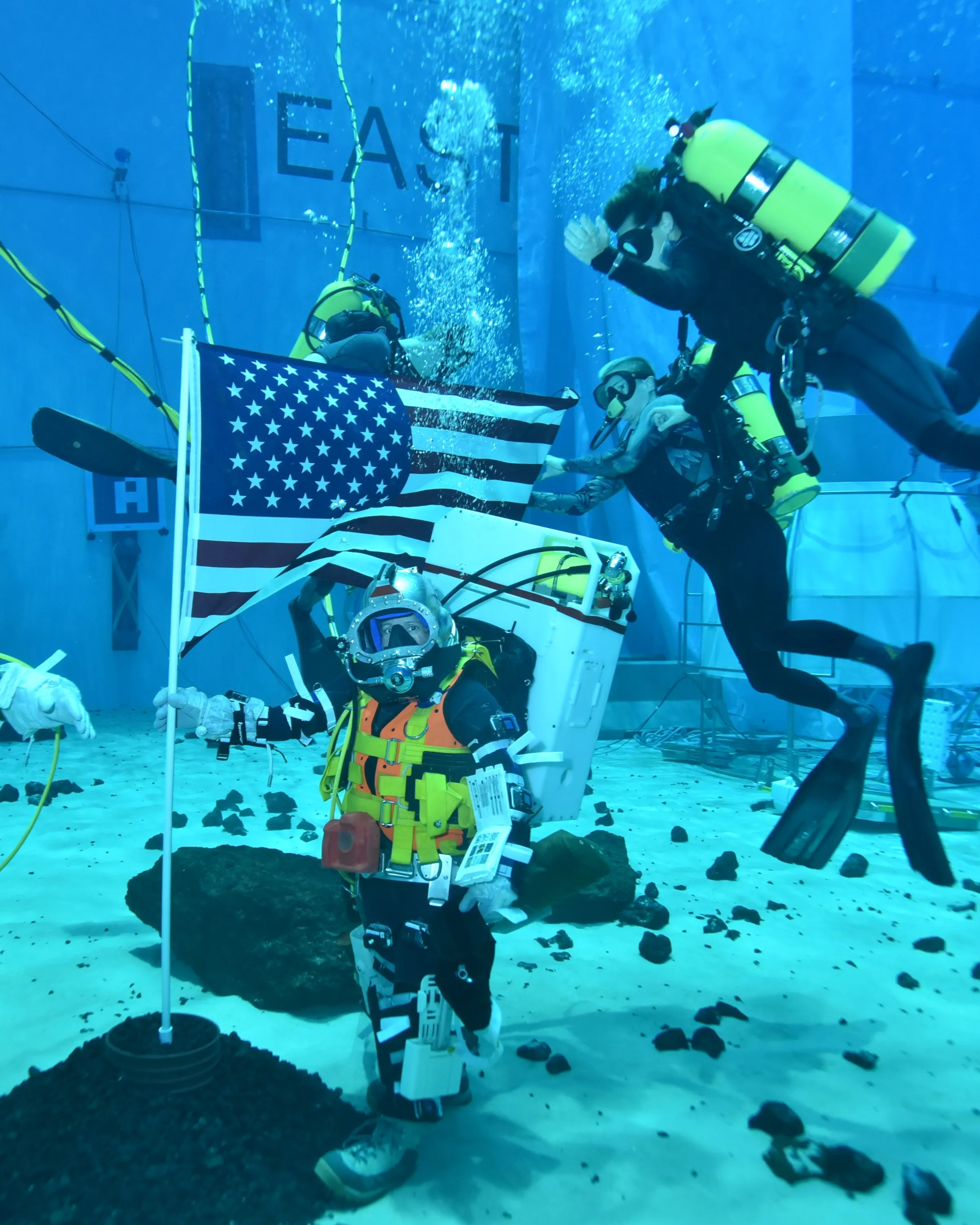
Jaclyn Kagey, the Artemis extravehicular activity lead within NASA’s Flight Operations Directorate, has completed her first test in the Axiom Extravehicular Mobility Unit (AxEMU). The trial took place on the Active Response Gravity Offload System (ARGOS) at NASA’s Johnson Space Centre in Houston, marking a significant milestone in the preparation for humanity’s return to the lunar surface.
Kagey plays a central role in defining how astronauts will operate on the Moon during Artemis missions, which aim to land humans at the lunar South Pole, a region never previously visited. Her responsibilities include planning detailed spacewalk timelines and guiding real-time operations for crews stepping outside NASA’s commercial human landing system, which transports astronauts from lunar orbit to the surface and back.
The testing of the AxEMU represents a personal and professional culmination for Kagey, who has long advocated for spacesuit designs that accommodate a wider range of body types. Standing on the shorter end of the height spectrum, she previously could not complete a full test in the legacy Extravehicular Mobility Unit (EMU) despite passing initial fit checks. The proportions of the current suit were too large for her, making the necessary movements for testing difficult, a challenge that drove her to push for more adaptable engineering.
Kagey brings more than 25 years of experience to the Artemis programme, having worked across some of NASA’s most complex operations. Her career began as a contractor with United Space Alliance, alongside her husband, after she studied at Embry-Riddle Aeronautical University, where watching space shuttle launches solidified her career goals. She has since planned and executed seven spacewalks, including a critical repair on the International Space Station during U.S. EVA 21 to address an ammonia leak.
Reflecting on her career, Kagey emphasised the importance of adaptability in high-pressure environments. She noted that while things rarely go exactly as planned, her job is to respond in ways that keep crews safe and missions moving forward. Her recent success in the AxEMU, which she described as fitting into the future of spacewalks, underscores the agency’s commitment to inclusive design as it prepares for deep space exploration.