NASA’s APOD highlights Yellowstone’s geothermal activity beneath the Milky Way
The 16 August 2026 entry in NASA’s Astronomy Picture of the Day series presents a composite view of the galaxy arching over a Wyoming hot spring, linking current geological observations to the region’s supervolcanic history.
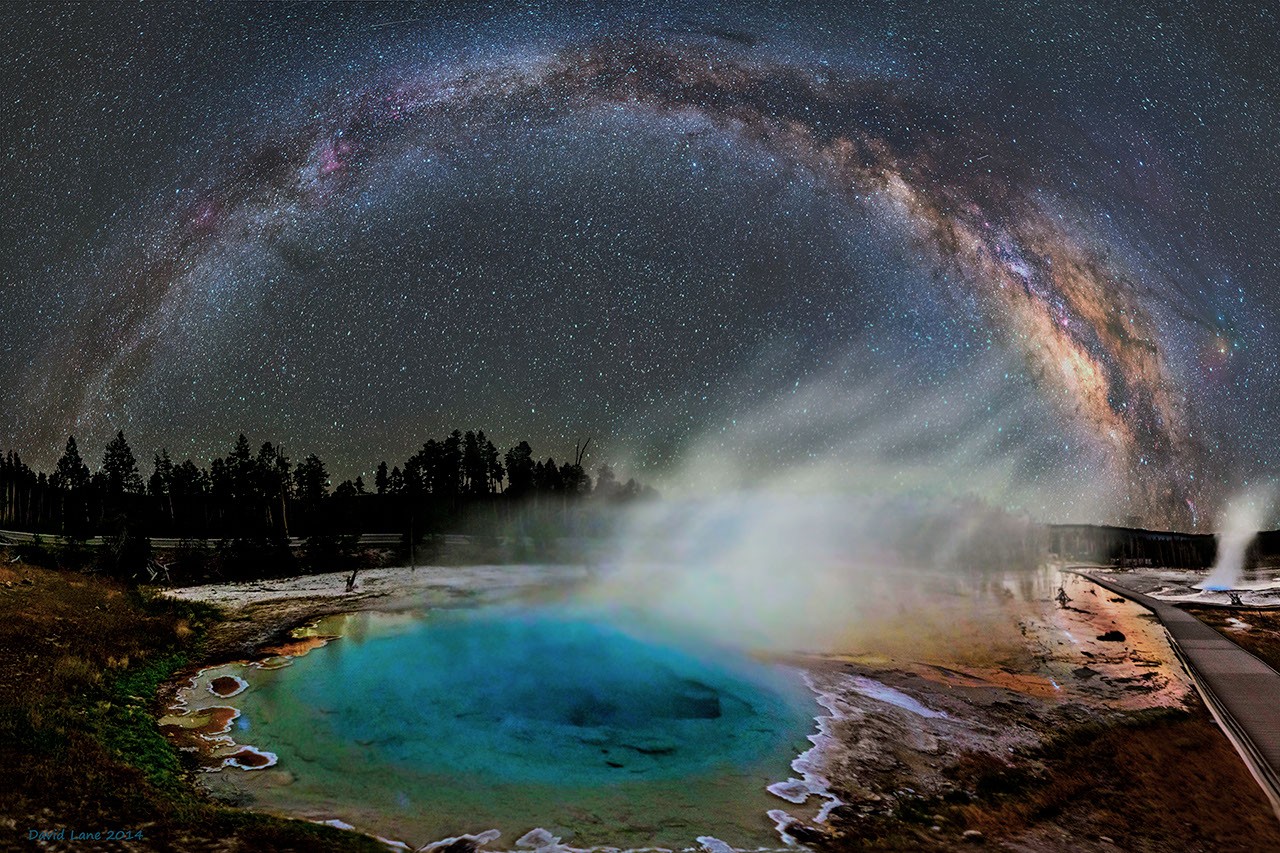
NASA’s Astronomy Picture of the Day (APOD) featured a panoramic image of the Milky Way arching over Silex Spring in Yellowstone National Park, Wyoming, on 16 August 2026. The entry, credited to photographer Dave Lane, displays a 16-image composite originally captured in 2014, offering a detailed view of the park’s geothermal features against the backdrop of the night sky.
The APOD explanation clarifies that the central band of the Milky Way is unrelated to the terrestrial features below. The colourful pool, measuring approximately 10 metres across, derives its hues from layers of bacteria growing within the hot spring. The image notes that the spring’s colours were artificially illuminated for the photograph, while steam rises from the water due to heat from underground magma associated with the Yellowstone Hotspot.
The service, a collaboration between the Astrophysics Science Division at NASA Goddard Space Flight Center, NASA Science Activation, and Michigan Technological University, provides daily cosmic imagery accompanied by expert commentary. This feature follows the publication of images from the total solar eclipse that traversed the Arctic Ocean, Greenland, Iceland, the Atlantic, Portugal, and northern Spain on 12 August 2026.
The APOD text contextualises the geological significance of the location, noting that the Yellowstone Hotspot caused a supervolcanic eruption approximately 640,000 years ago. The explanation states that a similar event today would affect a large part of North America, underscoring the ongoing volcanic activity beneath the park.
The 16 August entry was authored and edited by Robert Nemiroff, Jerry Bonnell, Cecilia Chirenti, and Keighley Rockcliffe. The publication also teased the following day’s image as an “eclipse shower” and directed readers to a growing gallery of photographs from the August 2026 solar eclipse.