NASA X-59 validates low-speed flight capabilities in Edwards testing
Recent flights above the Armstrong Flight Research Center confirm performance across varied conditions, including extended landing gear configurations.
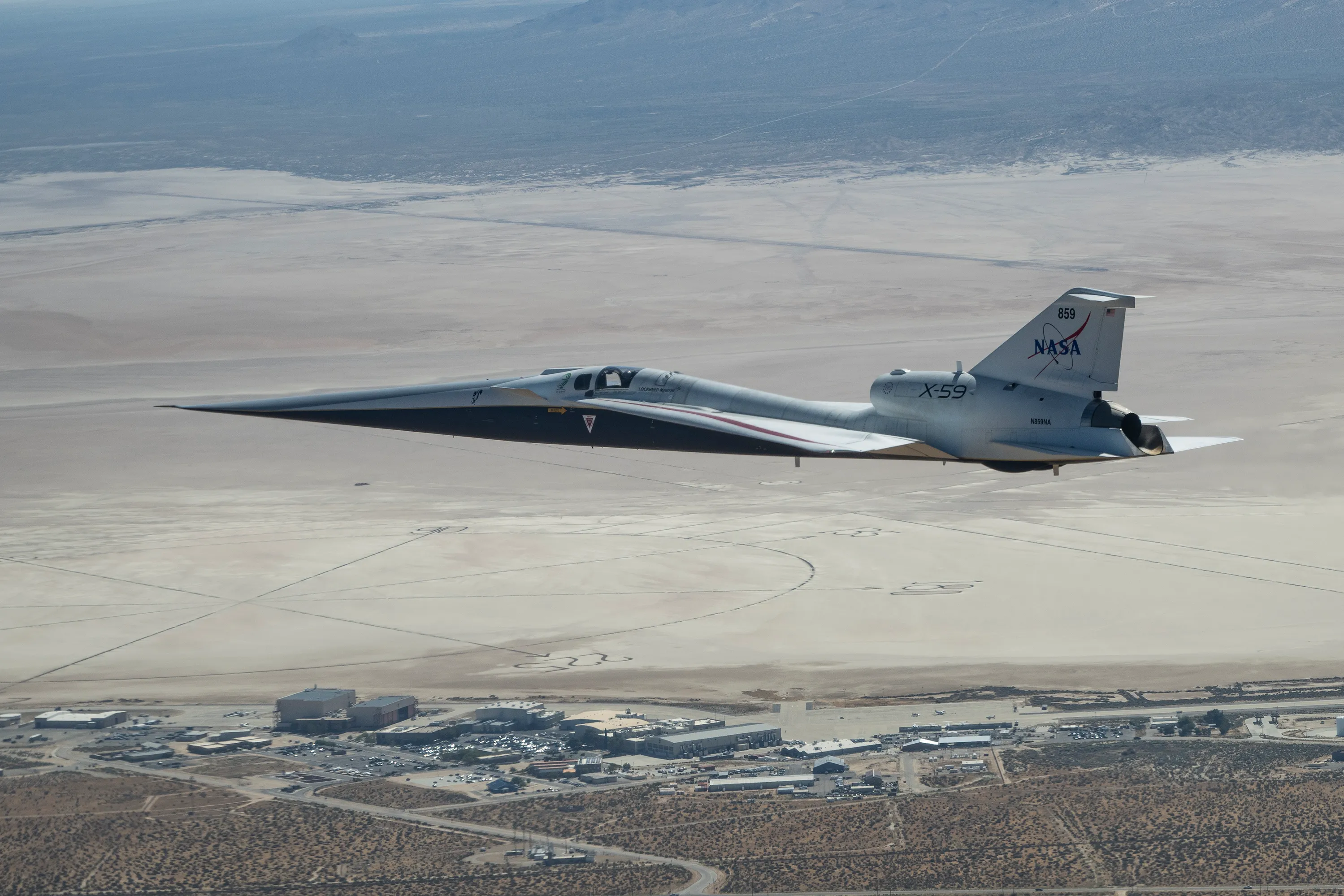
NASA’s X-59 quiet supersonic research aircraft conducted test flights above the Armstrong Flight Research Center in Edwards, California, on 28 April 2026. The operations focused on lower-speed and lower-altitude conditions, marking a distinct shift from the aircraft’s initial high-altitude and near-supersonic test campaigns. These flights are a critical component of the Quesst mission, designed to validate the aircraft’s performance across its full operating envelope.
The recent testing phase follows earlier missions that established baseline performance at higher altitudes and speeds approaching supersonic thresholds. By moving to lower altitudes and slower speeds, NASA engineers are gathering data to confirm how the X-59 behaves under a wider spectrum of flight conditions. This progression allows for a more comprehensive understanding of the aircraft’s aerodynamic characteristics before it enters more complex operational phases.
A key aspect of the 28 April 2026 flights was the verification of the aircraft’s performance with its landing gear in different configurations. The tests included operations with the landing gear both retracted and extended, ensuring that the aircraft maintains stability and control during critical phases of flight such as approach and landing. This data is essential for refining the flight control systems and ensuring safety margins are met across all operational scenarios.
The Quesst mission aims to develop and validate technology for a quiet supersonic aircraft. By reducing the sonic boom typically associated with supersonic flight, the X-59 seeks to gather the necessary acoustic data to potentially enable future commercial supersonic travel over land. The low-speed, low-altitude tests contribute to this broader goal by providing detailed insights into the aircraft’s handling and performance in conditions that may be more representative of real-world operational environments.
These ongoing tests at the Armstrong Flight Research Center continue to build the evidence base required for the X-59’s eventual role in shaping regulatory frameworks for supersonic flight. As the mission progresses, the data collected from these varied flight conditions will help inform the design and operation of future quiet supersonic aircraft, potentially transforming the landscape of global air travel.