NASA X-59 set for first supersonic flight in June milestone
The X-59 will reach speeds over 630 mph at 43,000 feet, marking a critical step in proving its airworthiness before Phase 2 testing begins later this year.
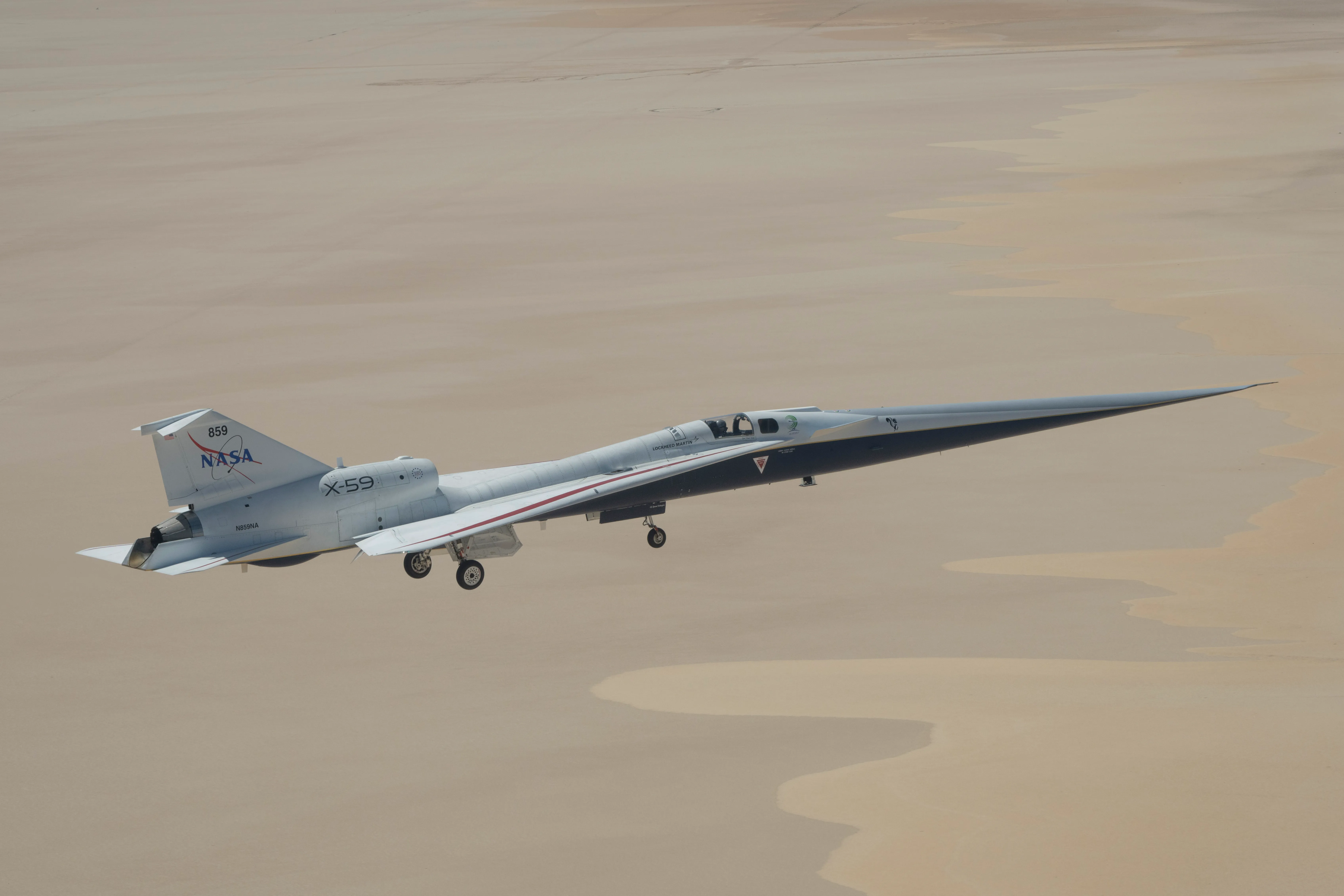
NASA’s X-59 quiet supersonic research aircraft is preparing for a significant operational milestone, with its first flight faster than the speed of sound scheduled for early June. The test flight is expected to see the aircraft exceed 630 mph at an altitude of approximately 43,000 feet. This event marks a transition from initial low-speed handling checks to high-performance envelope expansion within the Quesst mission framework.
Following the initial supersonic flight, the team will conduct a mission conditions test at Mach 1.4, or 925 mph, at an altitude of 55,000 feet. This specific speed and altitude are critical performance targets designed to replicate the operational environment the aircraft will eventually encounter when flying over communities to demonstrate quiet supersonic flight capabilities. The aircraft is also expected to reach its maximum design speed of Mach 1.6 (1,218 mph) and an altitude of 60,000 feet during this test block.
Cathy Bahm, project manager for NASA’s Low Boom Flight Demonstrator, stated that the team is moving toward the mission conditions test point the aircraft was designed for. She noted that flying at supersonic speeds is a major milestone, bringing the team closer to demonstrating the quiet supersonic capability that is central to the Quesst mission. The upcoming flights are part of Phase 1, which is focused on proving the aircraft's performance and airworthiness.
To support these tests, a traditional supersonic chase plane will accompany the X-59. The sonic booms from the chase aircraft will obscure any quiet thump produced by the X-59 during this phase, as the primary objective is not yet to demonstrate the quiet flight signature. However, the chase aircraft will carry a specialized shock-sensing probe to take initial measurements of the X-59’s shock waves, gathering data that will help engineers prepare for subsequent phases.
The X-59 has completed 14 additional flights since returning to the skies in March 2026, following its first flight in October 2025 and a scheduled maintenance period. Data from these early flights has been used to assess critical systems, including fuel, hydraulics, environmental controls, and the eXternal Vision System, which uses cameras to provide the pilot with a forward view instead of a traditional windshield. Strain gauges installed throughout the airframe have also collected detailed information on structural forces and responses.
Phase 2 of the Quesst mission is set to begin later this year, shifting the focus to measuring the aircraft’s supersonic flight signature to verify it produces a quiet supersonic thump. While the X-59 will achieve supersonic speeds in June, testing will continue to include a mix of subsonic and lower-altitude flights to monitor the aircraft in varied conditions.
Bahm emphasised that the 15 flights accomplished since March have been essential to the mission, pushing the boundaries of what is possible and strengthening confidence in the aircraft. The team is now poised to expand the envelope further, moving toward the mission test point the aircraft was built to achieve.