NASA unveils dry vacuum rig to simulate lunar night cold
Engineers have created a novel test rig capable of reaching 40 Kelvin to evaluate components for future Moon and Mars missions.
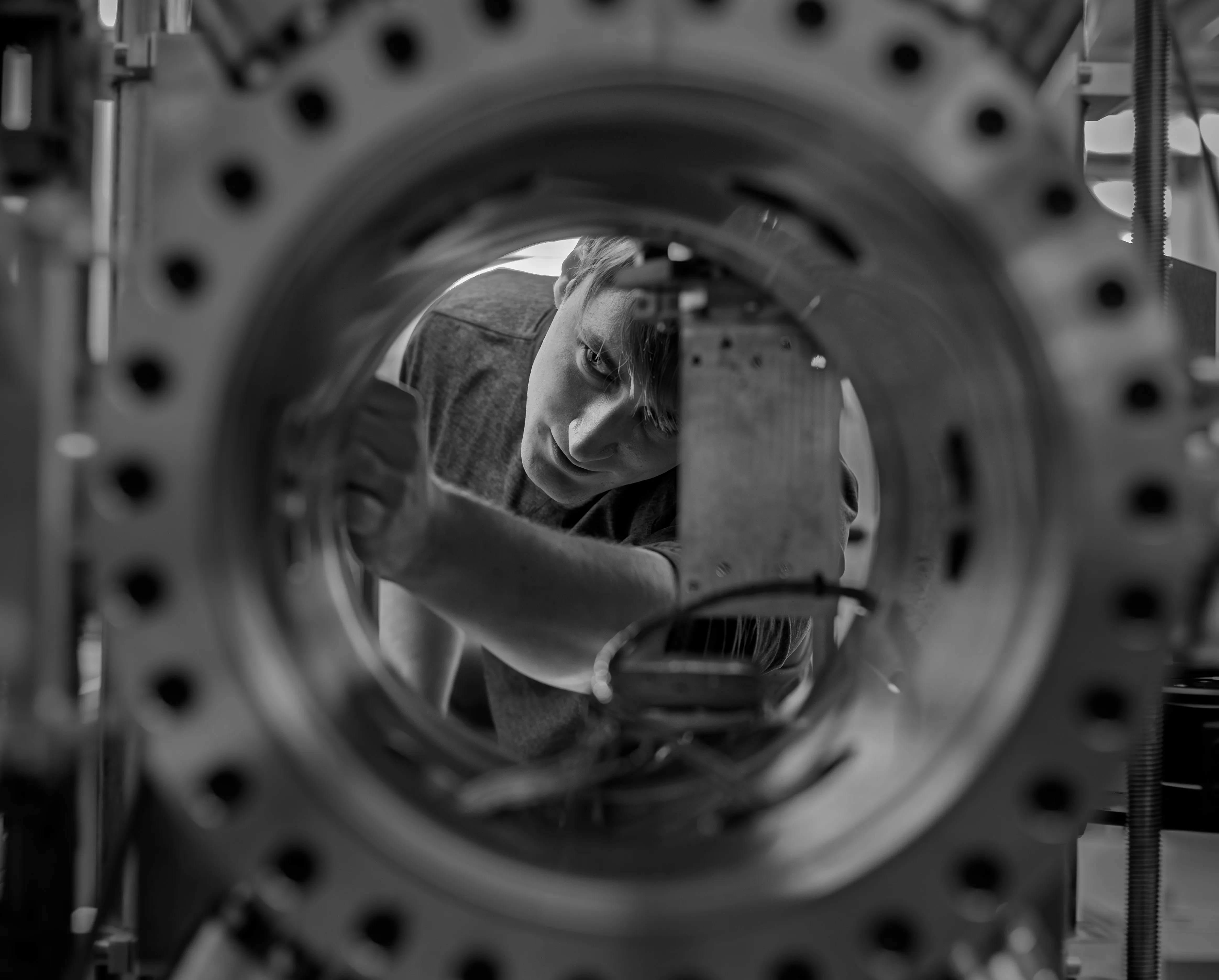
Researchers at NASA Glenn Research Center have developed the Lunar Environment Structural Test Rig, known as LESTR. This new machine is designed to test materials and electronics at temperatures as low as 40 Kelvin, which is approximately –388 degrees Fahrenheit. The device simulates the extreme cold of the lunar night, a critical environment for future exploration missions to the Moon and Mars.
Unlike traditional testing methods that rely on hazardous liquid cryogens such as nitrogen or helium, LESTR operates within a completely dry vacuum. The rig utilises a high-powered cryocooler to remove heat without the need for any liquid substances. This innovation marks the first mechanical test rig in the industry to function without liquid cryogens, offering a safer and more affordable alternative for scientists.
The elimination of liquid cryogens removes the necessity for complex safety systems, including oxygen displacement sensors and wet heaters. According to Ariel Dimston, technical lead for LESTR at NASA Glenn, this approach significantly reduces the time, complexity, and cost associated with the testing process. The dry environment allows researchers to test materials across a much wider range of temperatures while avoiding the challenges inherent to handling cryogenic fluids.
The first unit, designated LESTR 1, has been delivered to Fort Wayne Metals in Indiana. At the facility, experts will use the rig to test shape memory alloys intended for future rover tires. These alloys are designed to recover their original shape after extreme deformation and temperature swings, a vital capability for vehicles traversing the uneven, rocky surfaces of the Moon and Mars.
In addition to rover components, the team is currently testing yarns that may be woven into fabrics for next-generation spacesuits. Dimston noted that just as no building is constructed without understanding how its materials behave, no space mission is complete without a robust structural design based on such knowledge. The rig is essential for evaluating how rubber, circuit boards, and electrical connections withstand the drastic temperature fluctuations found at the lunar South Pole.
While the first unit is operational, the team is currently constructing LESTR 2, a twin unit to the original. NASA Glenn continues to lead the agency in advanced materials testing and in-space cryogenic fluid management, utilising world-class facilities that also mimic the vacuum of space, microgravity, and the pressure of Venus.