NASA transports SLS core stage to Kennedy Space Center for Artemis III assembly
Moved 900 miles via barge from New Orleans, the core stage is now positioned for final assembly at the Vehicle Assembly Building ahead of the Orion spacecraft launch.
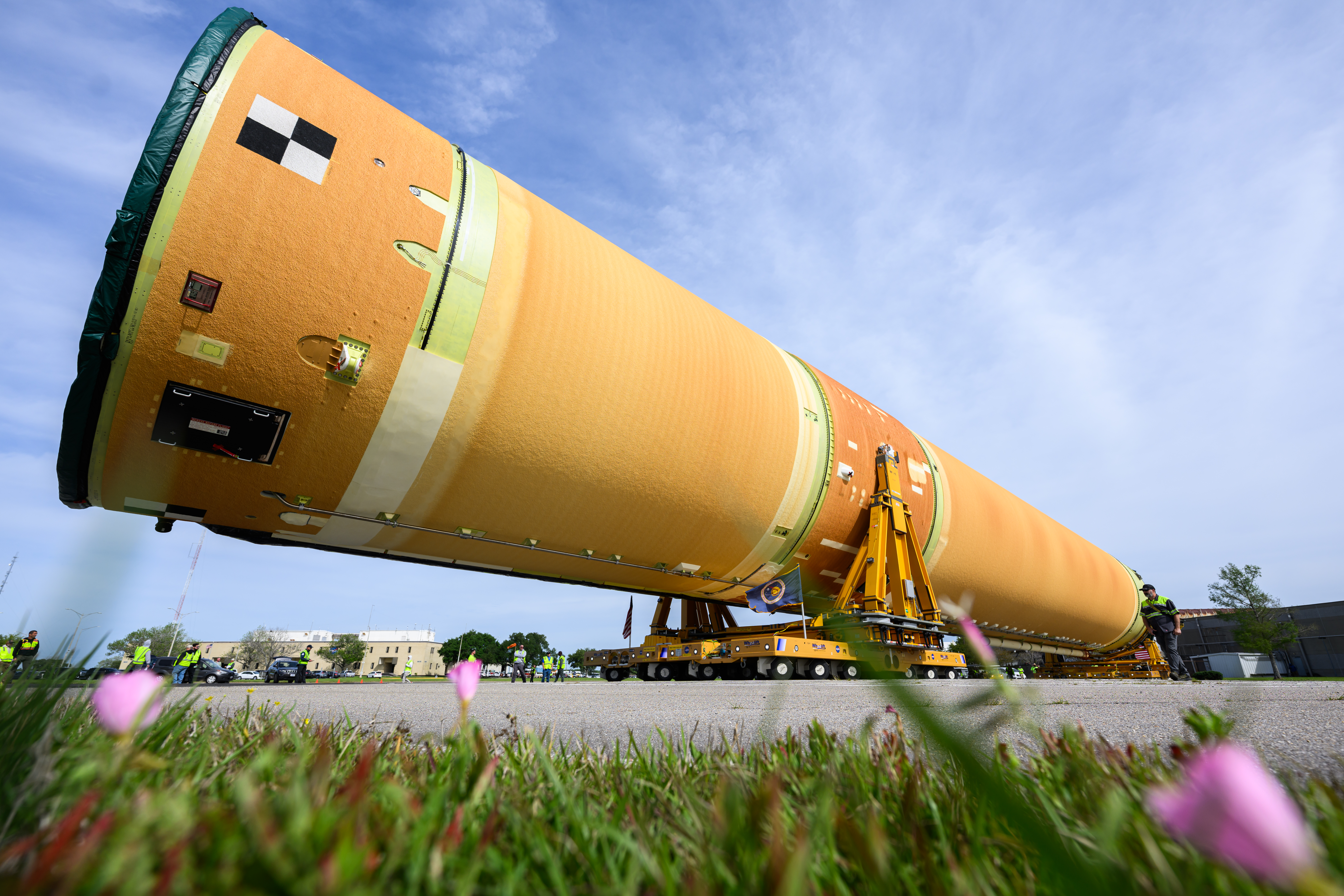
NASA teams have successfully moved the core stage of the Space Launch System rocket for the Artemis III mission from the Michoud Assembly Facility in New Orleans to the Vehicle Assembly Building at Kennedy Space Center in Florida. This significant logistical operation marks a critical step in the preparation for the agency's upcoming lunar exploration efforts.
The massive core stage, which represents the largest section of the vehicle, travelled a distance of 900 miles via the Pegasus barge to reach its destination. The transport route connected the manufacturing site in New Orleans directly to the Kennedy Space Center, where the final assembly of the Artemis III rocket is designated to take place.
This specific configuration of the Space Launch System is intended to launch the Orion spacecraft to test rendezvous and docking capabilities with commercial spacecraft. These tests are a necessary prerequisite for the ultimate goal of landing astronauts on the Moon, ensuring that the systems required for future lunar landings function correctly before crewed missions proceed.
The move of the core stage into the Vehicle Assembly Building allows NASA to commence the final integration of the rocket. By consolidating the largest component at the Florida facility, the agency is progressing toward the launch of the Orion spacecraft, which will carry crew to validate the docking procedures essential for the Artemis program.
The event, which occurred on 27 April 2026, underscores the complex coordination required to assemble such a massive vehicle. With the core stage now in position, the focus shifts to the detailed assembly work needed to prepare the rocket for its role in testing the capabilities required for human return to the lunar surface.