NASA to broadcast live coverage of Roscosmos spacewalk on International Space Station
Live streams will commence at 9:45 a.m. EDT as cosmonauts install solar experiments and inspect cargo spacecraft hardware.
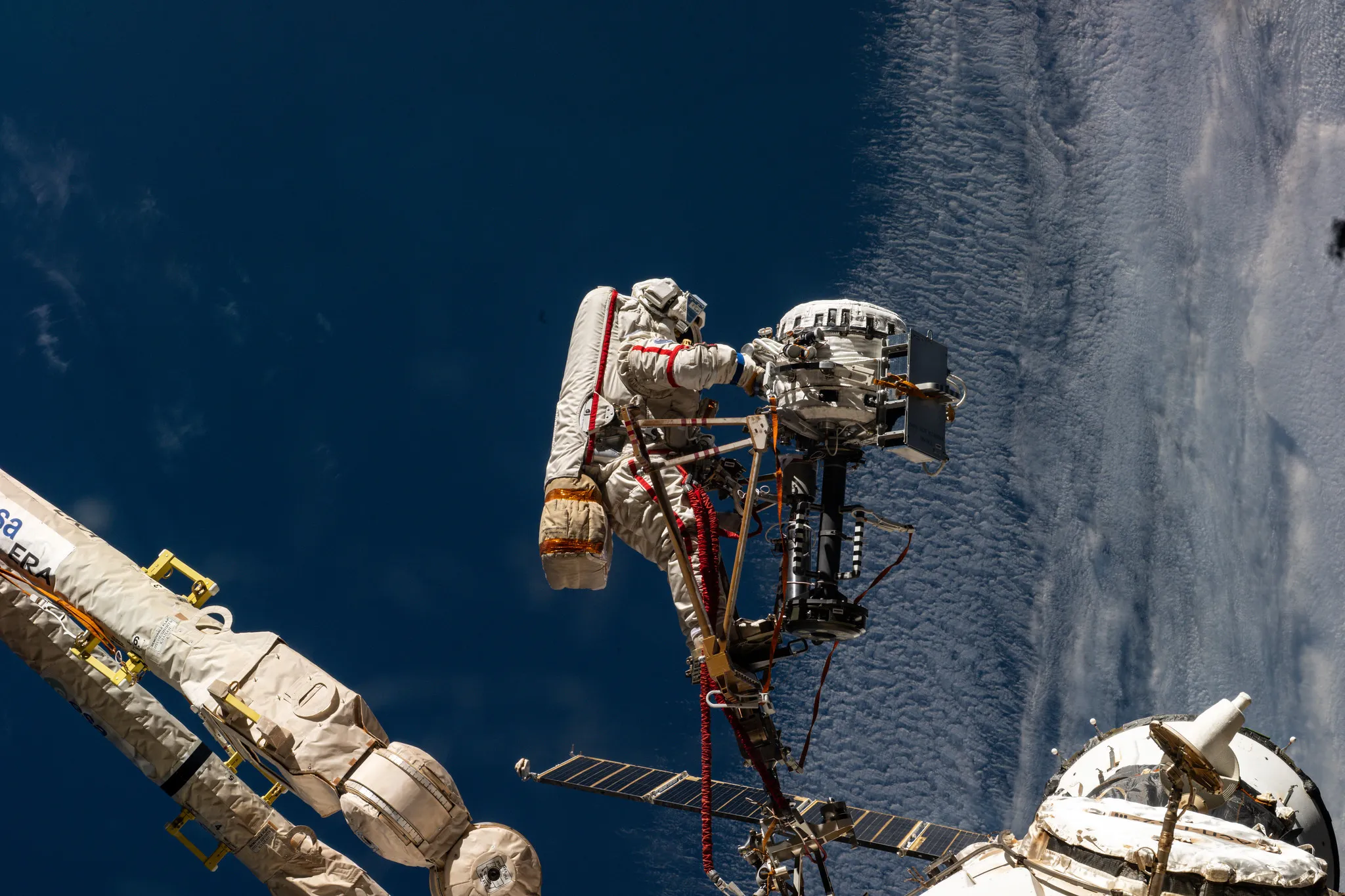
NASA will provide live coverage of a spacewalk conducted by two Roscosmos cosmonauts outside the International Space Station on Wednesday, May 27. The extravehicular activity is scheduled to commence at approximately 10:15 a.m. EDT and is expected to last roughly five hours.
Live broadcasts will begin at 9:45 a.m. EDT via NASA+, Amazon Prime, and the agency’s YouTube channel. The coverage will feature Expedition 74 commander Sergey Kud-Sverchkov and flight engineer Sergei Mikaev as they work on the exterior of the orbiting complex.
The primary objectives for this mission include installing a solar radiation experiment on the Zvezda service module. The crew will also remove science hardware from the Poisk and Nauka modules, which are located within the Roscosmos segment of the station.
If operational conditions allow and time remains, the cosmonauts will photograph one of the Kurs rendezvous antennas on the Progress 94 cargo spacecraft. This antenna failed to deploy in March following its launch to the space station.
This activity marks the second spacewalk for Kud-Sverchkov and the first for Mikaev. Kud-Sverchkov will wear a spacesuit distinguished by red stripes, while Mikaev will wear one with blue stripes. The event constitutes the 279th spacewalk in support of International Space Station assembly, maintenance, and upgrades.