NASA Tests Mars Helicopter Rotor Blades Beyond the Sound Barrier
Data from November 2025 indicates the blades could surpass Mach 1 without structural failure, a key step toward expanding aerial capabilities on Mars.
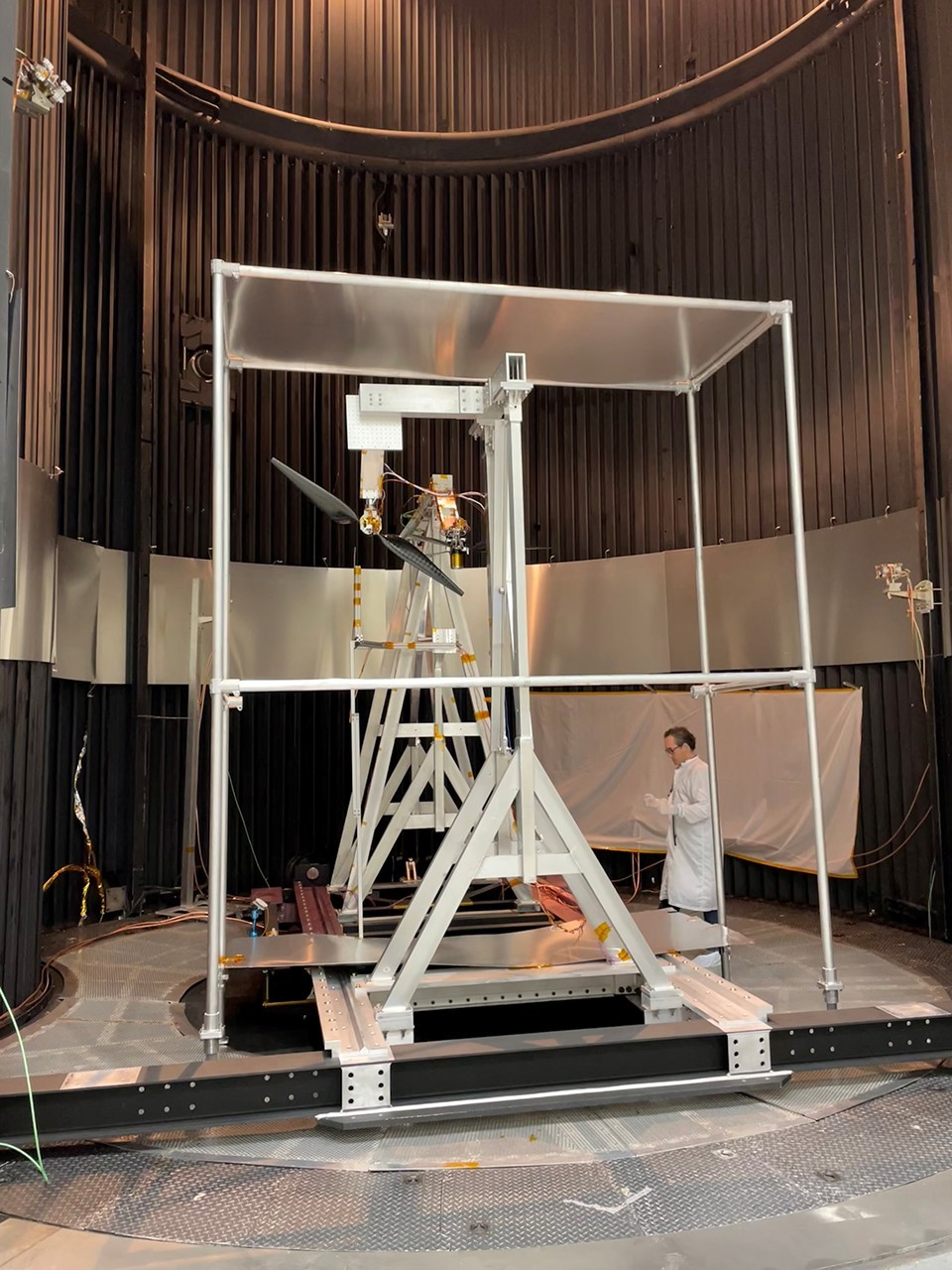
Engineers at NASA's Jet Propulsion Laboratory have completed high-speed trials of next-generation Mars helicopter rotor blades, revealing that the components can withstand speeds exceeding Mach 1. The testing, which took place in November 2025, was conducted inside the 25-Foot Space Simulator at the facility located in Southern California.
Data collected during the campaign indicates that the rotors could surpass the sound barrier without breaking apart. This represents a significant advancement in understanding the structural limits of aerial vehicles designed for the Martian environment, where the thin atmosphere results in a much lower speed of sound compared to Earth.
The specific tests were overseen by engineer Fernando Mier-Hicks, who inspected the test stand used to investigate the performance of the rotor blades. The 25-Foot Space Simulator was employed to replicate the conditions necessary for evaluating how these components would behave under extreme aerodynamic stress.
Funded by the Mars Exploration Program, the campaign aims to maximise the capability of future aircraft flying on Mars. The program is managed by a division of the California Institute of Technology in Pasadena, which oversees the Jet Propulsion Laboratory for NASA's Science Mission Directorate.
While the current Ingenuity helicopter has successfully demonstrated powered flight on the Red Planet, these trials focus on pushing the performance envelope for subsequent missions. The data suggests that future designs may be able to operate at velocities that were previously considered too risky for rotor integrity.
It remains unclear at this stage whether these next-generation blades will be integrated into a specific upcoming mission or if they are currently serving purely research purposes. The study does not provide exact performance metrics such as tip speed or the duration of supersonic exposure, but the results offer promising insights for the next generation of Martian aviation.