NASA terminates MAVEN mission after Mars orbiter loses contact
The Mars Atmosphere and Volatile Evolution mission ends after a decade of service, with other spacecraft set to assume its relay duties.
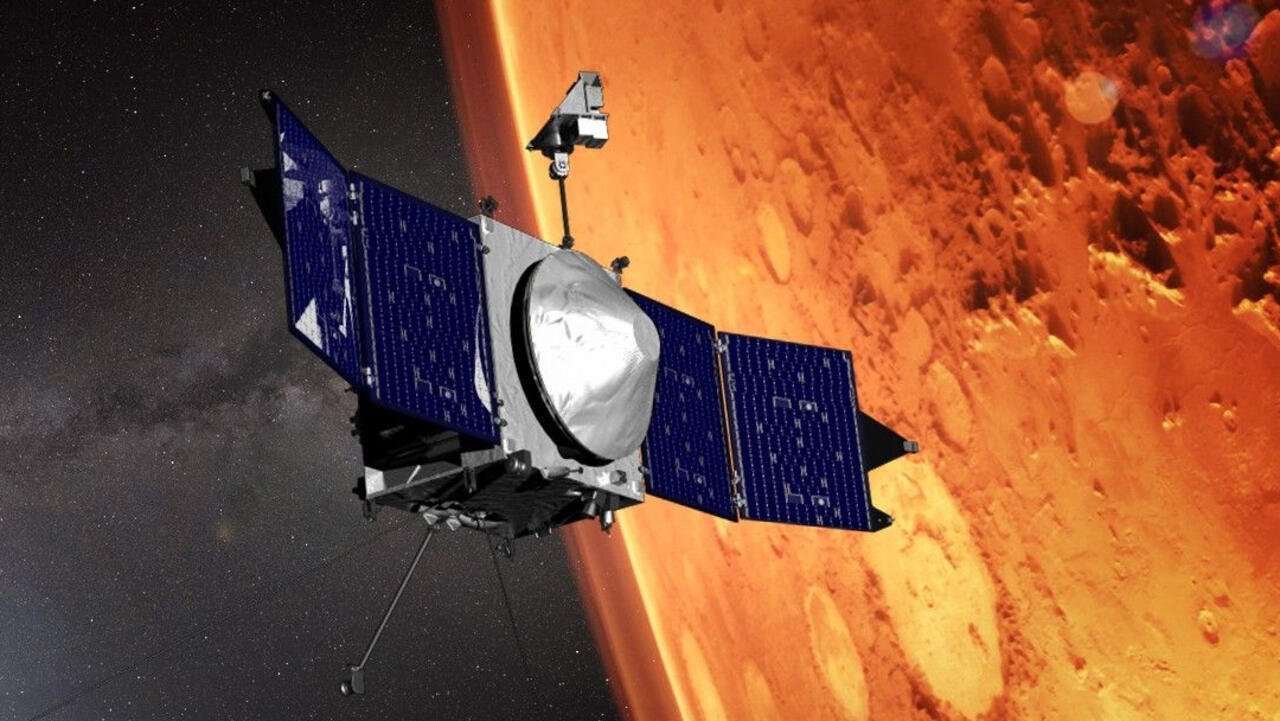
NASA has officially announced the termination of the MAVEN mission after the spacecraft lost contact with Earth for a period of six months. The US space agency confirmed the decision on Wednesday, stating that the orbiter went silent in December 2025 and has remained non-responsive since.
The Mars Atmosphere and Volatile Evolution probe entered Martian orbit in 2014 with a primary mandate to study the planet's atmosphere and evolution. Although the mission was originally designed for a one- to two-year operational lifespan, the spacecraft exceeded expectations by remaining active for more than a decade before the communication failure.
NASA stated that it would initiate an investigation into the specific cause of the loss of contact. While telemetry is unavailable to confirm the hardware's status, the agency noted that the spacecraft is believed to remain in orbit around Mars.
The mission provided critical data regarding atmospheric escape, the process by which atmospheric gases are lost into space. Shannon Curry, an astrophysics professor involved in the flight, described the mission as the "best Mars mission ever," noting that it established a superior understanding of atmospheric escape at Mars compared to other rocky planets, including Earth.
Tiffany Morgan, NASA’s exploration program chief, added that the probe had "profoundly advanced our understanding of Mars's atmosphere, climate history, and habitability." Beyond its scientific contributions, MAVEN served as a vital communications relay between Earth and robotic missions on the Martian surface.
With MAVEN no longer operational, other orbiters will now assume the responsibility of relaying communications for NASA’s surface robots. The agency has not yet released a timeline for the completion of its investigation into the cause of the signal loss.