NASA Study Reveals Ancient Martian Climate Conditions Using Mineralogical Markers
New research published in Science identifies hematite crystallite size as a key indicator of past environmental shifts on Mars.
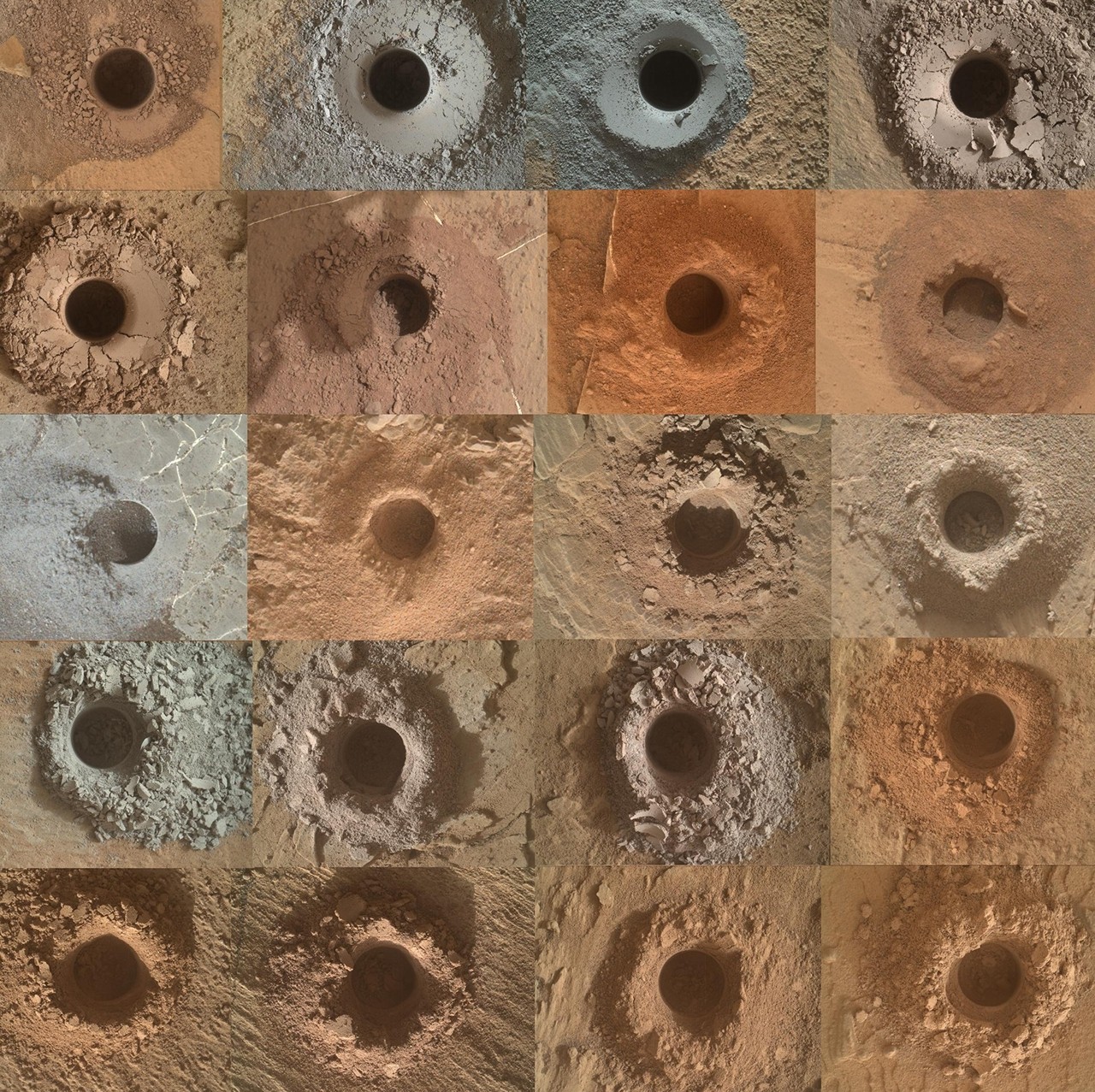
Scientists have utilised data from NASA’s Curiosity rover to identify hematite crystallite size as a mineralogical marker for understanding Mars' ancient climate. Analysis of 20 rock samples from Gale Crater revealed that larger hematite crystals in deeper layers indicate prolonged warm and wet conditions, suggesting that warm groundwater may have persisted for up to 4.7 million years, potentially creating habitable environments. The findings, published in the journal Science, contrast with colder, drier conditions indicated by smaller crystals in higher elevations.
The study analysed samples collected by Curiosity across various elevations within Gale Crater. Researchers discovered that hematite crystallites from higher elevations were less than 10 nanometers in size, while those from lower elevations were larger, reaching up to 65 nanometers. This variation in crystal size, combined with the presence or absence of goethite, provided evidence of distinct environmental histories at different depths.
Goethite, a mineral that typically forms alongside hematite, was absent in lower elevation samples but present in higher elevation samples. The team concluded that under warmer conditions with neutral or slightly alkaline pH, goethite can transform into hematite. This transformation, along with the growth of larger hematite crystals, occurred via Ostwald ripening, a process where smaller crystallites dissolve to contribute to the growth of larger ones.
Tanya Peretyazhko, co-first author of the study and planetary scientist at NASA’s Johnson Space Center, stated that warm and wet conditions were present for extended periods in buried rocks, despite Mars’ overall climate becoming colder. She noted that these warmer conditions in deep rocks could have made for habitable environments for much longer periods, provided other essential factors were present.
Data for the study was obtained using the Chemistry and Mineralogy (CheMin) instrument, which uses X-ray diffraction to measure crystal size and dimensions. Tom Bristow, principal investigator of the CheMin instrument at NASA’s Ames Research Center, highlighted that this method provides information on crystal size and shape that cannot be gathered from satellite analysis of the Martian surface.
Ashwin Vasavada, Curiosity’s project scientist at NASA’s Jet Propulsion Laboratory, emphasised the scientific fidelity of CheMin measurements. He explained that the instrument allows researchers to extract specific data on the size and shape of hematite crystallites and the presence of related minerals, all of which were necessary to produce these results.
The research highlights the capability of the rover’s instruments to provide detailed crystallographic data, offering a unique insight into Mars' environmental history. By examining these mineralogical markers, scientists can better understand the timing and nature of the environmental changes that transformed Mars from a wetter world to the dry planet observed today.